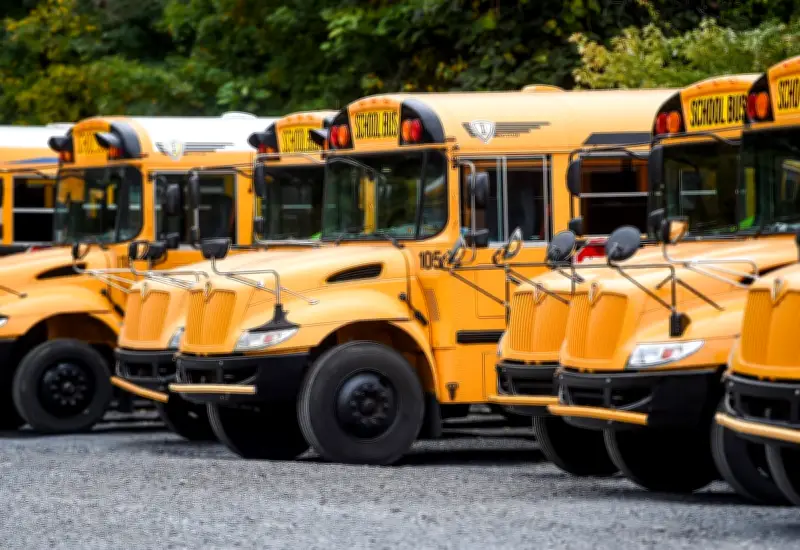
US schools are increasingly struggling to maintain student transportation services as a combination of bus driver shortages, budget constraints, and the expansion of school choice programs creates significant logistical and financial challenges.
According to a 2025 report from the Associated Press-NORC Center for Public Affairs Research conducted with HopSkipDrive, 80% of US districts have experienced transportation disruptions due to bus driver shortages, and 73% have been affected by budget shortages. The iconic yellow school bus, a symbol of American education, is becoming harder to operate.
Driver Shortages and Budget Pressures
The Economic Policy Institute reports that the number of school bus drivers fell from over 223,000 in August 2019 to 202,000 in August 2025, a 9.5% decline. Sarah Cordes, an associate professor at Temple University, noted that driving for ride-sharing services like Uber or Lyft is often more appealing because it requires less training and is less stressful than managing a bus full of children.

Inflation and rising fuel costs have compounded the problem. During the 2025-26 school year, more than half of district leaders reported diesel fuel costs exceeding their budgets, according to the School Superintendents Association. A quarter transferred funds from other programs to cover overruns, and 19% used reserve funding.
Enrollment Declines and Funding Gaps
Jeremy Singer, an assistant professor at the University of Michigan-Flint, attributed enrollment declines to falling birth rates and parents choosing private or charter schools or homeschooling. This reduces tax revenue for districts, yet transportation costs remain high because students are still dispersed geographically. Cutting routes forces longer bus rides, which can harm attendance and academic outcomes.
"If kids are on the bus for more than an hour, that is not good for their attendance," Cordes said.
Innovative Solutions and Regulatory Hurdles
Some districts are exploring alternatives like HopSkipDrive, a school-focused rideshare service using smaller vehicles. However, the 1974 School Bus Safety Amendments require vehicles carrying 11 or more people to meet the same safety standards as traditional buses, limiting flexibility and increasing costs. The Heritage Foundation has called for repealing the law, while the National Association of State Directors of Pupil Transportation Services argues it is crucial for safety.
Ohio's Transportation Crisis
Ohio exemplifies the challenges. A June report from the state's pupil transportation workgroup found that in 34 districts, fewer than 10% of vacant bus driver positions were filled. Transportation costs averaged $1,273 per student in fiscal year 2026, up nearly 5% from the previous year. Meanwhile, enrollment dropped by almost 100,000 students between 2016 and 2025, and 124 districts projected negative cash balances by 2029, the worst since the Great Recession, according to the Columbus Dispatch.
Ohio requires public schools to transport students to charter and private schools. Last year, districts labeled over 22,000 students "impractical to transport," allowing them to pay families instead. The workgroup recommended phasing out this designation and establishing a statewide policy ensuring safe, reliable transportation for all eligible students.
Columbus City Schools transports 20,000 students to its schools and 8,000 to private and religious schools. Michael Brown, the district's chief of communications and engagement, said officials are considering reducing service to high school students due to high costs. Eliminating the impracticality option would create an unfunded mandate.
Ohio Governor Mike DeWine approved legislation in 2025 capping school funding increases tied to property values, reducing revenue by at least $1.7 billion over three years, as reported by Ideastream Public Media. Brown expressed concern about the lack of full, fair funding for transportation.
Balancing Costs and Access
Cordes emphasized that districts must weigh the costs and benefits of expanding transportation access. "You may be getting more kids to school, but that might take away from the district's ability to spend money on other important things that have to happen in the classroom," she said.