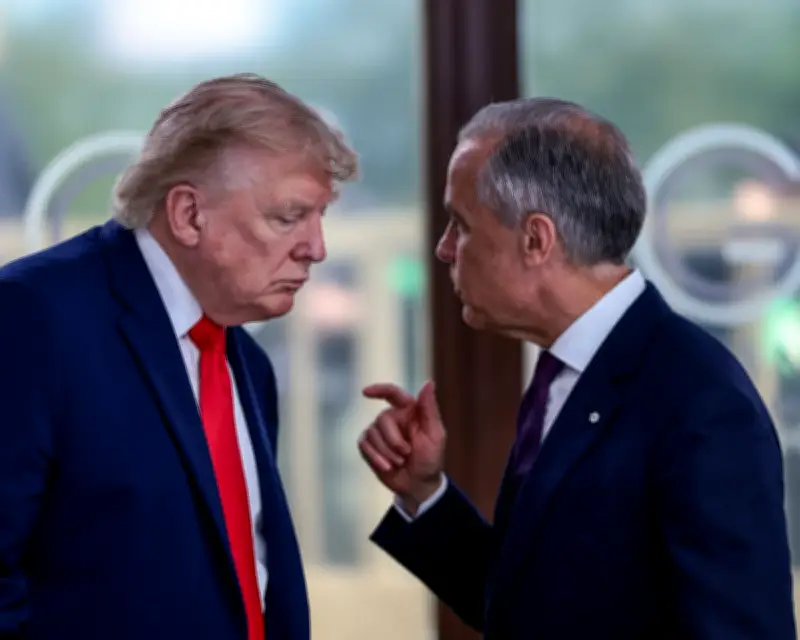
Canada has long sought attention from the United States, but the current focus from President Donald Trump and his Maga supporters has turned hostile. Trump's recent tariff policies single out Canada for unusually harsh treatment, with tariffs as high as 50% on selected Canadian products, including items previously protected by the USMCA trade deal. The White House cited retaliation for Canadian trade practices, but the lopsided attention suggests a deeper animosity.
Trump's annexation rhetoric and economic force
Trump has repeatedly mused about annexing Canada as the 51st state, ruling out military force but promising to use "economic force." Tariffs fit that description. While most US tariffs announced in April 2025 were around 10%, Canada faced 50% tariffs on a narrower range of exports, designed to hurt Canada without significantly affecting US consumers. This has shocked Canada's political class, which long assumed a friendly America was a given, leaving Canada dependent on the US for defence and trade.
Domestic political fallout benefits Carney
The tariff war has reshaped Canadian politics. Prime Minister Mark Carney, who replaced Justin Trudeau after Trump's annexation talk, led the Liberals to a decisive victory in the 2025 election. Canadians see Carney as the right choice to confront Trump, and his popularity remains high. However, the pressure from Washington is complicating Canada's internal politics, exposing regional divisions.

Regional economies hit unevenly
Canada's economy is regional: Ontario and Quebec rely on manufacturing, while Alberta and Saskatchewan depend on natural resources like oil, mostly exported to the US. The latest tariffs disproportionately target Ontario, Quebec, and British Columbia—provinces with anti-Trump leaders—while sparing Alberta and Saskatchewan. This appears to be a deliberate strategy to punish political opponents and exploit existing tensions. Alberta will vote on independence this fall, and Carney must tread carefully to avoid inflaming separatist sentiments.
Retaliation is politically necessary
Canada has not yet announced a response to the new tariffs, but Carney, whose political survival depends on standing up to Trump, can hardly avoid retaliation. Previous concessions, such as scrapping a digital tax, have been limited. The White House fails to understand that caving to Trump is toxic for Canadian voters. As journalist Matt Gurney notes, "Trump has often complained that dealing with Canadians is unpleasant and nasty. He should expect us to get nastier still."
Conclusion: no choice but to fight
Trump's tariffs and annexation rhetoric have left Canada with little option but to resist. The shock of a hostile US has unified the country behind Carney for now, but regional fissures could deepen. The coming weeks will test Canada's resolve as it prepares to retaliate, knowing that any sign of weakness would be politically fatal.