
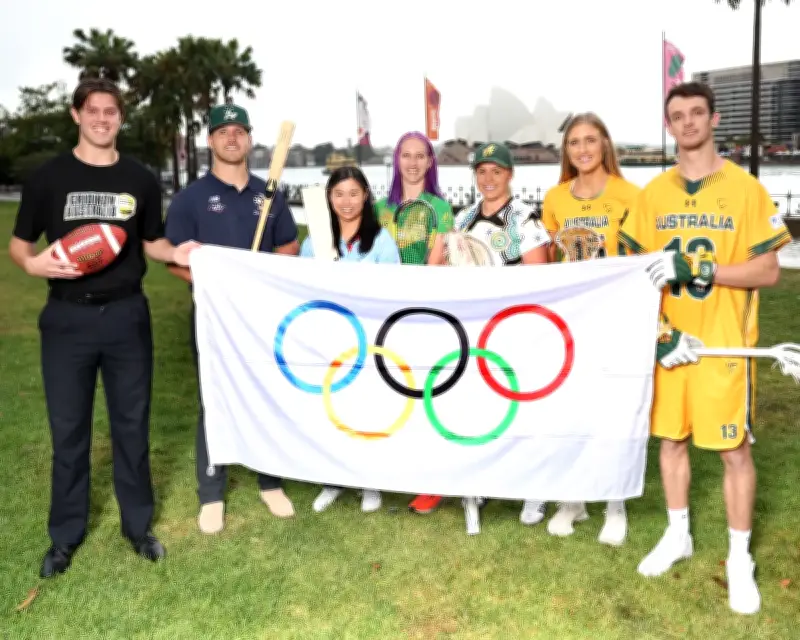
Kieren Perkins, Australia's most senior sport executive and a former Olympic gold-medal swimmer, has warned that the future of the Olympic Games depends on modernising the sporting program for Brisbane 2032. Speaking at the SportNXT conference in Melbourne, Perkins argued that some current Olympic sports “have no modern relevance whatsoever,” and if the program is not updated, “we should start to worry.”
Perkins calls for program overhaul
Perkins, who serves as chief executive of the Australian Sports Commission, expressed concern about the sustainability of the Olympic movement if the Brisbane 2032 program remains unchanged. He said, “If that program doesn’t look different, then yes, we should start to worry.” He added, “But if the Olympic movement actually does grasp the challenge that they’ve got, and recognise that while there are some traditional sports that we love dearly, they have no modern relevance whatsoever and there’s others that absolutely have earned and need a more prominent position within the Olympic movement.”
“If that’s embraced, then I think we’ll be fine, but if we can’t find a way to navigate through that, then there are question marks about that sustainability,” Perkins stated. He declined to name specific sports lacking modern relevance, but his comments are likely to unsettle officials from traditional sports with passionate followings, such as modern pentathlon and equestrian, which have long Olympic histories but struggle to match the profile of core sports like athletics and swimming.
Competition for places intensifies
The recent inclusion of cricket, baseball, softball, lacrosse, gridiron, and squash for Los Angeles 2028 highlights the intense competition for spots in the Olympic program. Cricket Australia chair Mike Baird has called for the Olympic final in 2032 to be the last game at the Gabba. A Cricket Australia spokesperson said the organisation is working with the ICC to “advance cricket’s cause for inclusion” in the Brisbane program, adding, “Cricket’s inclusion in Los Angeles 2028 will be a landmark moment for the game and our national teams showcasing the sport to our enormous global audiences as well as new cricket markets.”
Lacrosse, a sport invented by North American First Nations people, has also been re-introduced for 2028. Anna Carroll, chief executive of Lacrosse Australia, said the sport has “strong modern relevance” and its inclusion “will introduce the sport to new audiences, inspire the next generation of players and strengthen participation pathways across Australia.” She confirmed her organisation is working with World Lacrosse “to demonstrate the sport’s value to the Olympic movement.”
Netball has been lobbying for inclusion in 2032, citing its popularity among women. Netball Australia commissioned independent polling earlier this year that found two-thirds of Australians want netball played at Brisbane 2032.
New IOC methodology for Brisbane 2032
In June, the IOC session developed a new methodology to determine the Olympic program, focusing on individual disciplines rather than sports. Local organising committees can propose a maximum of four additional disciplines, each assessed on global appeal, cost, operational complexity, and athlete representation in governance. This will be applied flexibly to Brisbane 2032, with the program expected to be finalised by the IOC within the next year.
A Brisbane 2032 spokesperson said, “The Brisbane 2032 Olympic and Paralympic Games Organising Committee has had strong interest from a range of sports wanting to be involved in the Games in 2032. We are focused on designing a sports program that reflects the values of the Olympic and Paralympic movements, is operationally viable, and supports Brisbane 2032’s commercial, sustainable and engagement and experience objectives.”
Nicki Nicol, chief executive of the New Zealand Olympic Committee, said the Olympics must “keep evolving and evolve quickly,” but sports themselves must also adapt. She noted, “We’ve seen the ‘right-sized’ games for Glasgow [Commonwealth Games] just recently, and now as we look forward to Amdavad [the 2030 Commonwealth Games] that will be different again. For us, we’ve got a lot of traditional Olympic and Commonwealth sports, understanding what that pathway is going to look like, how we can influence the change, because we’ve got to make sure we’re still relevant to fans.”
Modern pentathlon has already taken the radical step of dropping equestrian from its sub-disciplines, replacing it with an obstacle course ahead of the 2028 Olympics. Meanwhile, breaking, the controversial addition to the Paris program, was not retained for Los Angeles. These changes underscore the ongoing evolution of the Olympic program as Brisbane 2032 prepares to finalise its sports lineup.




