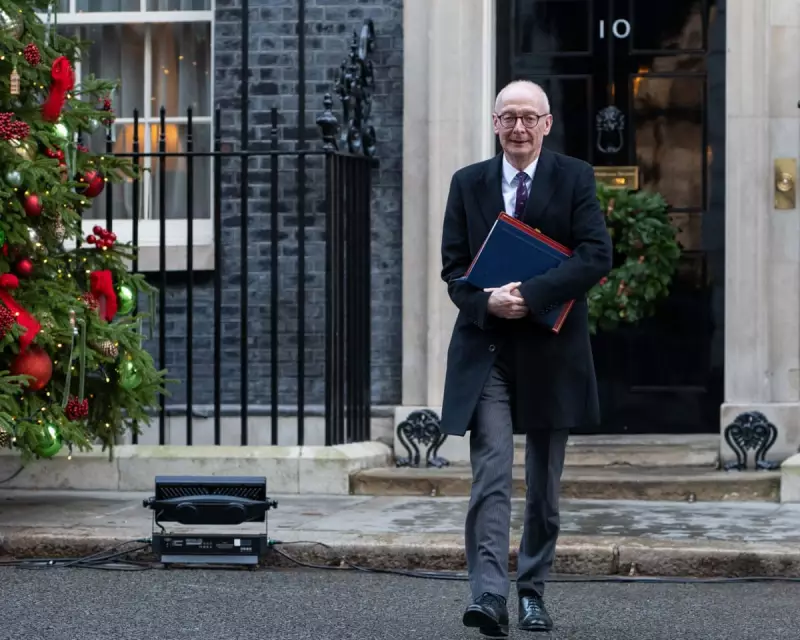
Work and Pensions Secretary Pat McFadden has declared that the UK's welfare system must undergo further reform to help more people into work and manage its "significantly rising costs," even as the government unveils a major new strategy to tackle child poverty.
Scrapping the Two-Child Limit: A £3bn Pledge
The centrepiece of the new child poverty strategy, published on Friday, is the government's commitment to abolish the controversial two-child limit on Universal Credit. This policy, introduced by the Conservative government in 2017, restricts benefit payments for the third and subsequent children in a family.
The Treasury estimates the move will cost £3bn and is projected to lift 450,000 children out of poverty by 2031. Labour MPs have widely welcomed the decision, which follows a victory in July when they forced ministers to abandon planned cuts to disability benefits.

Other measures within the strategy include plans to help parents access cheaper baby formula, accelerate the process of moving families out of temporary accommodation, establish breakfast clubs, and extend free school lunches.
"Reform is Happening": McFadden's Warning on Welfare
Despite this significant spending commitment, Pat McFadden used the strategy's launch to send a clear message that broader welfare reform remains firmly on the agenda. He warned it would be a "mistake" to believe the government was stepping back from changes following July's climbdown on disability payments.
"I think because of what happened in July, there's been a conclusion that no reform is happening. That's a mistake. Reform is happening. But I think we will need more in the future, too," McFadden stated in an interview with the Guardian.
He argued the current system is not delivering effectively, citing high costs and insufficient support to move people into employment. "I don't think the right thing to do with the welfare system is just to circle the wagons around a system that is not delivering as well as it should," he said.
Focus on Work and Long-Term Investment
McFadden framed the child poverty strategy not merely as income redistribution but as a vital long-term investment. He contends that improving children's prospects will enhance their future employability and, in turn, reduce reliance on the state.
He emphasised a focus on tackling economic inactivity, particularly among young people, highlighting the severe lifetime cost of sustained welfare dependency. "If a young person gets on to benefits and stays on them, they will lose out about a million pounds in earnings over the course of their life and it will cost the state about a million pounds too," McFadden explained.
The Chancellor, Rachel Reeves, has similarly stated the benefits bill cannot "remain untouched." Two major reviews are currently underway: the Timms review examining the disability benefits system, and another led by Alan Milburn focusing on youth inactivity.
When pressed on whether future reforms would involve cutting payments or tightening eligibility, McFadden declined to specify, stating he did not want to "rule things in or rule things out." He insisted the approach would be holistic, asking how different government departments could enhance opportunities for work, rather than simply retrofitting policies to meet arbitrary savings targets.
McFadden also robustly rejected Conservative claims that last month's budget favoured those on benefits over workers. He characterised the two-child limit as a political tool, stating it was "never really about saving money on the benefits bill" and accusing the previous government of using children as "the weapon of choice" to create divisions.