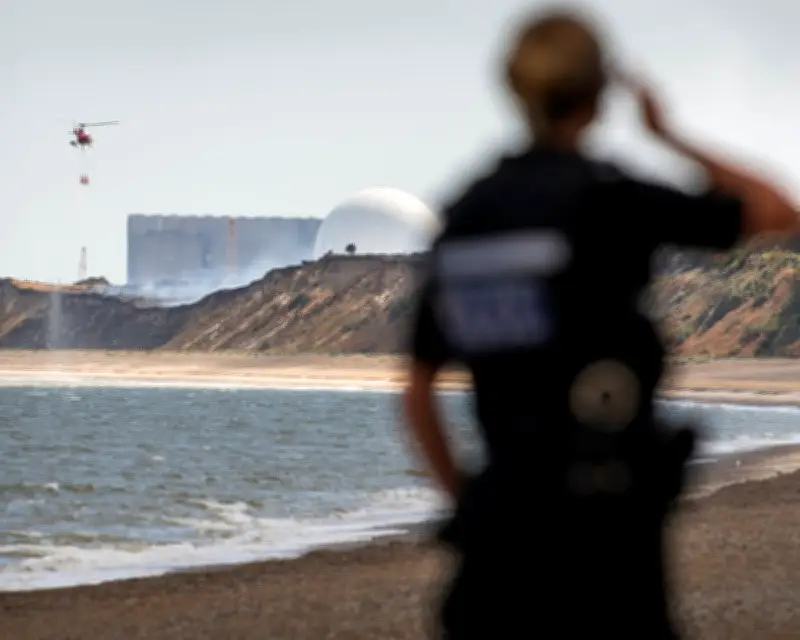
A major incident has been declared in Suffolk after a wildfire spread over more than 80 hectares (200 acres) near the Sizewell B nuclear power station, forcing hundreds of people to evacuate their homes and holiday parks. The blaze, described by one witness as “apocalyptic,” began at Dunwich Heath near Leiston on Wednesday evening and continued to burn into Thursday afternoon, according to Suffolk Fire and Rescue Service Chief Fire Officer Jon Lacey.
Firefighting efforts and current status
Lacey stated that while a change in wind direction and a helicopter dropping seawater had helped dampen the fire, he would not yet confirm it was under control. “Whether it’s actually under control, I wouldn’t commit myself to that just yet, but we are surrounded by resources to protect property and life,” he said. The fire prompted evacuations of homes and caravan parks, with residents opening their homes to help those displaced.
Andrew Turner, chair of Westleton parish council, said: “I had two families in my house. Two families and two dogs. There are now pillows and stuff in the village hall but the objective is to get everyone into houses. The council is still taking names of people who are willing to put up rooms.” He described the community as “tightknit” and praised the collective response.
Drought and climate context
The wildfire comes a day after half of England was officially declared to be in drought, including East Anglia and six other areas. On Thursday, Natural Resources Wales declared a drought across the whole of Wales, which is on course for its driest July since records began nearly 200 years ago. The climate crisis is supercharging “whiplash” wet-then-dry weather, leading to back-to-back heatwaves that encourage vegetation growth followed by drying, creating ideal fuel for fires.
Firefighters have responded to 393 wildfires across England and Wales in July, making it the busiest month on record. Phil Garrigan, chair of the National Fire Chiefs Council, warned: “Wildfires are no longer isolated or seasonal events. They are becoming a recurring and growing feature of the risks facing our communities and emergency services.”
Impact on wildlife and nature reserve
The fire caused considerable damage to the RSPB’s Minsmere nature reserve. Adam Rowlands, area manager for the RSPB, described the scene as “absolutely devastating.” He said: “The heathland habitat where the main fire is is home to really special and rare species in the UK, birds like nightjars, nightingales and Dartford warblers. Last night I stood on the heath and it was apocalyptic, the sky was orange, the smoke was billowing, it could be seen and smelled 20 miles to the north.”
Sizewell B nuclear power station
Firefighters confirmed there is no danger to Sizewell B, which is a few miles from the blaze. A spokesperson for EDF, the operator, stated the wildfire was not affecting operations and was being closely monitored. The plant has an emergency plan covering scenarios including a fire on site.
Prime Minister Andy Burnham promised support to firefighters during a visit to Cumbria, saying: “We’ve got the situation under close monitoring, and I’m receiving regular updates. It is a very serious incident.”
Expert warnings and broader implications
Dr Zakary Campbell-Lochrie, a lecturer in fire science at the University of Edinburgh, noted: “This wildfire is occurring at the same time as drought conditions have officially been declared in large parts of England, including Suffolk. The hot, dry weather conditions, including the multiple heatwave events across much of the UK in recent weeks, lead to strong drying conditions for vegetation, which can subsequently be highly susceptible to ignition and can present a much greater danger when fires do occur.”
The climate crisis, driven by fossil fuel burning, is making heatwaves more intense and frequent. A fortnight ago, Reform-led Suffolk County Council voted to rescind a climate emergency declaration adopted in 2019 and removed references to the climate emergency from council policies where appropriate. Meanwhile, the UK Health Security Agency said England is on track to record its highest ever number of heat-related deaths this summer.