
Finland's Housing First policy, introduced in 2008, has been a global model for ending homelessness, reducing the number of homeless people by more than half between 2012 and 2023. However, recent cuts to social services by the rightwing government have led to a rise in homelessness for the second consecutive year, according to the latest national survey from November. Despite these setbacks, the Finnish experience offers valuable lessons for other countries, including the UK, where Prime Minister Andy Burnham has pledged to end rough sleeping.
Housing First: A Fundamental Right
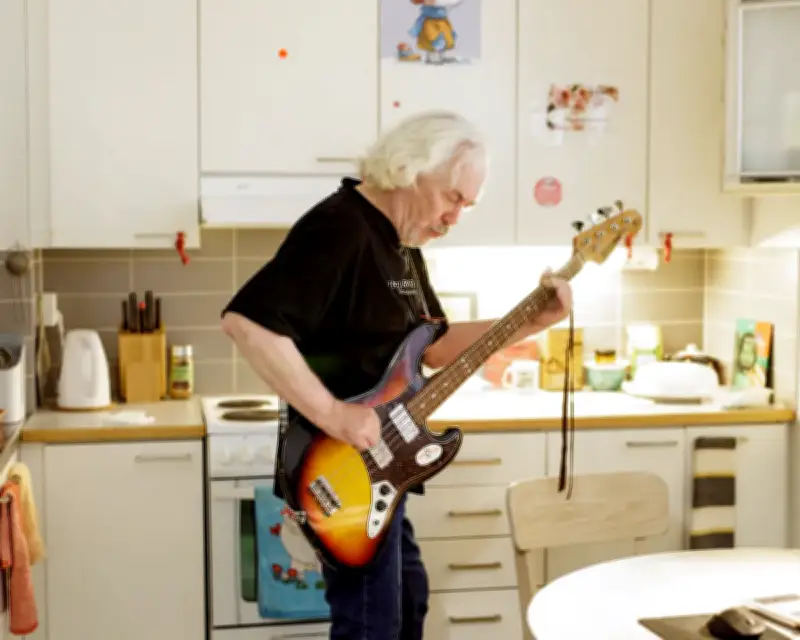
At 3.30am, Vello Senkel, 67, was awakened by neighbours asking for salt to boil macaroni, a request that soon included macaroni itself. Senkel, known as Velho (Finnish for wizard), lives in a Helsinki suburb in an apartment building with 77 other formerly homeless people. He moved in three and a half years ago after 10 days on the streets, following an eviction, a diagnosis of borderline personality disorder, and the death of his partner. Having this apartment, he says, has "changed everything."
The housing unit, converted from student accommodation, follows the Housing First principle, which treats housing as a fundamental human right, not a reward. Temporary accommodation is avoided, and all support is centered on permanent homes, with treatment, healthcare, and employment following. Advocates say it is cheaper for the state in the long run, as it reduces pressure on other public services. For Senkel, the 24-hour staff support is key; without it, his home would be a "black hole" of loneliness. He has an agreement that staff will contact him if they haven't seen him for 72 hours.
Support and Community: More Than a Roof
Marko Lahtela, who manages the unit, says tenants come from various homeless situations, and while housing is essential, it is not an instant fix. Building trust is vital, as many have substance-abuse issues or long-term problems. "It is more of a marathon than a sprint," he says. There is no limit on how long residents can stay; some have been there since it opened in 2022, while others move on after six months. Tenants range in age from early 20s to 60s, with the most common demographic being men around 40. Rent starts at about €850 (£728) a month, usually covered by benefits or pensions. The unit, run by Rinnekodit, has many success stories, but Lahtela notes there is not enough to prevent rental debt, which can lead to eviction after two months.
In a communal area, porridge and coffee are served every morning, and a weekly meeting addresses issues. Residents can volunteer for small tasks in return for a small fee. A notice reads: "You are precious. We listen and support and together with you we build the life that is true to you."
National Success and Recent Reversals
Since 2008, Finland's homelessness numbers dropped from about 8,000 to about 3,400 between 2012 and 2023, while homelessness rose across Europe. For context, homelessness in Spain rose by about a quarter between 2012 and 2022, and in England, Shelter reported an 8% rise in the past year to 382,618, with rough sleeping up 20%. Finland's success attracted global attention, including from UK Prime Minister Andy Burnham, who pledged to end rough sleeping and launched a £442m campaign to "get everyone in for Christmas."
However, the latest survey from last November found homelessness had risen for a second year in a row, to 4,579 people, a 20% increase. Key factors include rising housing and living costs, cuts to benefits, and more substance abuse and mental health issues. Homelessness has especially increased among women, under-25s, and people with non-Finnish backgrounds. The goal to end homelessness by 2027, set by former Prime Minister Sanna Marin, now seems out of reach.
On the Ground: Struggles and Resilience
At Vailla vakinaista asuntoa ry (No Fixed Abode), an NGO founded by homeless people 40 years ago, breakfast is served in a former restaurant. Jari Häkkinen, 57, says finding a place covered by his benefits is a struggle; he is fighting to keep his pensioner's apartment, which is €14 over his monthly limit. Another visitor, Leila, who has been homeless for nearly 12 years and lives under a bridge, challenges Finland's reputation as the world's happiest country: "They are saying [Finland is a] happy country. It is not true. This is the reality you see."
No Fixed Abode serves meals and runs a night cafe in winter when temperatures can sink to -30C. They see about 100 visitors a day, doubling in colder months. Erja Morottaja, head of communications, says there is no "one size, one idea, one model, one type of support service." Suski Kankaanmäki, 44, a peer worker who was homeless in 2015, spent nights on trains and in stations, then in "hidden homelessness" before getting an apartment that became a "drug using centre." After a major health scare in 2021, her life turned around; she is now training to be a nurse and wants to work at a Housing First unit. She predicts homelessness numbers will rise further, with people sleeping in shopping centres, stations, and Helsinki airport.
In Helsinki, homelessness rose by 25% last year to 979 people. At the Hietaniemenkatu service centre, staff see more women, elderly women, and people with jobs. Social worker Viveca attributes this to the current government: "There are cuts to everything. The only place they didn't cut from is the rich." The centre has 52 emergency places and 52 temporary places, but there is a revolving-door phenomenon where people lack life skills to maintain permanent apartments.
Lessons for the UK and Beyond
Despite recent setbacks, Finland's model remains instructive. Burnham visited Y-Foundation, which owns more than 19,000 homes, in 2019, and the foundation has supported his Manchester homelessness programme. Juha Kahila, head of international affairs, emphasizes that most formerly homeless people live in "scattered housing" among different demographic groups. Finland has about 400,000 affordable homes (30% of housing stock), with no profit for anyone. "It is not about the quantity of the affordable homes but how you target them that makes a big difference," he says. Comfort is key: "Home is something you want to decorate, you want to spend time there. When you close the door you can … You can be whoever you want. It's your safe place."




