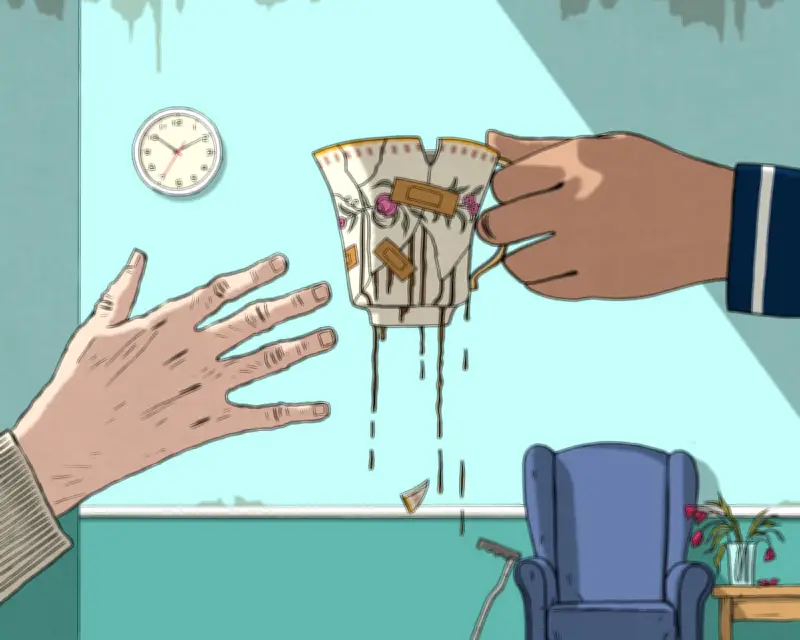
Andy Burnham has chosen social care reform as his first great challenge, a move described as 'remarkable bravery' by commentators. The prime minister faces a political minefield, with 22 major reviews over three decades having failed to fix the system. His enemies sneer at him as a 'people pleaser', but tackling this issue requires immense political capital.
Burnham's Personal Connection
In a speech from a north London care home, Burnham spoke of his father's dementia and the struggles families face: poor quality care, astronomical costs, and profiteering by private equity firms. This personal touch aims to resonate with the public, but his challenge is to make those untouched by social care care about it. A survey last year found 33% of people in England believed care was free at the point of need, like the NHS, and 18% didn't know. Only 4% listed social care as a top priority.
The Crisis in Numbers
Social care consumes 78% of local council funds in England, squeezing visible services. One in three people alive today will develop dementia, and one in seven will pay over £100,000 for nursing home care, often forcing the sale of the family home. Delayed discharges from hospitals due to lack of social care cost the NHS £2.7bn last year, with 13,600 beds occupied by patients who could leave if care were available.

Funding Reform Challenges
Burnham's proposal includes integrating NHS and social care, with a unified workforce on equal pay. Currently, a starter NHS healthcare assistant earns more than a care assistant. The Health Foundation found public support for funding reform 'once people understand the current system'. The prime minister warns the NHS could collapse without social care repair. A previous care levy proposed by Boris Johnson was popular but abolished by Kwasi Kwarteng before implementation, as it added 1.25 percentage points to national insurance for workers, not pensioners.
Political Obstacles
The Mail branded Burnham's plan an '£18bn death tax', but Burnham retorts: 'You can't create scare stories when people are already scared by what they're seeing through their own eyes.' He calls for 'a different kind of politics: problem-solving, not point-scoring'. Kemi Badenoch has set deliberately impossible conditions for consensus, demanding no borrowing, no taxes, and no taking from those who saved. Burnham insists pensioners must pay for the old, not the young.
Private Sector Role
For-profit care is lower quality than voluntary or local authority-run services, according to the Blavatnik School of Government. The system includes 16,500 care homes, 85% for profit, many small family-run businesses and private equity chains. This stems from a 1988 Thatcher-era reform that closed council homes and outsourced care to the private sector. Crafting a national care service would be the hardest in-sourcing task.
Public Mood and Timing
Burnham may strike a chord with a public hostile to politics. The wreckers in Tory and Reform parties may be wrong-footed. As Polly Toynbee writes: 'It has never been the right time to brave social care reform. But it may be now, with a leader driven by personal belief, in his early stages, when he still has substantial political capital.' The question remains: will society, politics, and the media grasp the nettle?