Venezuelan Activists Rally for Freedom as Political Climate Shifts Post-Maduro
In a significant display of growing political momentum, protesters have flooded the streets across multiple Venezuelan cities, signaling what many are calling an embryonic political shift following the recent downfall of longtime dictator Nicolás Maduro. This surge in public dissent represents a notable change in the country's authoritarian landscape, with activists enjoying greater freedom of expression despite the absence of complete regime change.
Student-Led Demonstrations Demand Democratic Transition
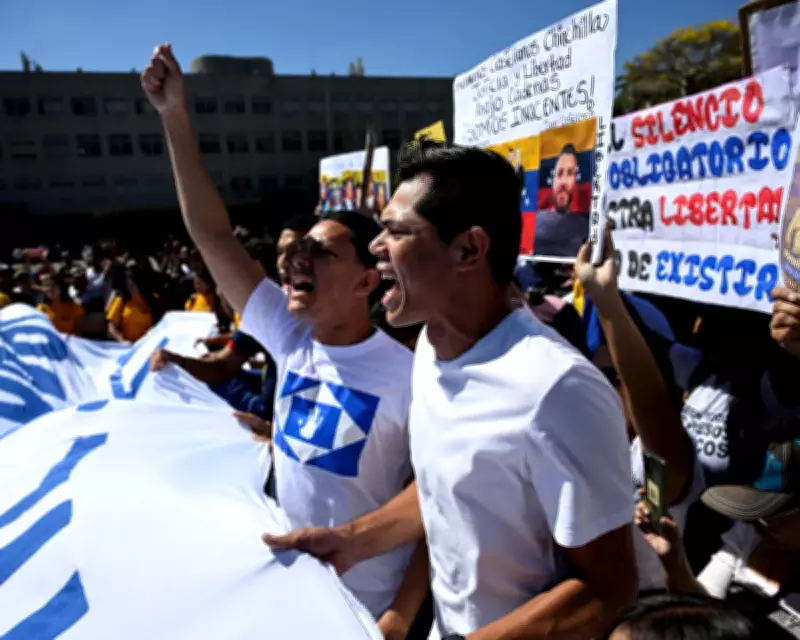
On Thursday, student demonstrators gathered at the Central University of Venezuela in Caracas, vocally demanding the release of all political prisoners, the return of exiled activists, and a full transition to democracy. The peaceful march featured hundreds of participants chanting "Who are we? Venezuela! What do we want? Freedom!"—a public show of dissent that would have been unthinkable just weeks earlier before U.S. special forces seized the 63-year-old leader.
Angel Gutiérrez, a literature student who participated in the rally, expressed his determination to challenge the status quo. "I refuse to live in a country without freedom of expression," said Gutiérrez, who noted that throughout his entire adult life, the will of the Venezuelan people had been systematically ignored. The 27-year-old added, "I'm here because I refuse to continue to accept my country carrying on under these conditions. A young person without hope is dead."
Media Coverage and Nationwide Protests Signal Thaw
In another indication of potential political thaw, the student-led demonstrations received unprecedented coverage on Venezuelan television networks, including Venevisión, which had been prohibited from reporting on such events for years. The protests extended beyond Caracas to cities including Barquisimeto, Ciudad Guayana, Maracaibo, and Mérida, demonstrating nationwide momentum for change.
John Pérez, an international relations student who joined the capital city march, remarked on the significance of the moment. "It's incredible that we are back in the streets. They should know that they will never silence us," he declared. These demonstrations represent the latest—and largest—in a series of protests that have emerged since U.S. troops abducted Maduro on January 3, partially transforming Venezuela's authoritarian political landscape.
Concessions and Continued Challenges
While much of Maduro's regime remains intact under the leadership of Vice-President Delcy Rodríguez, the country's new leadership has been compelled to make several important concessions. These include freeing more than 430 political prisoners, proposing an amnesty, tolerating increasing numbers of protests, and rewriting energy laws to permit greater involvement of foreign oil companies. Additionally, a limited number of foreign journalists were allowed into Venezuela this week.
Jesús Armas, a prominent opposition leader released on Sunday after fourteen months of imprisonment, offered a nuanced perspective on the current situation. "It's a really weird moment because we are not really in a transition to democracy. We don't have a date for a fair and free election. The same regime is in power," Armas explained. "But at the same time, because of the pressure of the United States, we are starting to see things like the freedom of political prisoners and the people are starting to lose their fear."
Changing Dynamics and Cautious Optimism
Yerwin Torrealba, a 26-year-old youth leader from Yaracuy state who was released from prison last month, expressed astonishment at being able to attend a recent protest without police harassment. "Two months ago, you couldn't do this," said Torrealba, an activist for the movement led by exiled Nobel laureate María Corina Machado. He noted that previously, simply posting a protest photo on social media could trigger an arrest warrant.
"This is a big step forwards. People are becoming active in the streets once again," Torrealba stated, voicing cautious confidence that Venezuela was entering a less authoritarian era. "It's still moving a little slowly, but the transition is steadily playing out." Many activists who went underground after Maduro was accused of stealing the 2024 presidential election from Machado's surrogate are now emerging from hiding.
International Engagement and Diplomatic Shifts
The Thursday rallies occurred just one day after U.S. Energy Secretary Chris Wright arrived in Caracas promising "a flood of investment" in the economically distressed South American nation. In scenes that would have been unimaginable weeks earlier given the previously toxic U.S.-Venezuela relationship, Trump's envoy was serenaded by young Venezuelan musicians playing maracas and harps.
Speaking to reporters at the Miraflores presidential palace, Wright conveyed, "I bring today a message from President Trump: he is passionately committed to absolutely transforming the relationship between the United States and Venezuela, part of a broader agenda to make the Americas great again." Delcy Rodríguez responded to her North American guest, "We are sure this first visit will open the door to many more."
This diplomatic engagement marks a dramatic shift from Rodríguez's previous accusations that the Trump administration was using military action to "capture" Venezuela's natural resources, which include the world's largest known oil reserves. In a rare interview with NBC News on Thursday, Venezuela's acting president struck a more diplomatic tone, announcing she was considering accepting an invitation to visit the United States—a development that would represent the first such visit since 1999, when Maduro's mentor Hugo Chávez assumed power.
Skepticism and Ongoing Repression
Despite these positive developments, observers remain skeptical about the interim administration's willingness to cede meaningful control, warning that limited signs of democratic reform could easily be reversed. On Sunday, opposition leader Juan Pablo Guanipa was taken back into detention by armed men just hours after being released from an eight-month prison stint, later being placed under house arrest. Hundreds of political prisoners remain incarcerated.
Speaking to a pro-Trump television network last weekend, Rodríguez's brother, National Assembly President Jorge Rodríguez, ruled out holding fresh elections in the "immediate" future while the country was being "stabilized." Many analysts view the regime's concessions to the White House as a strategic ploy to maintain power by delaying elections until after the next U.S. presidential election in 2028.
Michael Paarlberg, a former Latin America adviser to Bernie Sanders, offered this assessment: "I think if they're smart, they're going to be stringing the Trump administration along until the Trump administration is no longer in office—and then hope that everyone just kind of forgets about things. I think Trump has already largely forgotten about Venezuela."
The demonstration coincided with a national holiday commemorating a pivotal 1814 battle during Venezuela's war of independence, adding historical resonance to the contemporary struggle for political freedom. As Venezuela navigates this complex transitional period, the balance between genuine reform and strategic concession remains uncertain, with activists cautiously testing the boundaries of their newly expanded freedoms while remaining vigilant against potential regression.