
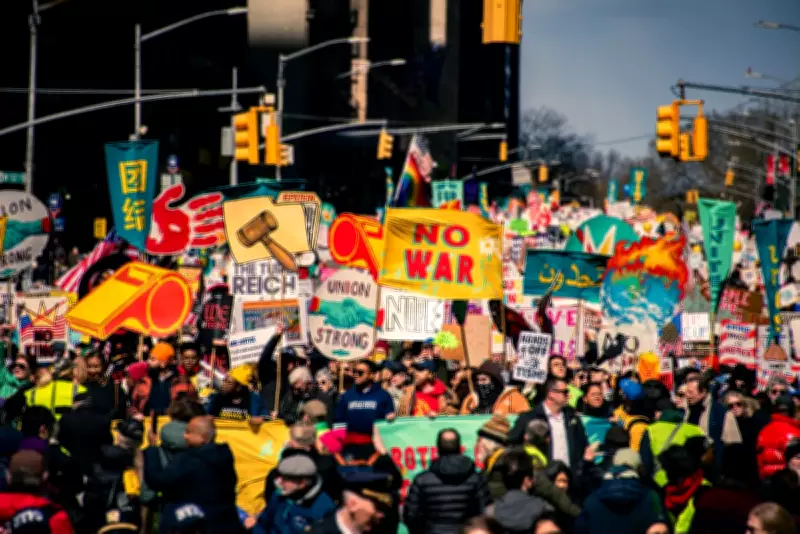
The Urgent Call for Unity in Resistance Movements
In today's political landscape, where division threatens to undermine collective action, the words of activist George Jackson resonate with renewed urgency. More than fifty years ago, while enduring unimaginable violence within California's prison system, Jackson issued a prophetic call for unity, love, and revolutionary courage. His message remains strikingly relevant: we must choose between fighting each other or fighting for one another, settling internal quarrels to confront the systems that oppress us.
The Contemporary Reality of Fascism
By 2026, the fascism Jackson warned about has moved from the shadows into plain sight. The Republican party has openly embraced authoritarian tendencies, while the Democratic party often offers only symbolic resistance through timid gestures and respectability politics. Many Democrats have contributed to building the very surveillance and militarized infrastructure that authoritarian leaders now weaponize. This reality demands a unified response from grassroots movements rather than reliance on established political structures.
The anti-ICE resistance demonstrates that effective opposition requires more than being morally right. People join movements when they feel a genuine sense of belonging, when organizations provide spaces for growth, struggle, and transformation. Most importantly, they engage when movements deliver tangible victories: food security, housing, safety, employment opportunities, and freedom from police violence.
Confronting Internal Fractures
To build sustainable resistance, movements must first address the fractures within their own ranks. White supremacist and capitalist cultures have long influenced organizational dynamics, determining who receives credit, who controls work, and whose voices are amplified. Egos of so-called leaders frequently take precedence over community needs and stated purposes.
These divisions render movements fragile precisely when they need strength most, as powerful institutions consolidate media control, corporate influence, and political authority. Strengthening relationships, solidarity, and discipline becomes essential to prevent reactionary tendencies that make movements vulnerable to divide-and-conquer strategies.
Practical Steps Toward Stronger Coalitions
Building resilient coalitions requires several concrete actions. Activists must show up consistently, even in uncomfortable situations. They need to engage with individuals whose politics remain imperfect and work alongside those still developing their political consciousness, recognizing their revolutionary potential. Movements must refuse to turn against close allies while maintaining focus on the actual adversaries.
Equally important is the difficult work of addressing harm directly rather than avoiding conflict. This involves creating accountability structures that don't replicate carceral systems and committing to the slow, principled work of repair. Over the past three years, movements in California have experimented with collective healing processes through facilitated sessions rooted in transformative justice, ritual practices, and embodiment techniques.
Infrastructure for Sustainable Movements
Alongside healing work, movements are developing infrastructure to prevent conflicts before they cause fractures. Coalitions across California have created collective agreements outlining shared decision-making processes, communication protocols, and accountability mechanisms. These frameworks represent political commitments to practicing solidarity in real time, helping navigate disagreements, define expectations, and establish clear responses to harm and power dynamics.
Across the nation, healers, educators, and organizers are developing skills and structures necessary for sustaining healthy movements. From culturally rooted healing circles and compassionate accountability trainings to leadership programs incorporating Indigenous wisdom, these resources build collective capacity to address harm without reproducing it. Teachers like Jerry Tello, co-founder of the National Compadres Network, demonstrate how communities can heal, release trauma, and return to their sacred purposes when provided appropriate space and support.
Immediate Actions for Collective Power
The time for waiting has expired. Movements no longer have the luxury of postponing action until they achieve perfect internal cohesion. Immediate steps include reading together, training collectively, stockpiling food, sharing supplies, building local defense and care networks, and learning neighbors' contact information for emergency situations. Protecting one another and practicing solidarity as if lives depend on it—because they genuinely do—forms the foundation of effective resistance.
Sources of Hope and Inspiration
In Los Angeles, the People's Budget Assembly with Black Lives Matter LA and the People's Budget LA Coalition continues surveying over 35,000 residents annually. Since the 2020 Freedom Uprisings for George Floyd, responses consistently demand divestment from punitive systems and investment in community resources. This moral clarity across political spectrums inspires organizers to heed Jackson's call to settle quarrels and unite.
Recent experiences delivering humanitarian aid to Cuba reveal the material reality of imperialism in hospital rooms and schools, where children's access to life-saving care depends on political circumstances. Despite these conditions, the Cuban people's unwavering commitment to dignity strengthens resolve to fight for self-determined lives worldwide. Hope may fluctuate, but responsibility to one another remains constant, driving daily action toward collective liberation.




