
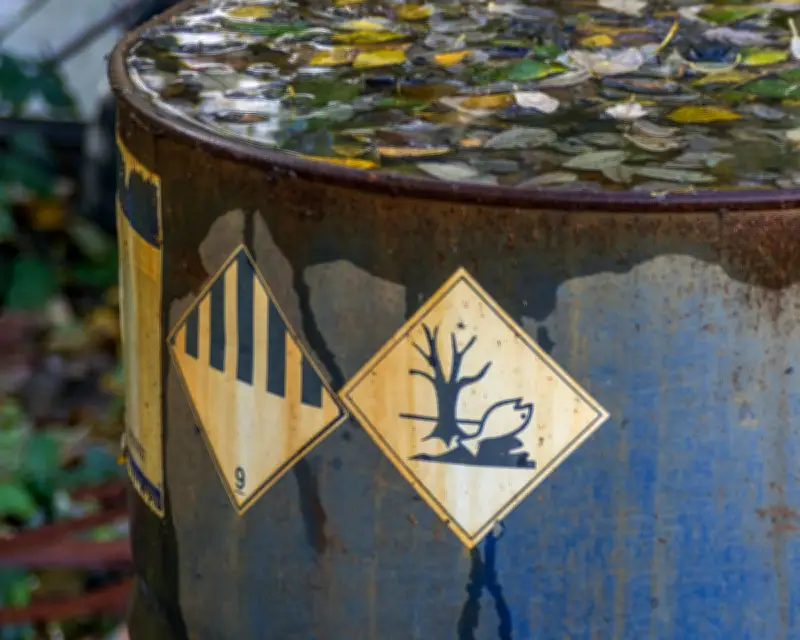
The system that determines which substances are identified as hazardous, the warnings that appear on labels, and whether bans or controls are applied is at the center of a legal dispute. Environmental campaigners argue that proposed changes could expose Britons to harmful chemicals.
Legal Action Against Government
An environmental campaign group, Fighting Dirty, is taking legal action against the government over proposals that it claims could fast-track chemical hazard classifications from other countries with lower standards into UK law. The group argues that these changes could result in the UK weakening standards on cancer-causing substances.
Last year, the Health and Safety Executive (HSE), which has been responsible for the regulation of chemicals in Britain since Brexit, launched a consultation on plans to change the system. This system determines which substances are identified as hazardous, the warnings that appear on labels, what restrictions apply, and whether chemicals are banned or tightly controlled.
EU Standards Omitted
The HSE's consultation proposed allowing the fast-tracking of chemical hazard classifications from other countries into British law. When the HSE published its response, it stated it would recognize the EU's standards when adopting such classifications. The EU has some of the highest standards on chemical safety globally.
However, when the government laid the regulations before parliament earlier this year, the EU and its standards were not mentioned. Fighting Dirty is now taking legal action over concerns that this omission may expose the public to more hazardous chemicals.
Ricardo Gama, a partner at the law firm Leigh Day representing Fighting Dirty, said the absence of this safeguard meant the government, or any future government, could approve chemicals from places with lower standards than the UK and EU.
Concerns Over Carcinogens
Fighting Dirty has highlighted that substances classified as human carcinogens by the International Agency for Research on Cancer, such as hexavalent chromium—made infamous through the film Erin Brockovich—are far more widely used in countries like the US, China, India, and Brazil than in the EU.
The campaign group argues the new regulations would give the HSE unchecked power to import weaker standards for such chemicals into British law. Georgia Elliott-Smith, founder of Fighting Dirty, stated: "This is deregulation dressed up as efficiency, and the British public will pay for it with their health."
HSE Response
The HSE claims the legislation will help prevent non-EU jurisdictions with weaker regulatory practices from qualifying for fast-track evaluations. However, campaigners argue the omission of the EU in the text means future governments could still approve chemicals from places with lower standards than the EU.
Chloe Topping, a senior campaigner at the charity CHEM Trust, said the omission "risks the regulations being misused in the future." Elliott-Smith added: "We are not asking for anything radical. We are asking the court to hold the government to its own promises and ensure laws designed to protect people from cancer-causing chemicals actually do their job."
Topping urged the government to "close this door by clarifying in the legal text that they only intend to use the changes to speed up adoption of decisions made by the EU, which sets the highest standards globally on chemical safety."
Legal Proceedings
A formal letter before the claim was sent to the HSE on 1 April. Fighting Dirty is now proceeding with an application for a judicial review. A spokesperson for the HSE said: "Far from opening the door to lower standards, these regulations actually provide for a mechanism by which Great Britain can prevent non-EU jurisdictions with weaker regulatory practices from qualifying for fast-track evaluation—helping protect the public and the environment."




