
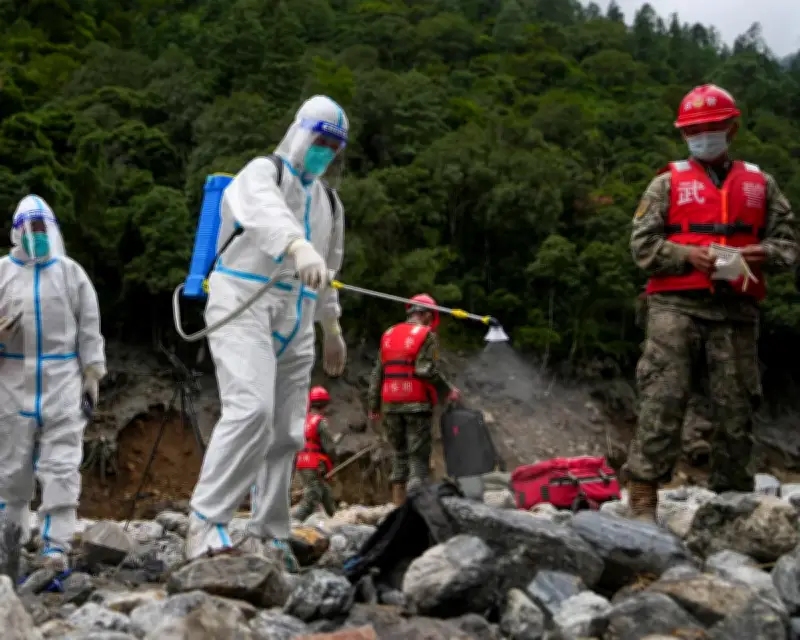
The International Campaign for Tibet (ICT) has disputed China's official death toll from last week's flash floods on the Tibetan side of the Nepal-Tibet border, claiming that at least 300 homes were destroyed and the number of missing people is "far higher" than Beijing acknowledges.
Chinese authorities have confirmed 16 deaths and 546 missing, including 261 foreign citizens. However, ICT president Tencho Gyatso told the Guardian that sources on the ground report significantly higher casualties. "What is visible in Nepal exposes what is being concealed in Tibet," she said. "Four villages – Sale, Serchung, Labi and Rizi – were among the hardest hit, with approximately 300 homes reportedly destroyed and many people still missing."
Gyatso added that the "little information that we can gather from the ground" suggests the number of affected people is "far higher" than official reports.
Disaster and Official Response
The floods were triggered by a glacier collapse on 26 August, causing devastation along the Nepal-Tibet border. On the Nepal side, the death toll has surpassed 900, with more than 4,000 missing. Tourists from India, the US, Britain, Australia, and Canada remain unaccounted for in the mountainous region popular with trekkers and pilgrims.
China's state media has dominated coverage, with few unofficial accounts of the disaster's scale. Security officials in Tibet announced on Sunday that they had penalised at least 10 people for sharing "false disaster information," though no further details were given.
Restrictions and Allegations of Concealment
Independent verification in Tibet is extremely difficult due to severe restrictions on foreign journalists and the risk of imprisonment for Tibetans sharing information. Gyatso said, "Officially released glimpses, however important, cannot tell us what is happening across all affected communities."
ICT reports that survivors have been moved to Gyirong, about 30km (18 miles) from the border crossing, where they are under strict management and restricted from communicating freely. A state-run newspaper, Tibet Daily, reported on 27 August that two Tibetans were detained for posting "rumours" that more than 1,000 people had been swept away.
Social Media and Criticism
Posts about the disaster trended on Chinese social media on Monday, with many echoing official narratives. Hu Xijin, a prominent commentator and former chief editor of the Global Times, accused a small number of voices of seeking to "stir controversy by fabricating baseless claims." However, one comment questioned why all updates were coming from the Nepali side.
Maya Wang of Human Rights Watch said, "The instinct of the Chinese government is always to kind of control and to ensure the narrative which is to portray itself as a very efficient government." She also raised questions about how development in the ecologically and geologically fragile valleys may have contributed to the disaster.
In response to allegations of censorship and underreporting, Chinese foreign ministry spokesperson Guo Jiakun insisted on Monday that information release was transparent and timely. "Malicious smear campaigns and hype using the disaster situation does not align with popular sentiment," he said, and firmly opposed "baseless and malicious speculation" regarding ignored scientific warnings.




