
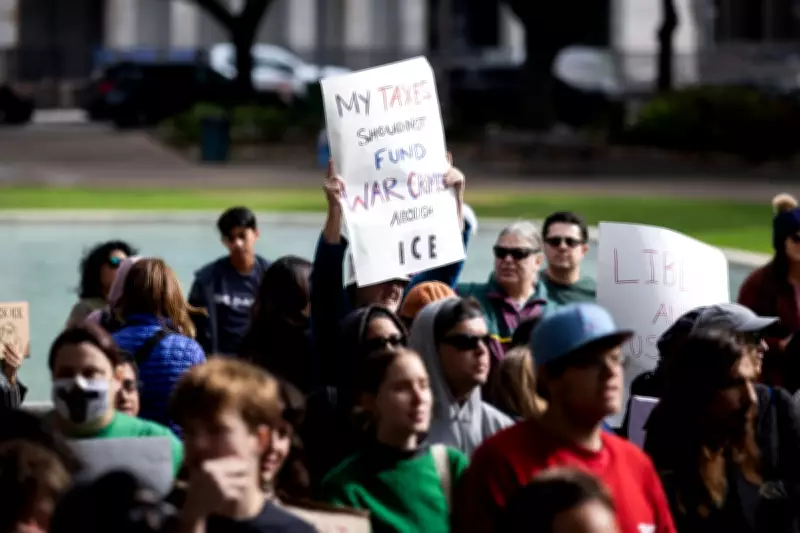
Tax Resistance Movement Gains Momentum Amid Trump Era Policies
In a bold act of civil disobedience, a new generation of Americans is choosing to withhold their federal income taxes as a protest against the policies of the Trump administration. This movement, driven by concerns over immigration enforcement and military engagements, is seeing a significant surge in participation, with individuals like Rachel Cohen, a 31-year-old lawyer from Chicago, leading the charge.
Cohen recently announced on social media that she will not pay the $8,800 she owes in federal taxes this year, instead placing the funds in a high-yield savings account. Her decision stems from a refusal to support what she describes as "wars in Iran and Gaza" and the actions of Immigration and Customs Enforcement (ICE) agents. "I don't want to fund wars or immigration agents detaining my neighbors," she stated, highlighting the moral dilemma faced by many taxpayers.
Rising Interest in War Tax Resistance
The National War Tax Resistance Coordinating Committee (NWTRCC) reports a dramatic increase in engagement since Trump's re-election. Lincoln Rice, the committee's leader, noted that a recent "War Tax Resistance 101" training attracted nearly 500 attendees, a stark contrast to the dozen or so who participated a few years ago. Website traffic has also soared, with over 110,000 unique visitors seeking information on how to resist taxes legally and effectively.
Rice emphasizes that while some methods of tax resistance are illegal and carry risks such as wage garnishment or property seizure, the movement is growing as more Americans question how their tax dollars are allocated. Approximately 13% of federal income taxes fund the military, with an additional 1% supporting federal law enforcement, including ICE.
Historical Context of Tax Protest
Tax resistance has deep roots in American history, dating back to the Boston Tea Party in 1773. During the Vietnam War, celebrities like Joan Baez famously withheld taxes to protest military spending, inspiring millions. In the 1970s, hundreds of thousands refused to pay a telephone tax meant to subsidize the war effort. Since then, the practice has fluctuated in popularity, often sustained by pacifist religious groups such as Quakers and Mennonites.
In recent years, the movement has shifted from conservative libertarian interests to a more progressive stance, particularly during the Biden and Trump administrations. Christina Thompson, a volunteer coordinator with the National Tax Strike, explains that the focus is not on opposing taxation itself but on redirecting funds toward domestic priorities like healthcare and housing. "We believe our taxes should be going towards the best use for people in this country," she said, criticizing the allocation of resources to "forever wars."
Legal and Personal Risks
Participants in tax resistance face potential penalties, including threatening letters from the IRS and financial repercussions. However, with the IRS workforce reduced by 27% under Trump, some experts question the agency's ability to enforce collections promptly. Rice notes that while few new resisters have faced severe actions recently, long-term practitioners have experienced bank account levies.
For Cohen, the decision to withhold taxes was not made lightly. After leaving her job at a major law firm, she built a social media platform to advocate for undocumented immigrants and carefully assessed the risks. "I'm doing an informed risk assessment," she said, acknowledging her fears but emphasizing the urgency of the political moment. This sentiment echoes across the movement, as Americans seek to challenge what they perceive as rising authoritarianism and misplaced government spending.




