Sydney Protest Erupts in Violence as Police Defend 'Impossible Situation'
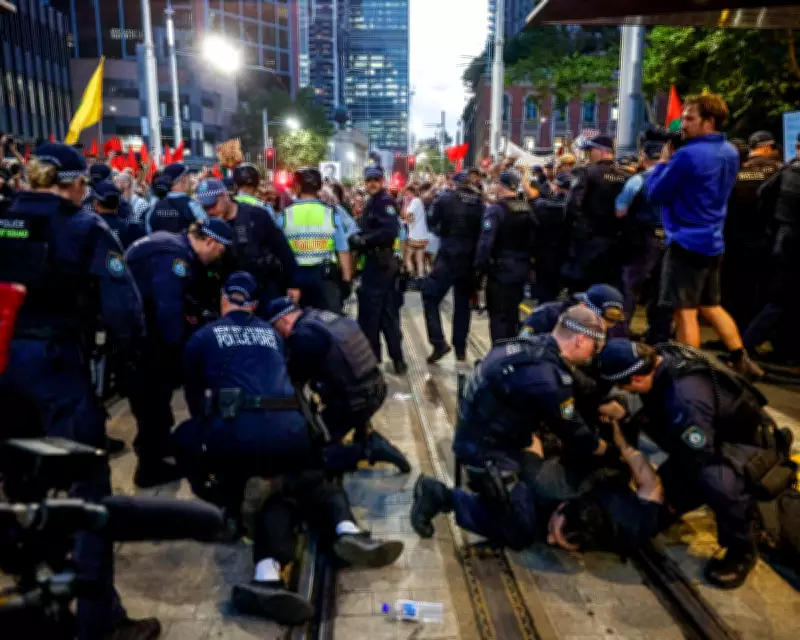
Police in Sydney have detained multiple protesters during a demonstration against the visit of Israel's President, Isaac Herzog, leading to accusations of excessive force and a fierce political debate. The New South Wales Premier, Chris Minns, has staunchly defended the police response, describing officers as being placed in an "impossible situation" during the volatile evening.
Political Backlash and Allegations of Police Violence
Labor backbench and Greens MPs have condemned the police actions as "wildly inappropriate," with state Greens MP Abigail Boyd alleging she was "targeted and attacked" by officers, sustaining injuries to her wrist and chin. "I feel just absolutely shocked," Boyd expressed, revealing her dismay at the police conduct witnessed during the rally.
NSW police confirmed the use of pepper spray against protesters gathered at Sydney's Town Hall, resulting in 27 arrests. Authorities reported that 10 officers were assaulted, though none seriously. The protest, organised by the Palestine Action Group, proceeded despite a NSW Supreme Court case that failed to overturn enhanced police powers enacted for Herzog's visit duration.
Premier's Defence and Protest Restrictions
Premier Minns emphasised that police had "done everything possible to avoid that confrontation," noting that organisers were urged to hold the protest in Hyde Park for safety. He highlighted the simultaneous presence of 7,000 Jewish mourners in Sydney, necessitating police separation of the two groups. The protest restrictions, introduced following the Bondi attack, prevented marchers from proceeding to NSW Parliament, creating what one government member called a "pressure cooker" situation.
Prime Minister Anthony Albanese expressed devastation at the scenes, stating they "undermined" the protesters' cause while affirming the appropriateness of Herzog's visit. He stressed that peaceful expression should follow police-designated routes to ensure safety.
Organiser's Account and Planned Further Action
Josh Lees, an organiser for Palestine Action Group, described the events as the worst he had witnessed in years of pro-Palestine activism. He argued that a peaceful march, as requested by organisers, could have averted the clashes. "Police kettled people into that area outside Town Hall and then charged them repeatedly," Lees claimed, alleging excessive force including pepper-spraying and trampling.
The group plans a follow-up event at NSW Police's Surry Hills station, demanding dropped charges and accountability for officer behaviour. Footage from the protest showed men kneeling in prayer before being dragged away by police, though Minns rejected suggestions of disproportionate focus on the Muslim community, citing the "riotous behaviour" context.
Official Responses and Investigations
NSW Greens MP Sue Higginson announced she would refer the "wildly inappropriate" police actions, including alleged horse charges and unprovoked assaults, to the Law Enforcement Conduct Commission. Conversely, NSW Police Assistant Commissioner Peter McKenna vehemently defended officer restraint, describing the situation as "one of the most precarious, volatile" he had seen, with "palpable" crowd aggression.
Federal Minister Tanya Plibersek labelled social media videos "very concerning" and expected investigations, while affirming protest rights alongside the need to heed police advice. Labor NSW upper house member Stephen Lawrence criticised the protest restriction linkage to the Bondi attack, warning that removing authorised protest capacity created inevitable consequences.
The incident has sparked intense scrutiny of police powers and protest management in New South Wales, with calls for thorough review and accountability from multiple political quarters.