
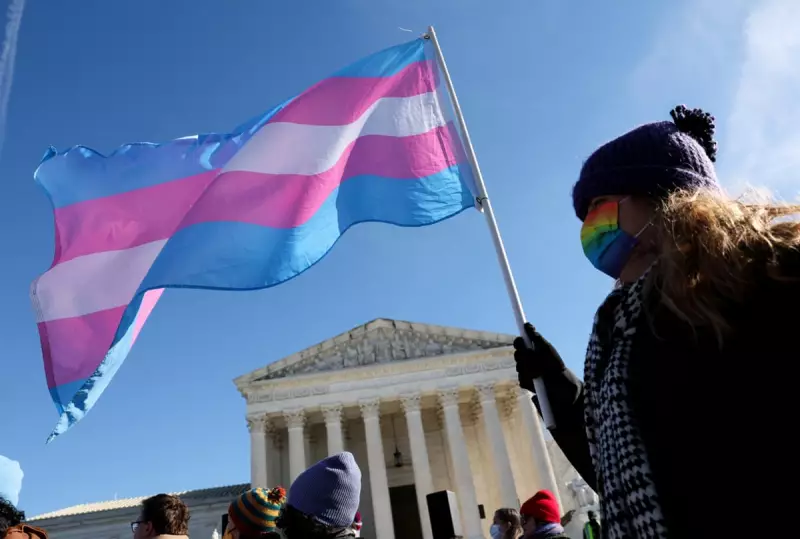
The United States Supreme Court has begun hearing arguments in a pivotal legal battle that could reshape civil rights protections for transgender youth across the nation. The cases, heard on Tuesday 4 December 2024, challenge state laws in West Virginia and Idaho that ban transgender girls from participating in girls' school sports teams.
The Cases at the Heart of the Debate
Oral arguments centred on two specific lawsuits. The first, West Virginia v BPJ, involves 15-year-old Becky Pepper-Jackson, who challenged the state's 2021 law that barred her from joining the girls' track team. A lower federal court had previously blocked the ban, but West Virginia's appeal brought the matter to the nation's highest court.
The second case, Little v Hecox, concerns Lindsay Hecox, a transgender college student who sued to overturn Idaho's 2020 law, which was the first of its kind in the US to categorically ban trans women and girls from women's sports teams. Notably, Hecox has since sought to have her case dismissed, stating she is no longer pursuing sports in college and wishes to avoid further harassment. Despite this, the Supreme Court proceeded with the hearing.
National Context and Conflicting Arguments
These cases arrive amid a nationwide push for such legislation, with 27 US states having now enacted laws restricting transgender youths' access to school sports. The vast majority specifically target transgender girls.
Defenders of the bans, often Republican legislators and groups like the Alliance Defending Freedom, argue they are necessary to ensure fairness and safety in women's sports. Conversely, transgender rights advocates and organisations like the American Civil Liberties Union (ACLU) argue the laws are discriminatory and lack credible evidence that inclusive policies harm cisgender girls.
The scale of the issue is frequently questioned. Proponents have at times been unable to identify any transgender girls actually playing sports in their states, and the president of the National Collegiate Athletic Association (NCAA) testified he knew of fewer than ten transgender athletes competing in college sports.
Potential Legal Ramifications and a Student's Plea
The court's decision hinges on critical legal questions. Lawyers for the students argue the bans violate the Constitution's equal protection clause and, in West Virginia's case, Title IX, the federal law prohibiting sex discrimination in education. The court must decide if these laws warrant "heightened scrutiny," a rigorous legal standard requiring the government to provide a compelling justification.
Legal experts warn that if the court's conservative supermajority rules that the bans do not merit this scrutiny, it could set a dangerous precedent, making anti-trans laws "presumptively constitutional." A ruling that trans people are not covered by Title IX could also empower further restrictions on bathroom access, pronoun use, and names, stripping LGBTQ+ youth of vital protections against bullying and discrimination.
In a statement last week, Becky Pepper-Jackson articulated the human impact, saying she plays sports to "make friends, have fun, and challenge myself." She added, "All I’ve ever wanted was the same opportunities as my peers... This is unfair to me and every transgender kid who just wants the freedom to be themselves." The Supreme Court's ruling, expected next year, will determine if that freedom is legally protected.




