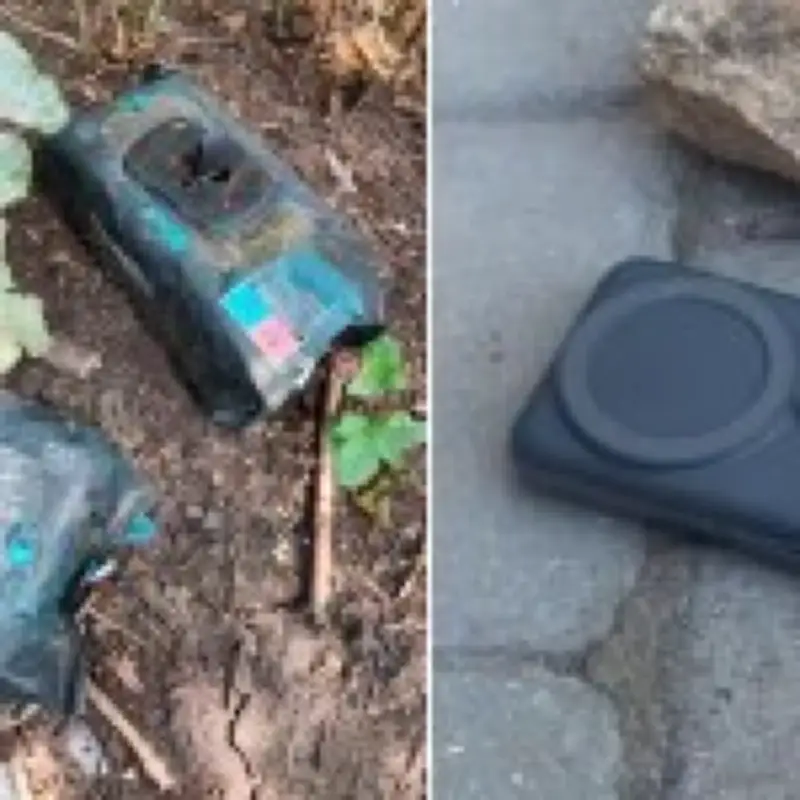
Russia has been dropping booby-trapped tissue boxes and power banks onto the streets of Ukraine in a new 'war against civilians,' according to human rights campaigners. The decoy bombs have been discovered in the battleground city of Kherson in recent days, with charity Hope for Ukraine reporting that even military units have been sold dangerous fake power banks.
New Tactic Targets Civilians
Russian forces have been dropping anti-personnel mines in Kherson for nearly two years, but these are the first reports of explosives disguised as harmless items like wet wipes and power banks. Pictures from the city show the makeshift bombs on sidewalks or in parks. Hope for Ukraine's CEO Yuriy Boyechko said they were likely flown over enemy lines by a drone and dropped there. 'If a curious kid or anyone picks it up, or steps on it, then it explodes immediately. It is a direct crime against civilians,' he told Metro.
Shift from 'Gingerbread' Mines
Boyechko believes the Russians are changing tactics because Kherson locals have learned to avoid the enemy's uncamouflaged explosives, known as 'gingerbread' mines due to their small, flat appearance that children might mistake for plastic toys. These mines have been seen in the city since October 2024, according to the Centre for Information Resilience. 'After months of dropping these, people knew to stay away, so the Russians are now adopting a new strategy with these tissue boxes and power banks,' Boyechko explained.
Warnings from Local Officials
The booby-trapped charging packs have sparked warnings from local officials. Yaroslav Shanko, Head of Kherson City Military Administration, said: 'The calculation is simple and cynical: a person may mistake such an object for a lost charging device, pick it up, or try to use it. The consequences could be fatal.' He urged parents to explain to children that they must not pick up any items found on the street, even if they look safe or useful.
Outrage from Human Rights Campaigners
Putin's new tactic has sparked outrage, with human rights campaigners accusing the dictator of breaching the rules of war. Lord Alton, chair of Parliament's Joint Committee on Human Rights, told Metro: 'The deliberate disguising of explosives, indiscriminately dropped into civilian neighbourhoods in Ukraine, is yet another calculated act despicably targeting non-combatants. Inevitably, curious children will be among those picking up innocent looking tissue boxes. That will lead to fatalities and terrible injuries. One day, this must be added to the charge sheet of war crimes.'
Helen Maguire MP, Chair of Parliament's group on Explosive Weapons and Their Impact, said the camouflaged mines were 'a truly abhorrent development in an already brutal war.' She added: 'International law is clear on this: parties to a conflict must distinguish between civilians and military targets, and weapons that are intended to deceive civilians into handling them are incredibly alarming.' The Liberal Democrat MP called for swift international condemnation and continued support for Ukraine in clearing explosive contamination.
Potential War Crimes
International humanitarian law prohibits directing attacks against civilians, and if the intention was to cause death or injury to civilians, it could potentially amount to a war crime, Amnesty International said. Brian Dooley, a senior advisor at Human Rights First who has spent time on Ukraine's front line, said the disguised bombs 'bear all the hallmarks of Russia's attacks on civilians in Ukraine'.
Booby-Trapped Power Banks Sold to Soldiers
Hope for Ukraine also reported that booby-trapped power banks were being sold to soldiers fighting Russians. Boyechko explained that many military units raise money for supplies themselves and often buy items like power banks. 'There have been reports that sellers have been selling power banks filled with explosives. It looks like some of these sellers buy supplies which are already compromised. Or these sellers collaborate with the Russians to inflict pain and damage.' A handful of sellers have been identified as selling compromised units, the charity's CEO added.
New Drone Tactics on Roads
The charity also raised awareness of a 'brand new tactic' employed by Russia to target cars, buses, and bikes on roads in Kherson. Drones are currently obstructed from targeting vehicles due to anti-drone fishing nets stretched over the streets. However, Boyechko said the Russians are bypassing the nets by flying drones onto the side of the road, where they hover low over the grass and wait for targets to pass by. 'They land the drone next to a tree, road and it is so low to the grass it is almost not visible. As the driver drives on the road, they activate the drone and hit the car from under the nets.'
International Condemnation
Ross Burley, co-founder of the Centre for Information Resilience that documents war crimes, said: 'Russia is turning streets, hospitals and everyday objects into potential death traps. This is not simply a military tactic; it is a campaign of terror designed to make Ukrainian civilians fear every step. Sadly, it's also unsurprising, and what we've come to expect from a pretty abhorrent regime.' The Russian Embassy in London has been contacted for comment.