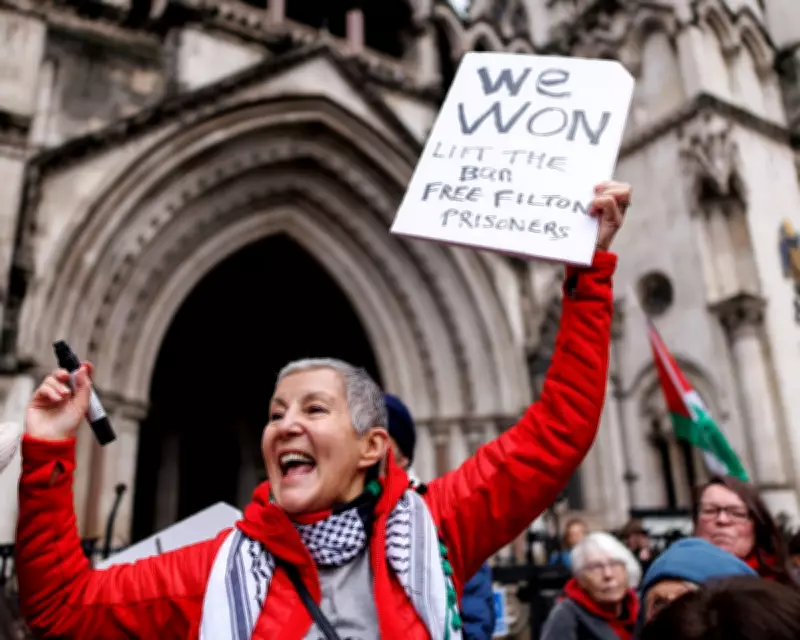
Court Overturns Arrests of Retirees Under Palestine Action Proscription
A significant court ruling has vindicated a group of retirees who were arrested under the controversial proscription of Palestine Action, declaring the measure unlawful and raising critical questions about protest rights in the United Kingdom. The decision, handed down by the High Court, marks a pivotal moment in the ongoing legal and political debates surrounding the government's approach to activism and civil liberties.
Background of the Case
The retirees, whose identities have been protected for privacy reasons, were detained earlier this year following the government's decision to proscribe Palestine Action as a banned organization. This proscription, implemented under national security legislation, aimed to curb activities deemed disruptive or linked to protests against Israeli policies. However, the court found that the arrests lacked proper legal justification, as the proscription itself was applied in a manner that infringed on fundamental rights to peaceful assembly and expression.
Legal experts have highlighted that the ruling underscores the importance of proportionality in government actions, especially when balancing security concerns with democratic freedoms. The retirees, described as peaceful activists in their late 60s and 70s, argued that their arrests were politically motivated and violated their rights under the Human Rights Act. The court agreed, stating that the proscription was overly broad and failed to distinguish between lawful protest and unlawful activities.
Implications for Protest Rights
This ruling is expected to have far-reaching implications for protest rights across the UK. It challenges the government's use of proscription powers, which have been increasingly deployed in recent years to target various activist groups. Civil liberties organizations have welcomed the decision, viewing it as a safeguard against potential abuses of state power. They argue that it reinforces the principle that peaceful dissent should be protected, even when it involves contentious political issues like the Israeli-Palestinian conflict.
Moreover, the case has sparked a broader public debate about the limits of government authority in regulating protests. Critics of the proscription argue that it risks stifling legitimate political discourse, while supporters claim it is necessary to maintain public order and national security. The court's intervention suggests a need for more nuanced approaches that respect both security imperatives and constitutional rights.
Reactions and Next Steps
In response to the ruling, the government has indicated that it will review its proscription policies but has not yet committed to any specific changes. A spokesperson for the Home Office stated that they are considering the judgment carefully and will take appropriate steps to ensure compliance with the law. Meanwhile, the retirees and their legal team have expressed relief and satisfaction with the outcome, hoping it will prevent similar cases in the future.
The ruling also highlights the role of the judiciary in checking executive power, particularly in areas involving civil liberties. As similar cases may arise, this decision could set a precedent for how courts handle challenges to proscription measures, potentially leading to more rigorous scrutiny of government actions. For now, the vindicated retirees plan to continue their activism, emboldened by the court's support for their right to protest peacefully.