
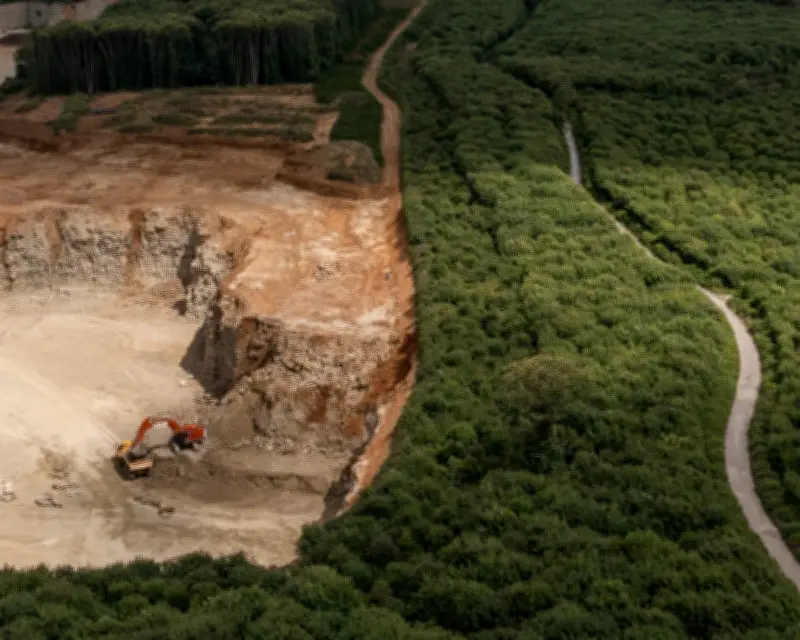
Kent county council, led by Reform UK, has voted to include 40 hectares of Oaken Wood in its mineral sites plan, designating the ancient woodland as a potential expansion site for the adjacent Hermitage quarry. The decision, made this month, does not grant planning permission but identifies the Kentish ragstone beneath the forest as essential for building and restoration projects, including the Tower of London and Canterbury Cathedral. Campaigners have mobilized to oppose the plan, arguing that it prioritizes built heritage over nature conservation.
Ancient Woodland Under Threat
Oaken Wood, continuously wooded since at least 1600, is a plantation on an ancient woodland site (PAWS). It has been managed as a sweet chestnut coppice for centuries, with sections felled in rotation to allow regrowth. The wood supports wildlife such as dormice, nightjars, and owls, and contains veteran oaks and a rich mycorrhizal soil network that acts as a carbon sink, according to Kent Wildlife Trust.
Allison Sweetman, a Green party councillor who knows the wood intimately, led a walk through the forest with fellow Green councillor Rachel Rodwell, campaigner Julie Read, and Brontie Ansell, managing director of Lawyers for Nature. Sweetman highlighted the coppicing cycle: “It takes about seven years before they’re ready to be coppiced again. And in the time they grow they’re actually absorbing more carbon from the atmosphere than a fully grown tree.”
Irreplaceable Ecosystem vs. Quarry Expansion
Kentish ragstone has been quarried since Roman times and is deemed crucial by the council for conserving ancient buildings. However, opponents argue that destroying a living ecosystem for stone is misguided. Ansell stated: “It is still irreplaceable. You couldn’t just create this somewhere else.” The Gallagher Group, which runs Hermitage quarry, plans to translocate topsoil and remove non-native chestnut trees, replacing them with more than double the tree planting in restored native woodland. Campaigners are skeptical; Ansell described the process as “chuck the topsoil down somewhere and go: ‘There you go, it’s been replaced.’” Rodwell added: “It’s just treated like garden topsoil. And they forget the interconnectivity. It’s not [just] the soil, it’s a living system.”
Public Opposition and Next Steps
More than 25,000 people voiced concerns during a consultation last year. The Woodland Trust and Kent Wildlife Trust oppose the plan. Maidstone borough council, where Sweetman and Rodwell sit, passed a rights of nature motion in April. The council’s decision requires government approval before planning permission can proceed. Walking near the quarry, the group encountered heavy machinery, exhaust fumes, and rock dust. Rodwell remarked: “We’re treating nature as a commodity or a resource and we’re forgetting we’re part of the same system. And it’s this sense of entitlement that we can just strip it away and plunder it.”




