New York Anti-War Protesters Rally Against US Military Funding for Israel
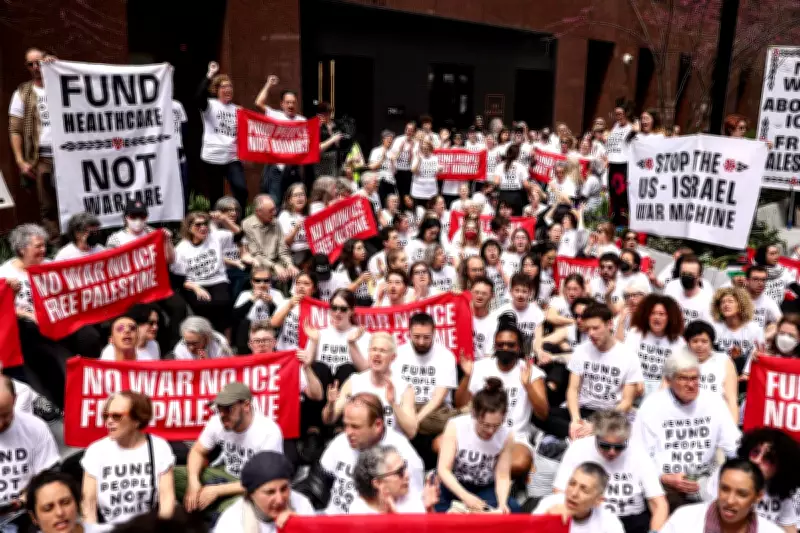
On Monday afternoon, a significant protest unfolded outside the Manhattan offices of New York senators Kirsten Gillibrand and Chuck Schumer, with demonstrators vocally opposing continued US military funding for Israel. The action, part of a broader national movement, saw hundreds of participants, including high-profile figures like Chelsea Manning, actor Hannah Einbinder, and artist Molly Crabapple, gathering to demand a shift in foreign policy priorities.
'Fund People, Not Bombs': The Core Message
Protesters shed their casual-business attire to reveal matching shirts emblazoned with the slogan 'FUND PEOPLE, NOT BOMBS', symbolizing their call to redirect federal spending from warfare to domestic needs such as healthcare, childcare, and public benefits. The demonstration was coordinated by groups including Jewish Voice for Peace and About Face: Veterans Against the War, aiming to pressure senators to support joint resolutions of disapproval introduced by Senator Bernie Sanders in March. These resolutions seek to block hundreds of millions of dollars in bombs and bulldozers from being sent to Israel.
Arrests and Civil Disobedience
The protest escalated as nearly a hundred participants, including Manning, actor Hari Nef, and New York congressional candidate Darializa Avila Chevalier, were arrested after shutting down traffic on Third Avenue. Chevalier, who has organized around immigration and Palestine issues, emphasized the frustration many New Yorkers feel, stating, 'New Yorkers are sick and tired of hearing that there's not enough money for their childcare, their healthcare, and yet every day we wake up and watch billions of dollars being spent on slaughter.' This act of civil disobedience highlights the growing intensity of anti-war sentiment in the US.
Broader Context and Political Implications
The protest coincides with a congressional vote on war powers resolutions, affecting not only conflicts in the Middle East but also potential actions against Venezuela, Cuba, or Greenland. Polling indicates the war is measurably unpopular, with roughly 50% opposition since its inception, and many voters lack confidence in the president's approach to Iran. Bridget Moix, general secretary of the Friends Committee on National Legislation, noted that congressional phones were 'ringing off the hook' when the US went to war with Iran, reflecting widespread public concern.
Organizers acknowledge that the vote on joint resolutions is unlikely to succeed but hope to pressure Democratic holdouts by linking Israel's arms sales to the war's unpopularity. Hamid Bendaas, communications director for the IMEU Policy Project, warned that Democratic leadership risks future electoral losses if they fail to stand against American war-making, including alongside Israel. He compared current anti-war sentiment to the Iraq war era, where many in Congress later regretted their support.
Tax Day Protests and Growing Resistance
The protest is part of a larger movement, with actions scheduled for Tax Day in the US, where there is increasing interest in withholding income taxes to protest government spending on war or immigration enforcement. Hari Nef, participating in her first risk-of-arrest action, expressed the urgency of the moment, saying, 'I think you have to do a lot of mental gymnastics these days not to feel absolutely insane about what's happening geopolitically. Putting your body on the line is the most powerful articulation of your beliefs, and that's what I'm willing to do today.' This reflects a deepening commitment among activists to use civil disobedience as a tool for change.
As protests continue across the United States and globally, including in Israel, the movement underscores a critical juncture in US foreign policy, with implications for upcoming elections and the Democratic Party's credibility. The call to reallocate funds from military endeavors to domestic needs resonates amid ongoing debates over federal priorities and social justice.