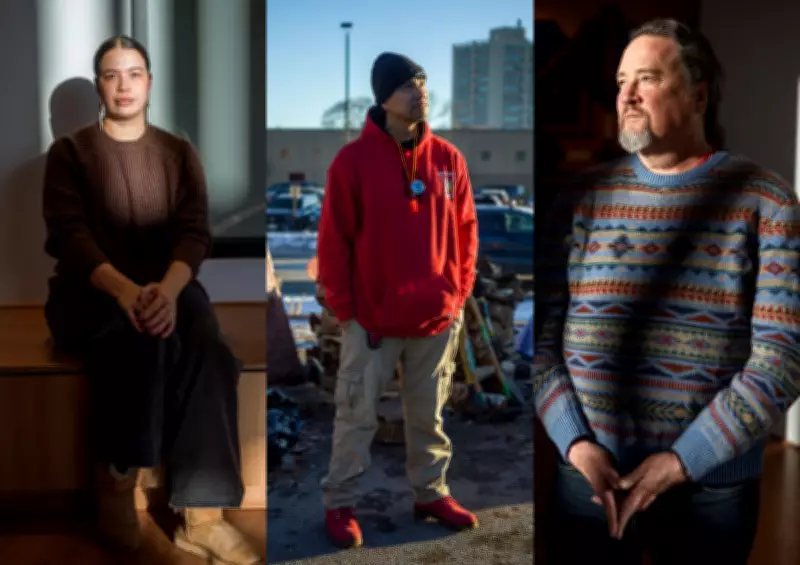
Minneapolis Native Patrols Revive Historic Watch Amid ICE Crackdown
In the heart of Minneapolis, Minnesota, a group of dedicated watchers gathers outside the Pow Wow Grounds coffee shop, nestled within the city's vibrant Native American cultural corridor. Huddled around a small firepit, they clutch steaming cups of coffee, their eyes scanning the intersection for any sign of ICE agents. This scene is not just a response to recent events but a poignant revival of a practice born over half a century ago.
Volunteers equipped with heated handwarmers and orange whistles are dispatched throughout the neighborhood, while others monitor local chat groups for reports of ICE activity. Cars patrol in pairs, ensuring that no corner goes unwatched. This mobilization comes as federal forces, part of Donald Trump's aggressive immigration crackdown, have flooded the Twin Cities this winter, targeting not only undocumented immigrants but also legal residents and tribal citizens.
A Legacy of Resistance
More than 50 years ago, the American Indian Movement (AIM) was established in this very corner of south Minneapolis, directly across from the coffee shop. In 1968, in response to escalating police brutality against Native people, AIM initiated citizen patrols. Now, under the leadership of Vin Dionne of the Many Shields Society, this tradition has been reprised. Dionne explains, "Our kids are afraid, our elders are afraid. That's really what sparked the fire to get us out here."
The Minneapolis and St. Paul metro areas are home to one of the largest urban American Indian populations in the United States. This winter, masked and armed federal agents in SUVs repeatedly circled neighborhoods, stopping individuals and hovering outside Little Earth, a Native American community housing project. Robert Lilligren, CEO of the Native American Community Development Institute (NCDI), notes, "This is a general attack on brown people, a 'scoop them all up.'"
Community Impact and Response
The operations have left deep scars. At least four members of the Oglala Sioux Tribe have been detained, according to tribal president Frank Star Comes Out, though the Department of Homeland Security disputes these allegations. In an unprecedented move, tribal leaders from at least 10 tribes traveled to Minneapolis to process applications for tribal IDs at the Minneapolis American Indian Center. Star Comes Out states, "We felt an urgency to protect our people," highlighting that many Native Minnesotans lack passports or Real IDs, making tribal identification crucial.
Local residents, like Mary, a 70-year-old citizen of the Lac Courte Oreilles Band of Lake Superior Ojibwe, describe the terror instilled by ICE presence. She shares, "I have hardly slept in weeks," opting for Ubers over buses to avoid agents at stops. After agents stationed outside her apartment, she fled to a reservation in Wisconsin, seeking safety in tribal statements that reject cooperation with ICE.
Historical Echoes and Trauma
For many Native elders, the sight of armed federal agents triggers dark memories of generational trauma. Jolene Jones, an organizer with NCDI, explains, "We're having so much anxiety because it's in our bones. We were still being chased, we're still being snatched from our homes." This trauma is compounded by the location of an ICE processing facility at Fort Snelling, where over 1,600 Dakota and Ho-Chunk people were imprisoned in the mid-1800s. Jones reflects, "History repeats itself."
At Pow Wow Grounds, the community has transformed the space into a mutual aid hub. The All My Relations art gallery now houses tables piled with supplies for patrollers, replacing art installations. Signs on the door bar ICE agents and instruct visitors to knock for entry. Volunteers organize donations of diapers and pet food, while hot soup and fry bread are offered to locals.
Looking Forward
Despite hopes for a drawdown after the Trump administration's announcement to pull back federal agents, concerns linger about the lasting impact. Dionne recounts patrolling his neighborhood, watching for anyone agents might target. When ICE arrived, he rushed home to find his children recording the scene from their window. "We talked about how sad, in 2026, even our Native American population – the first group of people on this continent – feel unsafe in their own neighborhoods," he says.
The community remains vigilant. Dionne's wife, Rachel Dionne-Thunder, was stopped by agents while driving, prompting a swift response from volunteers. As Dionne prepares to head back on patrol, he emphasizes the unity among Native and immigrant neighbors: "We all are relatives. And that's also why we stick up for our community members." With gas masks and goggles at the ready, the patrols continue, embodying a resilient spirit that echoes through decades of struggle and solidarity.