
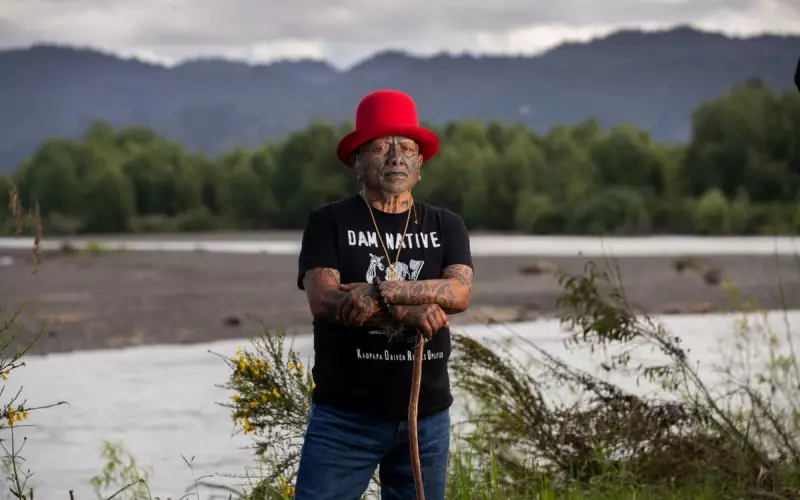
In a remarkable turn of events that charts the shifting tides of a nation's conscience, John Tamihere, once branded a terrorist by the state, is now preparing to share his life story in his own words. His memoir, ‘Terrorist to National Treasure’, is set for release in February 2026, promising an unflinching account of his journey from political prisoner to a pivotal figure in New Zealand's social landscape.
A Life Forged in Protest and Prison
The book delves into the pivotal events of the 1970s and 80s that defined Tamihere's early life. As a young activist fighting for Māori land rights and social justice, he found himself at the sharp end of state power. His involvement with the He Taua group, which confronted university students performing a racist caricature of a haka in 1979, was a flashpoint.
This activism led to his arrest in 1982 under the New Zealand Security Intelligence Service (SIS) Act. He was accused of planning violent acts, charges he has always vehemently denied. Tamihere spent 18 months in prison, much of it in solitary confinement, an experience he describes as a deliberate attempt to break him. “They wanted to destroy me,” Tamihere states, reflecting on a period where he was isolated from his whānau (family) and community.
Redemption and Building a Legacy
Emerging from prison, Tamihere's path was one of relentless community building. He transitioned from activist to a formidable social service leader. He served as the chief executive of the Waipareira Trust, a West Auckland Māori health and social service provider, for nearly two decades, transforming it into a model of indigenous-led care.
His political career saw him elected as a Labour Party MP for the Hauraki-Waikato electorate, serving from 1999 to 2005. However, his most enduring legacy is arguably his co-leadership in designing and implementing Whānau Ora, a groundbreaking holistic health and social service policy that empowers Māori families to determine their own wellbeing.
The Power of Telling One's Own Story
For decades, Tamihere's narrative was shaped by police files, court documents, and media headlines. This memoir represents a seismic reclaiming of his own history. “This is my story, on my terms,” he asserts. The process of writing, he admits, has been emotionally taxing, forcing him to relive traumatic chapters, including the profound impact his imprisonment had on his late mother.
The forthcoming publication signals more than just a personal account; it is a reflection of New Zealand's own journey in confronting its colonial past and the treatment of its indigenous rights advocates. Where the state once saw a threat, many now see a visionary leader whose work has tangibly improved lives.
As the book's February 2026 release approaches, it stands as a testament to resilience and the complex road from vilification to validation. John Tamihere's story is no longer one of a so-called terrorist, but of a man who endured state persecution to become a foundational architect of modern Māori social innovation.




