
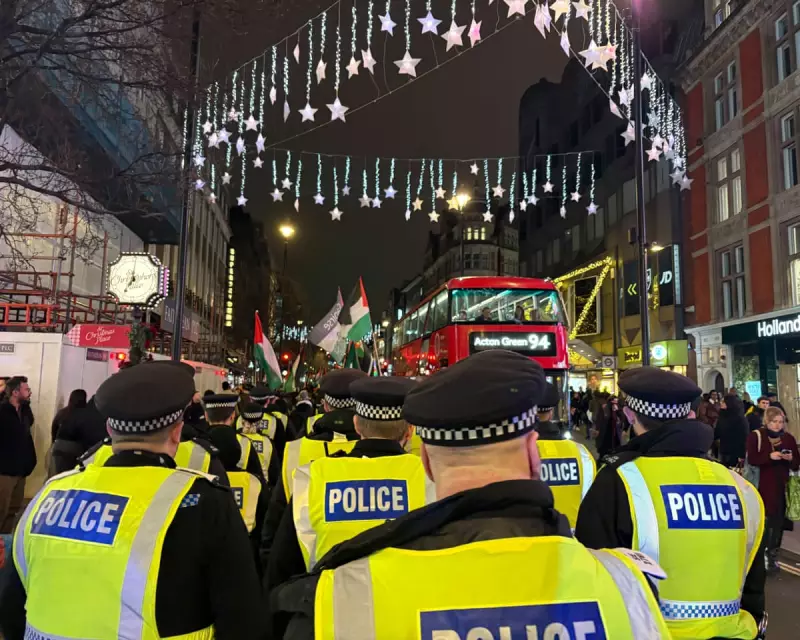
Legal experts have accused the Metropolitan Police of employing powers it no longer legally possesses to impose restrictions on pro-Palestine demonstrations across London. The allegations centre on the force's continued use of the 'cumulative disruption' concept, despite a court ruling that quashed the regulations underpinning it.
Quashed Powers Still in Use?
According to evidence gathered by the Guardian and Liberty Investigates, senior Met officers have cited the cumulative impact of protests to justify imposing conditions on at least two separate pro-Palestine events. This is despite the fact that regulations allowing for such considerations were struck down by the Court of Appeal on 2 May 2025 following a legal challenge by the human rights group Liberty.
Raj Chada, a partner at Hodge, Jones & Allen and a leading human rights lawyer, was unequivocal. "There is no reference to cumulative disruption in the original legislation," he stated. "The regulations that introduced this concept were quashed in May 2025, so I fail to see how this can still be the approach taken by police. There is no legal basis for this whatsoever."
Specific Incidents of Alleged Overreach
The reported incidents provide concrete examples of the contested policy in action. Documents obtained under freedom of information laws reveal that on 7 May 2025—just five days after the court's ruling—the Met banned a weekly protest by the Jewish pro-Palestine group, the International Jewish Anti-Zionist Network (IJAN), in Swiss Cottage. The stated reason was the cumulative impact on the local Jewish community. Lawyers say this ban has been renewed weekly ever since.
In another case in November, the Met forced the Palestine Coalition to alter its march route at short notice, citing the cumulative disruption to businesses over the Black Friday weekend. Organisers noted this was despite the proposed route not being used for over a year.
Ben Jamal, director of the Palestine Solidarity Campaign, recounted a conversation with Deputy Assistant Commissioner Alison Heydari, who told him a decision to shift a march's starting point "will be purely around the cumulative effect of your protests." Jamal argued these repeated impositions cause "immense disruption" and act as a "demobiliser," creating public confusion.
Contrasting Views and Democratic Concerns
The Met and the Home Office maintain a different interpretation. A Met spokesperson argued that the judicial review outcome "does not prevent senior officers from considering the cumulative impact of protest on the life of communities." The Home Office stated that the discretion is implied within the Public Order Act 1986 and that upcoming legislation will make it an "explicit requirement."
However, critics see a worrying pattern. Kevin Blowe, campaigns coordinator for the Network for Police Monitoring (Netpol), said the revelations point to "zero police accountability and transparency."
Nick Glynn, a retired senior police officer with over 30 years' service, offered a stark warning: "The police have too many protest powers already and they definitely don’t need any more... The right to protest is sacrosanct and more stifling of protest makes democracy worth less."
The Home Secretary has announced plans to reintroduce the power to consider cumulative impact in a toughened form via the Crime and Policing Bill, which is currently progressing through Parliament. This development ensures the debate over the balance between public order and the right to protest will remain fiercely contested.




