
The streets of Minneapolis have become a flashpoint for national tension after the US Department of Homeland Security initiated what it calls the largest operation in its history, flooding the city with federal agents. The move comes amid escalating protests following the fatal shooting of a local mother, Renee Nicole Good, by an Immigration and Customs Enforcement (ICE) officer last week.
Massive Federal Presence and Street Confrontations
Federal authorities have surged a significant force into the Minneapolis area. A DHS official confirmed to CBS News that there are currently 800 Customs and Border Protection agents and 2,000 ICE officials deployed locally. This substantial deployment has dramatically altered the atmosphere in the city's neighbourhoods.
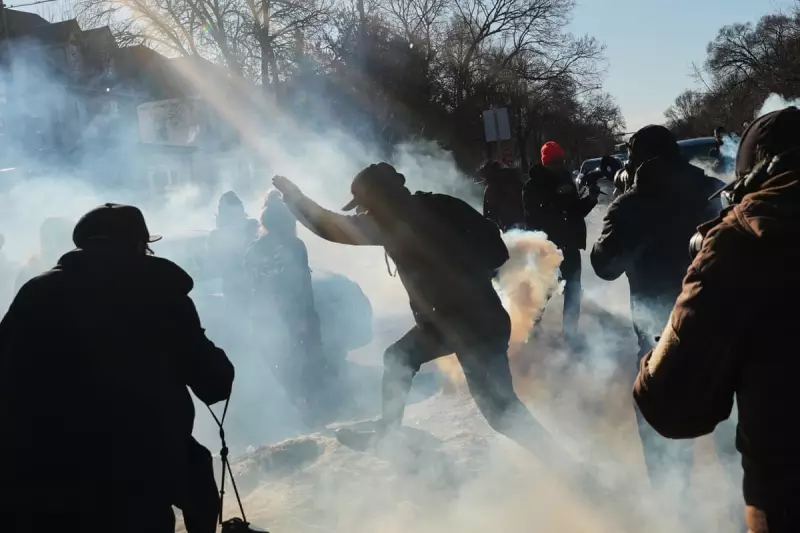
On Tuesday, federal officers used teargas and an orange eye irritant against activists. The chemical clouds filled a street near the scene where Renee Good was killed. In a disturbing scene, one man was seen scrubbing his eyes with snow and screaming for help after agents in an unmarked Jeep sprayed the irritant and drove away.
Community response has been vocal and organised. It is now common for residents to boo, taunt, and blow orange whistles when they spot heavily armed agents in unmarked vehicles—a grassroots effort to warn the neighbourhood and signal that citizens are watching. "Who doesn't have a whistle?" a man distributing them yelled to the crowd.
Legal Challenges and Political Backlash Intensify
The federal operation is facing mounting legal and political resistance. The state of Minnesota, joined by the cities of Minneapolis and St. Paul, filed a lawsuit on Monday seeking to halt or limit the agent surge. They argue the DHS is violating First Amendment and other constitutional protections by targeting a progressive, Democrat-leaning state that welcomes immigrants.
"This is, in essence, a federal invasion of the Twin Cities in Minnesota, and it must stop," stated Keith Ellison, the Minnesota Attorney General. Minneapolis Mayor Jacob Frey echoed the sentiment, noting the "tremendous impact on day-to-day life" caused by thousands of federal agents.
Separately, a judge heard arguments on a request to restrict the use of force, such as chemical irritants, against people who are merely observing and recording agents. A ruling is expected by Thursday or Friday.
A Community in Mourning and a Nation Reacting
The catalyst for the current crisis was the killing of 37-year-old Renee Nicole Good, a mother of three. Dozens of vigils and protests have been held across the US in her honour. The Trump administration has defended the ICE officer involved, claiming he acted in self-defence, but local leaders including Governor Tim Walz have widely criticised this explanation based on available video evidence.
The controversy is resonating beyond Minnesota. In Washington, two Democratic lawmakers from Massachusetts announced a bill to make it easier to sue federal officers accused of civil rights violations. In Wisconsin, the Lieutenant Governor proposed banning civil immigration enforcement near schools, hospitals, and churches.
Despite the backlash, Homeland Security remains defiant. Spokesperson Tricia McLaughlin, responding to the lawsuit, accused Minnesota officials of ignoring public safety and emphasised the administration's stance. "President Trump's job is to protect the American people and enforce the law—no matter who your mayor, governor, or state attorney general is," she stated. The DHS claims to have made over 2,000 arrests in the state since early December and vows not to back down.




