Mass Non-Cooperation: The Key to Defeating Trump's Authoritarian Drive
In the wake of horrifying killings of legal observers in Minnesota and widespread abductions of immigrant community members, the United States has reached a critical turning point. Backlash against the lawlessness and aggression of Immigration and Customs Enforcement (ICE) has reverberated so loudly that even former President Donald Trump has taken notice. However, the impact on ordinary Americans, contemplating what they would do if they lived in cities like Minneapolis or St. Paul, is perhaps even more profound.
Grassroots Solidarity and Creative Resistance
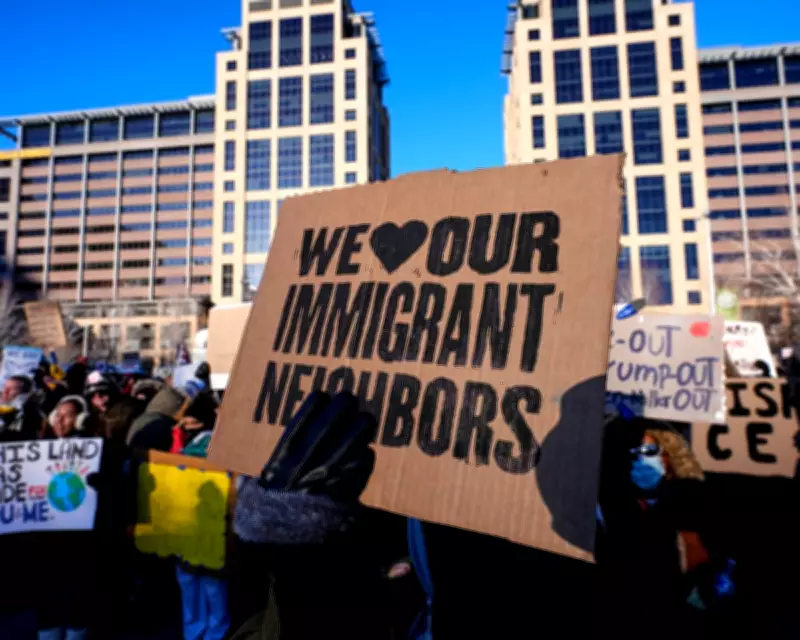
The extraordinary level of grassroots solidarity and creative resistance in anti-ICE protests across Minnesota has provided people with a new appreciation for the power that mass non-cooperation can wield in resisting the Trump administration's drive toward authoritarianism. This movement has fostered a widespread awareness of why such action is urgently needed to protect democratic values.
Early in Trump's second term, many mainstream critics expressed skepticism about the value of continued street protests, placing their faith in institutions such as Congress and the courts. Yet, as these institutions—along with law firms, universities, and the business community—have each caved to the administration's demands and proven unwilling to catalyze a robust defense of democracy, the responsibility has fallen to the people themselves to undertake this essential work.
Expanding Public Awareness Through Community Action
The Twin Cities were not the first to stand up against authoritarian pressures. Robust resistance has been observed in metropolitan areas like Chicago, Los Angeles, Charlotte, and Washington DC, previously targeted by ICE or occupied by federal troops. Over the past year, significant events such as the No Kings marches and coordinated consumer actions like the Tesla Takedown have demonstrated public dissent. However, Minnesota has elevated the stakes and expanded public awareness of what a community-wide refusal to submit can achieve.
As more individuals consider joining acts of refusal, it is vital to recognize that they can build upon a rich history of past actions. While popular revolt is often perceived as spontaneous and emotional, there exists a comprehensive body of study exploring how mass protest can be deployed in a deliberate and strategic manner. This field offers rich insights that new participants can draw from today.
Lessons from Civil Resistance Studies
A decade ago, authors Mark Engler and Paul Engler wrote This Is An Uprising, examining the evolution of nonviolent direct action theory and practice over the past century. In preparing a new and expanded 10th anniversary edition, they reflected on how the field of civil resistance has transformed since the Barack Obama era. This involved analyzing how the craft of mass mobilization has become increasingly crucial in the face of growing tyranny, both in the US and globally.
Today, democratic uprisings must be bold enough to confront the scale of the current crisis and strategic enough to outmaneuver the systems that created it. Therefore, examining lessons from civil resistance is essential for effective opposition.
Rejecting the False Binary of Resistance Tactics
There has long been a debate about whether civil resistance tactics are more relevant in democratic or authoritarian contexts, with critics casting doubt in both directions. Initially, it was believed that disruptive protest campaigns could only succeed under governments that nominally tolerated freedom of expression and assembly, such as British rule in Gandhi's India or the Kennedy and Johnson administrations during the US civil rights movement. Without basic guarantees, many feared demonstrations would be crushed.
In subsequent decades, this assumption reversed as unarmed uprisings showed surprising success under autocracies, leading cynics to argue that strategies used to unseat dictators had little relevance in democracies where people could vote. The Englers reject this false binary, asserting that civil resistance is vital in both contexts, though strategies must adapt to local conditions.
The Need for Organized Popular Defiance
In a country like the US, even under administrations that call themselves progressive, such as Obama's, movement pressure plays a critical role. When leaders fail to deliver on promises due to political cowardice or entrenched corporate power, popular mobilization often becomes the only force capable of compelling action. Under a regime like Trump's, especially in his second term, the need for organized popular defiance is even more profound as the foundations of American democracy appear to fracture.
Trump has launched attacks on public services, the social safety net, free speech, the rule of law, workers' rights, immigrants, and other vulnerable communities. To stop this and replace oligarchic rule with true democracy, people must rediscover their own power.
Overcoming Defeatism in Political Thinking
Mainstream political thinking in the US often views power as monolithic, resting with senators, generals, billionaires, presidents, and CEOs. From this perspective, options for opposing a rogue administration seem limited to waiting for elections, filing lawsuits, or hoping for elite maneuvers. This worldview breeds despair, with some consultants even advising progressives to roll over and play dead.
The lack of imagination is staggering. In a March 2025 op-ed for the New York Times, Erwin Chemerinsky suggested that if Trump defies court orders, there might be little recourse, potentially leading to the end of government under the rule of law. Political theorist Corey Robin criticized this defeatism, noting that people globally with fewer rights have found forceful ways to confront authoritarianism through mass strikes, boycotts, and other forms of noncompliance.
The Antidote: Civil Resistance Strategies
The field of civil resistance provides an antidote to this fatal shortage of vision, detailing a vast repertoire of steps beyond lobbying and litigation. Key lessons include that public sentiment rarely moves on its own but responds to collective action, and democracies under assault cannot rely solely on checks and balances but require activated citizens. Simply declaring a constitutional crisis and pleading powerlessness leads to pre-emptive ruin.
Grassroots Agitation Nourishes Democracy
Those immersed in social movements view change differently than political insiders, holding a social view of power that recognizes authorities' dependence on the cooperation of the governed. Scholar Frances Fox Piven argues that movements succeed by impeding business as usual, and agitation from outside established structures nourishes democracy.
Creative organizers in Minnesota have shown that campaigns from below can be varied, extending beyond large marches. Gene Sharp's list of 198 methods of nonviolent action has been expanded by activists like Michael Beer to include 346 tactics, highlighting the many tools available for social movements.
Hope Through Mutual Reinforcement
A main error by mainstream detractors is assuming protest tactics are exclusive with other methods for progress. Instead, grassroots action should be seen as an opportunity to alter political conditions and draw in new recruits. Intensive organizing in Minnesota has inspired participation beyond state borders, with hundreds attending trainings on monitoring and resisting ICE, and shifts in public opinion are evident at the polls where Trump-aligned candidates are losing ground.
For instance, a far-right Republican was recently defeated by a Democratic union leader in a Texas state senate district that Trump won by 17 points in 2024. In dark times, these mutually reinforcing gains are encouraging signs, and many more will be needed to sustain democratic resilience.