Madagascar's Youth Activists Face Arrests Under New Military Government
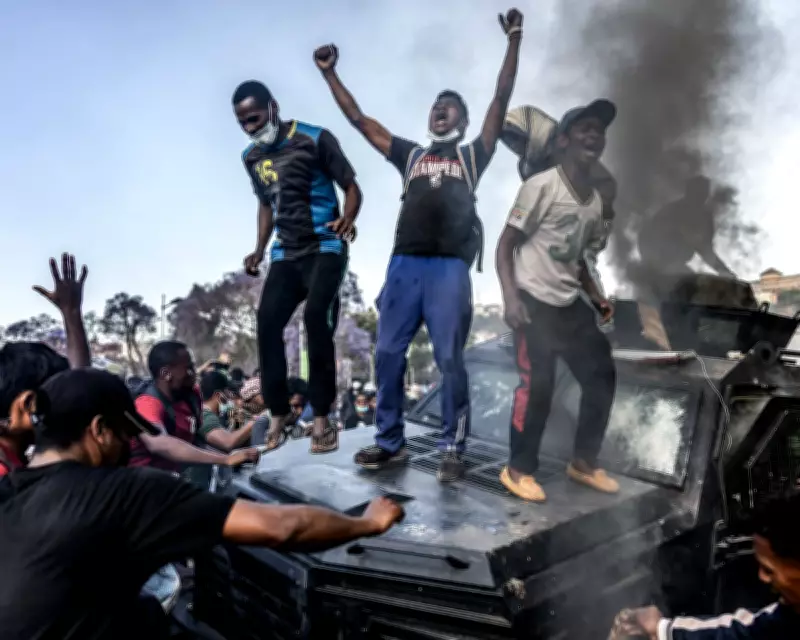
Jubilation has turned to disenchantment for Madagascar's Gen Z protesters as recent arrests fuel growing fears that the military regime that took power last October may be no better than the government it overthrew. The detention of several young activists has sparked concerns about the return of old, corrupt elites under a different guise.
Arrests of Key Activists
Four prominent Gen Z activists—Herizo Andriamanantena, Miora Rakotomalala, Dina Randrianarisoa, and Nomena Ratsihorimanana—were arrested on April 12, just two days after participating in protests demanding an election date be set. Their lawyer, Aliarivelo Maromanana, confirmed the detentions and stated the activists face charges related to undermining state security and criminal conspiracy.
"They've all denied it and there's no evidence whatsoever," Maromanana emphasized, questioning the legitimacy of the charges. By Friday, only Herizo, the group's leader, remained in detention, with two activists released and hospitalized earlier in the week.
Local media reported national police claims that the activists were not harmed during detention, attributing the hospitalizations to illness. However, two additional activists were arrested Wednesday night, according to Gen Z 261, one of the groups that emerged from the previously leaderless Gen Z Madagascar movement.
Military Regime's Response
Col Michael Randrianirina came to power in October 2025 following weeks of youth-led protests under the Gen Z Madagascar banner. When questioned about the arrests, presidential spokesperson Harry Laurent Rahajason invoked the separation of powers, stating "the presidency has nothing to do with cases dealt with by the national police."
The regime's response to constitutional reform inquiries has been equally evasive. Rahajason referred journalists to a previous press conference where he discussed corruption investigations totaling 3,811 billion ariary (approximately £679 million) and linked these investigations to threats against the president.
Growing Disillusionment Among Youth
Young protesters who celebrated the ousting of former president Andry Rajoelina last October now express profound disappointment with Randrianirina's government. Their concerns center on three main issues: the appointment of officials perceived as part of the old corrupt elite, the lack of substantive economic reforms, and the regime's growing closeness to Russia.
"For the moment, there's no real reforms that have been implemented by the government," said Elliot Randriamandrato, a leader of Gen Z Madagasikara. "That's maybe why everyone is so frustrated, because we don't see anything clear and visible."
Randriamandrato emphasized that constitutional reform matters more than election dates to his group, particularly regarding electoral systems that currently favor wealthy candidates. "It's a system that only permits people with more money to win," he noted.
International Concerns and Russian Influence
The arrests have raised significant human rights concerns. Ketakandriana Rafitoson, a Transparency International Madagascar board member, stated: "It is a pattern we saw under the previous administration and one that many hoped would be broken with the transition. So Friday's protests were a test for this regime and they failed it."
Meanwhile, the military regime has strengthened ties with Russia, receiving donations of military trucks, helicopters, and tanks following Randrianirina's visit to Moscow in February. Rahajason confirmed Russians serve in the presidential guard, though he questioned why this drew scrutiny when similar arrangements exist elsewhere.
Shelly Andriamihaja of Gen Z Madagasikara expressed concern about "the risk of new state capture from foreign countries," while clarifying she wasn't defending former colonial ruler France.
Broader Context of Madagascar's Challenges
Madagascar, an Indian Ocean island nation of 32 million people, faces multiple challenges beyond political instability:
- Rich in biodiversity and natural resources including vanilla, rubies, and sapphires
- Ranked as the fifth poorest country globally in 2024 with GDP per capita of $545
- History of coups and corruption since independence from France
- Increasingly severe cyclones and droughts exacerbated by climate change
- Persistent infrastructure problems including water and electricity outages
The current protests trace back to September, when two Antananarivo councillors were arrested for protesting utility outages—services that have seen little improvement since the regime change.
As Madagascar's young activists face increasing pressure, their struggle highlights the complex challenges of political transition in a nation grappling with poverty, corruption, and external influences while its citizens demand genuine reform and democratic processes.