
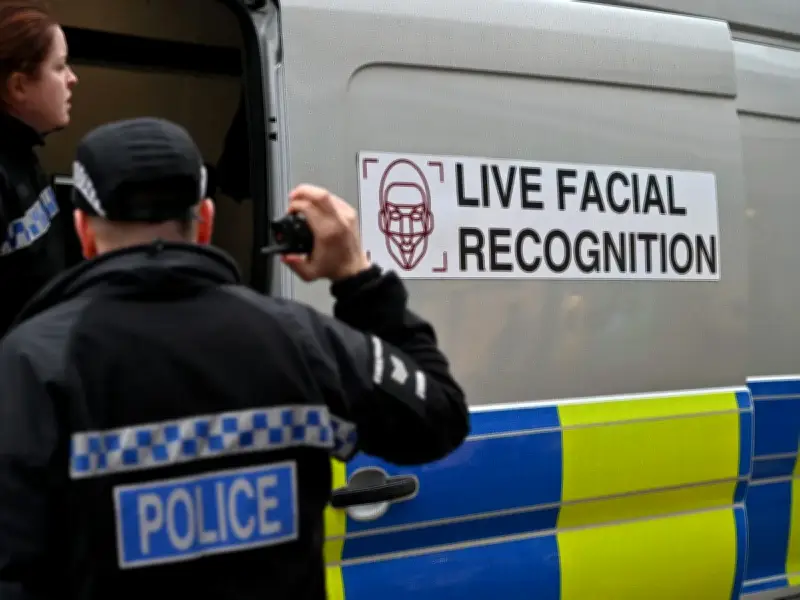
Recent polling reveals that Londoners are concerned about the rollout of facial recognition technology (FRT) due to worries about errors, privacy, and surveillance. The British Transport Police (BTP) has admitted that its trial at railway stations, running for six months, has caught no serious offenders as a direct result of the technology, though they say the threshold has been set deliberately high in terms of the offenders it's being used to find.
Public Concerns Over Accuracy and Privacy
72 per cent of respondents to the polling in Greater London want the public to have a say on how FRT is used, while two-thirds worry errors could get people into trouble unfairly. Another 62 per cent are concerned about how images of faces will be stored, while half feel there is a risk of racial bias.
The polling, carried out by Opinium earlier this year, comes amid the start of live facial recognition (LFR) cameras being rolled out at some London Tube stations. It was first deployed at Victoria Underground station as part of a trial that started in February, and will rotate between different stations until November.
Trial Results and Police Response
While the majority of Londoners - 70 per cent - support the use of FRT by police forces, more than half say it should only be deployed where there are a clear public benefit and strong safeguards in place. Tony Kounnis, CEO of Face Int, which commissioned the research, said: “It's far too simplistic to say that people in London are for or against facial recognition. This research shows that it’s far more nuanced than that – people have specific and understandable concerns, particularly the accuracy of the technology, their own privacy, and the security of biometric data.
“Public trust cannot be overlooked; nor is the efficacy of the technology enough. Organisations deploying FRT need to be transparent about how the technology is used, clear about the safeguards in place and willing to recognise that people expect a consultation in how facial recognition is deployed.”
Criticism and Calls for Oversight
Green Party London Assembly Member Benali Hamdache told the Local Democracy Reporting Service (LDRS) that the Met and BTP must implement stronger protections when using the technology to avoid "overreach and abuse". He said: “Live facial recognition is an invasive tool that allows the police to monitor our daily lives entirely unregulated and without any safeguards in place. With instances of misidentification and a lack of transparency surrounding how data is used, it’s clear that proper oversight is urgently needed. The continued expansion of this technology despite these concerns sets a dangerous precedent for the future.”
Jasleen Chaggar, Senior Legal and Policy Officer at Big Brother Watch, added: "It's unsurprising that the vast majority of people oppose being treated like guinea pigs by police forces that have been experimenting with facial recognition on the public, without their say, for more than a decade. Londoners understand the risks of error-prone AI. They can put themselves in the shoes of the someone who is falsely flagged by a machine, then accused and questioned by the police and forced to prove their innocence. The majority of people recognise facial recognition for what it is: Orwellian mass surveillance technology that turns the public into walking ID cards, as they go about their daily lives. The Government must adopt the safeguarding proposals we have set out to the Home Office and allow the public to have a genuine democratic debate about if, and how, this intrusive tech can be used."
Future Deployments and Safeguards
The Met is also understood to be planning to use static LFR camera in London's West End and Soho due to high crime rates, while Sir Sadiq Khan appeared to confirm its use on Oxford Street during a City Hall session last month. TfL and the BTP say the technology used in the trial only seeks to generate alerts for individuals on an authorised BTP watchlist linked to serious and high-harm offences including robbery, knife crime and sexual assaults. While faces are scanned in real time, images of people who are not a match are not retained - so anyone not on the watchlist will have their image automatically and immediately deleted as they continue their journey, police say.
A BTP spokesperson added: "Our Live Facial Recognition pilot launched in February to assess how the technology performs in a railway environment, which presents a unique set of operational challenges. To date, no alerts have resulted in a confirmed match. We have set a deliberately high threshold to prioritise accuracy and reduce the likelihood of misidentification, with all alerts subject to officer review before any engagement. LFR is being deployed as part of wider policing operations at stations, alongside existing patrols and engagement activity, to keep passengers and staff safe. During these deployments, officers have made 13 arrests for offences including breach of Criminal Behaviour Orders, theft and public order offences. Four people were arrested after being identified as wanted by other forces. As these arrests were not as a direct result of a facial match using the LFR technology, they are not included within LFR performance data. We can confirm that we have seen a reduction in crime during the periods where these operations have been in place, which reflects the broader policing activity and increased officer presence."
A spokesperson for the Mayor of London told the LDRS: "The Mayor is committed to ensuring that police are open and transparent around where, when, why and how Live Facial Recognition technology is used in London. His Office for Policing and Crime will continue to scrutinise and oversee its use to ensure there's trust and confidence in policing, as we continue to build a safer London for everyone."




