
Mayor of London Sadiq Khan has accused Russia, China, Make America Great Again (MAGA) influencers, and rival cities of spreading disinformation that portrays London as lawless, despite official figures showing a significant drop in crime.
Crime statistics show improvement
Statistics released on Thursday revealed that neighbourhood crime in London—including theft, robbery, and burglary—fell by 14%, representing more than 35,000 fewer offences in the 12 months to June. The number of homicides involving a knife or sharp instrument recorded annually by police in England and Wales also fell to its lowest level in 35 years.
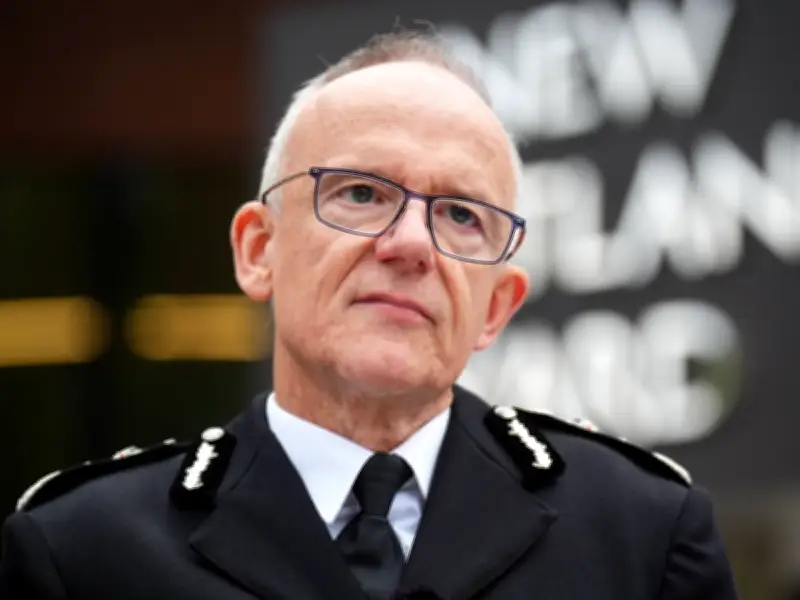
Metropolitan Police Commissioner Sir Mark Rowley said competitor cities and state actors amplify online content that depicts London as dangerous, despite the capital being “massively safe.” Speaking outside Holborn Police Station, Sir Mark told the Press Association: “There are culture wars out there, and frankly, we’re routinely invited to join one side or the other, we politely decline that. We get on with doing our job without fear or favour. Look, there are hostile states out there, Russia and Iran, who try to undermine stability in other countries. They are magnifying some of this content. Then there are competitor cities who want to undermine London, but London is massively safe.”
Mayor blames bot farms and state actors
Mayor Sir Sadiq Khan said negative stories about London are amplified by MAGA influencers and rival cities such as Brussels and Barcelona, who want to be “spiky” about the capital. Speaking to the Press Association, Sir Sadiq said: “So, two things are happening: one is you’re seeing bot farms across the world, from Vietnam to Sri Lanka, where people are churning out this negative stuff about London. Why? Because it makes them money. And secondly, you’re seeing state actors, whether it’s Russia, China… we’ve seen Maga-influenced actors in the USA spreading disinformation, misinformation, and lies.”
Specific crime reductions include a 23% drop (23,311 fewer offences) in thefts from people, an 11% reduction (2,943) in personal robberies, and a 9% decline (8,737) in vehicle offences. Offences dropped by more than a third in Westminster, with nearly 14,000 fewer crimes during the year. The Met’s largest crackdown on phone thefts resulted in 13,000 fewer mobile phone thefts across London, with numbers halving in the West End.
Technology and policing
Sir Mark credited both traditional policing and new technologies for the reductions. “That’s a phenomenal effort,” he told PA. “And it’s both classic policing – brilliant officers on the streets making a difference – as well as supported by clever technologies such as facial recognition cameras helping us capture wanted offenders, or drones that are helping us deal with dangerous people on e-bikes.”
Sir Mark defended the use of live facial recognition (LFR) technology, which has been criticised by human rights groups. He said a minority of people are “whipping up” baseless concerns, and that about 80% of Londoners support the technology according to survey data. “We all live in a world where every business, everything we interact with, is using technology more, and Londoners want police to be using technology to protect them, and that’s what they’re seeing us do,” he said.
Criticism of facial recognition
Campaign group Liberty has claimed LFR “tracks and monitors” people as they go about their daily lives, arguing that it puts ethnic minorities at greater risk of being misidentified. However, Sir Sadiq said the use of the technology was a “proportionate response that is required.” He added: “We need more bodies on the beat, and we need tools to invest in technology.”
In August 2025, the Equality and Human Rights Commission (EHRC) said the Met’s policy over LFR was “unlawful” because it is “incompatible” with human rights laws. EHRC chief executive John Kirkpatrick stated: “The law is clear: everyone has the right to privacy, to freedom of expression and to freedom of assembly. These rights are vital for any democratic society. As such, there must be clear rules which guarantee that live facial recognition technology is used only where necessary, proportionate and constrained by appropriate safeguards.”
The Met first trialled LFR in August 2016 at the Notting Hill Carnival and officially deployed the technology in 2020.




