
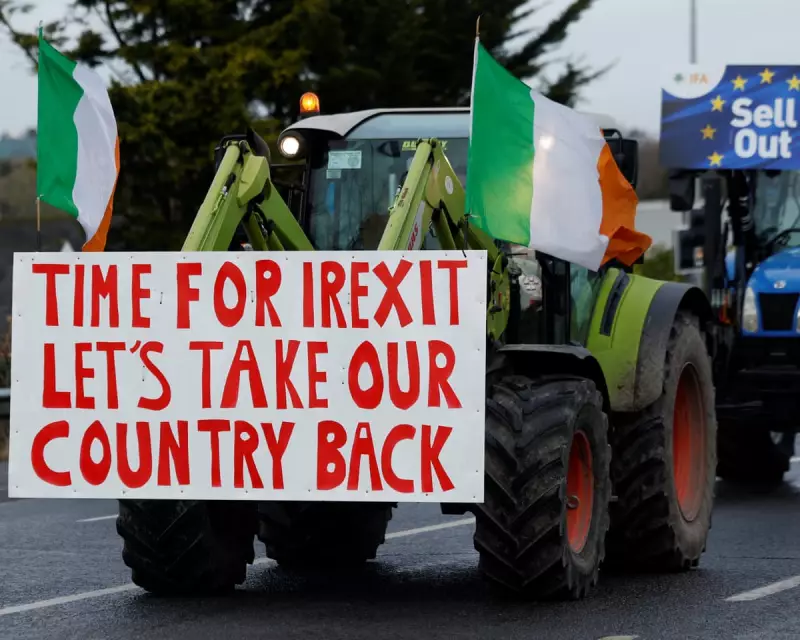
Thousands of Irish farmers have taken to the streets in a major demonstration, protesting the European Union's decision to approve a landmark trade agreement with the South American Mercosur bloc. The protest in Athlone, central Ireland, saw a convoy of tractors block roads, with participants brandishing signs reading "Stop EU-Mercosur" and accusing the EU of a "sell out."
EU Green Light Sparks Widespread Farmer Anger
The Athlone demonstration followed a series of similar actions across the continent. On Friday, farmers in Poland, France, and Belgium also protested after EU member states formally gave the green light to the accord. The deal, which has been in negotiation for over 25 years, aims to create one of the world's largest free-trade areas, boosting commerce between the 27-nation EU and Mercosur nations Brazil, Argentina, Paraguay, and Uruguay.
While welcomed by many business groups for lowering tariffs on EU exports like machinery and chemicals, the pact is fiercely opposed by agricultural sectors. Ireland, France, Poland, Hungary, and Austria all voted against the agreement. The core fear is that a flood of cheaper agricultural imports, particularly beef from Brazil and its neighbours, will severely undercut European farmers who operate under stricter and more costly regulations.
The Beef at the Heart of the Dispute
For Irish farmers, the threat is quantified and direct. They fear the deal will lead to an additional 99,000 tonnes of cheap South American beef entering the EU market, which they argue would devastate the Irish agricultural economy. The Irish Farmers' Association (IFA) labelled the approval as "very disappointing."
IFA President Francie Gorman stated the group would now "renew" its focus on securing a majority against the deal in the upcoming European Parliament vote. "We expect Irish MEPs to stand behind the farming community and reject the Mercosur deal," Gorman said. Protest signs in Athlone went further, some calling for an "Irexit" and alleging that Mercosur beef is not produced to equivalent environmental and welfare standards.
Standards and the Political Battle Ahead
This concern over standards was echoed by Irish political leaders. Taoiseach Micheál Martin expressed unease this week, stating the EU must be "confident" that the high standards imposed on Irish farmers are not "undermined" by imports produced under less stringent rules.
The political fight is far from over. The Mercosur agreement must still be ratified by the European Parliament in the coming months, where voting coalitions are described as volatile. The IFA and other farming bodies across Europe are now set to lobby MEPs intensely, hoping to block the deal's final passage and protect what they see as the future of European agriculture.




