
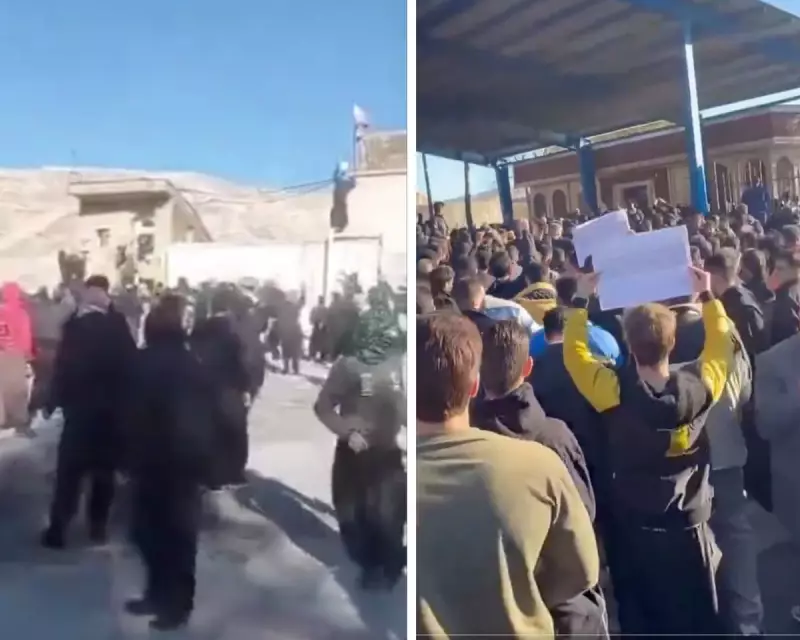
Iranian security forces have opened fire with live ammunition on unarmed protesters in the country's western Kurdish regions, according to eyewitnesses and human rights groups. The violent crackdown comes as demonstrations sparked by a severe economic crisis enter their eleventh day.
Violent Crackdown in Kurdish Cities
Footage emerging from Malekshahi in western Iran is said to show the moment security forces used live rounds against crowds on Saturday. This was followed by large gatherings at a cemetery on Sunday for the funeral of a slain protester. The protests, which began over dire economic conditions, have seen shopkeepers shutter stores and citizens chant against government corruption across Kurdish cities.
A female protester in Kermanshah described a brutal scene to the Guardian. "They are killing us. They’re showing no mercy," she said, her voice breaking. "At noon in the square they beat a woman so badly she couldn’t stand up." Her testimony was corroborated by others who reported authorities using teargas, pellet guns, and live bullets.
The Norway-based Hengaw Organisation for Human Rights confirmed it had documented the use of Kalashnikov rifles against protesters on Wednesday. Furthermore, video evidence appears to show security forces in riot gear raiding the Imam Khomeini hospital in Ilam.
Mounting Casualties and Calls for a General Strike
The toll from the escalating violence is severe. According to the US-based Human Rights Activists News Agency (Hrana), at least 36 people have been killed, including four children and two security force members. More than 2,100 individuals have been arrested, with a wave of detentions targeting Kurdish protesters.
In response, seven Iranian Kurdish opposition parties have called for a general strike. Reza Pahlavi, the exiled son of Iran's former Shah, has echoed calls for nationwide unified protests. Hiwa Bahrami of the Democratic Party of Iranian Kurdistan stated the strike is a "peaceful action" intended to show the strength of the resistance.
Government's Dual Strategy and Deepening Crisis
The Iranian government has adopted a contradictory approach. President Masoud Pezeshkian has ordered investigations into the hospital raid and announced a doubling of a state subsidy, though it amounts to just £5.20 per month. Concurrently, the head of Iran's army, Maj Gen Amir Hatami, warned that the military would not idly tolerate foreign threats, claiming riots were "undoubtedly planned by the enemies."
The protests were initially triggered by a plummeting currency and soaring prices. The Iranian rial has lost two-thirds of its value in three years, with food prices rising 72% in the last year alone. The government's cancellation of a preferential exchange rate for importers is expected to worsen the situation.
Despite the lethal crackdown, protesters vow to continue. "They are shooting at anyone and everyone," said Soran, a pseudonymous protester from Kermanshah. "Tomorrow is the day all the Kurdish people will be on the streets." The movement, while growing, has not yet reached the scale of the 2022 Mahsa Amini protests, but the resolve appears undiminished as economic despair deepens.




