
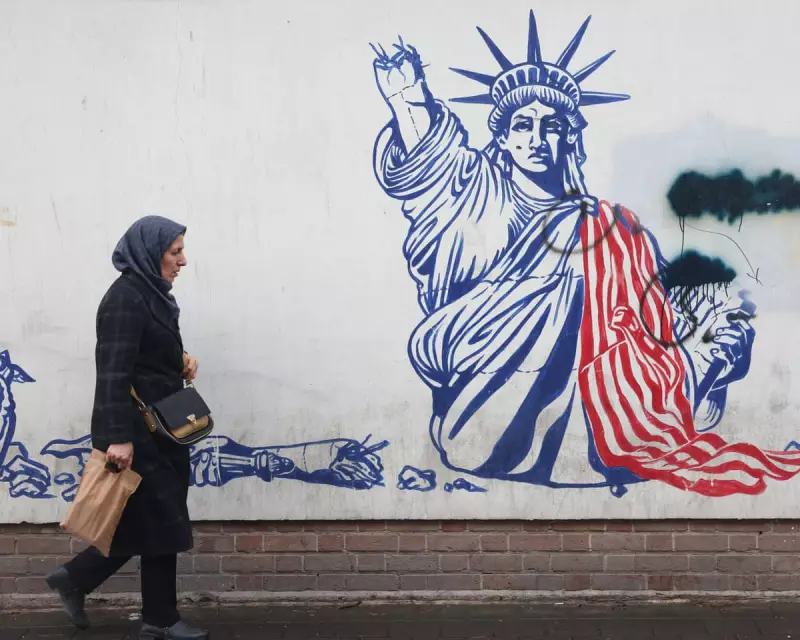
As a woman walks past a stark anti-American mural on a Tehran street in early January 2026, the image captures the complex duality of Iran's current crisis. The nation is gripped by profound internal unrest, with its theocratic regime accused of killing hundreds and arresting thousands of protesters. Yet, the path to freedom for Iranians is fraught with the dangerous spectre of Western military intervention, a solution with a catastrophic track record in the region.
A History Written in Blood and Oil
The origins of Iran's modern nightmare are deeply rooted in Western interference. In 1953, Britain and the United States orchestrated a coup that overthrew the progressive, democratically elected government of Mohammad Mosaddegh. The motivation was starkly economic, with then US Secretary of State John Foster Dulles fearing the loss of Iranian oil assets. The Shah installed by the coup later thanked a CIA agent, cementing a dictatorship whose brutality fuelled the 1979 revolution.
This historical pattern of external powers pursuing their own interests, rather than the welfare of the Iranian people, continues today. The current protest movement, sparked in part by economic hardship exacerbated by sanctions, reflects a deep-seated public frustration with fundamentalist rule. Surveys indicate growing religious non-observance and opposition to laws like the compulsory hijab. However, the response from figures like Donald Trump and the son of the deposed Shah, Reza Pahlavi, has been to threaten military action, with Trump having long viewed intervention through the lens of securing oil wealth.
The Grim Catalogue of Failed Interventions
Advocates for bombing Iran seem unable to learn from the devastating failures that have defined Western policy in the Muslim world this century. The Iraq war, launched under false pretences, descended into a sectarian bloodbath, partly exacerbated by returning exiled politicians. In Afghanistan, a two-decade occupation justified by women's rights ended with the Taliban's return and a worsening plight for those it claimed to protect. In Libya, a mission to protect civilians led to a violent civil war, jihadist exploitation, and a fractured state with two rival governments 15 years later.
These interventions were not driven by altruism. The US has consistently supported tyrannical allies in the region, such as Saudi Arabia. Trump's own national security strategy explicitly abandoned the pretence of promoting democracy abroad. The assassination of Iranian General Qassem Suleimani and strikes on nuclear facilities were acts of extreme escalation not undertaken with ordinary Iranians' safety in mind.
Why Iran Would Be a Catastrophe of Unprecedented Scale
Iran presents a uniquely complex and dangerous scenario for any foreign military adventure. Its population is over three times larger than Iraq's was at the time of invasion and is ethnically and religiously diverse, encompassing Persians, Azeris, Kurds, Lurs, Arabs, and Turkmens. While support for the regime is eroding, it maintains a significant and entrenched base, with millions still voting for ultra-conservative candidates.
The role of Israel also looms large. Israeli officials have boasted of operations within Iran, viewing a weak and chaotic neighbour as preferable to a strong, democratic one. This aligns with a strategy seen in Syria, where Israel has promoted Balkanisation. Furthermore, the chauvinistic rhetoric of some advisers to figures like Pahlavi hints at the internal divisions and potential for conflict that could erupt in a power vacuum.
Given this dire history and Iran's specific complexities, it would be lunacy to believe a Trump-led intervention would succeed where all others have failed. The lesson from Iraq, Afghanistan, and Libya is written in blood: Western military power is not a tool for liberation but often a catalyst for prolonged suffering and instability. The Iranian people deserve unwavering solidarity and support for their democratic aspirations, not to be made pawns in another geopolitical game that will inevitably leave them worse off.




