
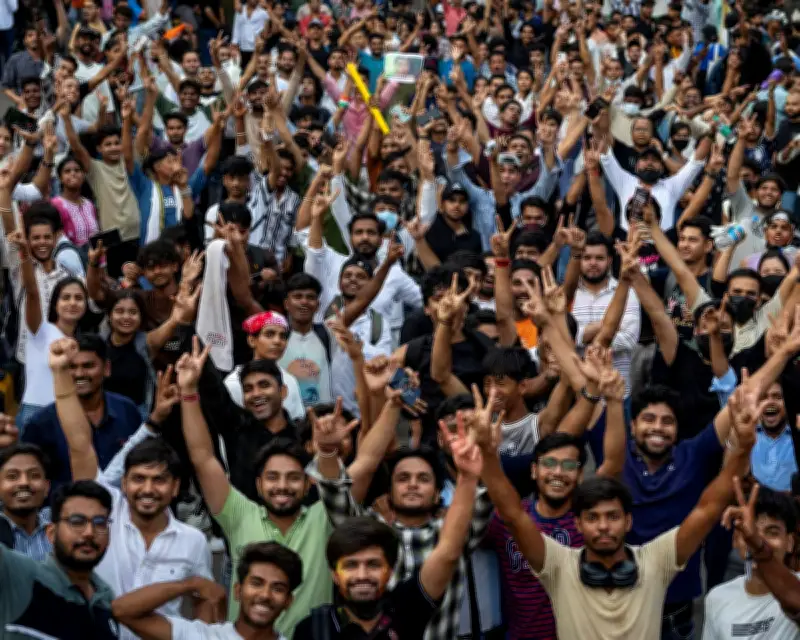
India's Gen Z protests, spearheaded by the Cockroach Janta party (CJP) in Delhi, have revealed a generation discovering the power of peaceful collective action, with support transcending age and geographic boundaries. The movement, which included hunger strikes, was not confined to the young and unemployed but garnered wholehearted backing from parents, grandparents, and even affluent young professionals with families, according to a letter from Bhaskar Mani in Bengaluru.
Widespread Support Across Demographics and Regions
Mani emphasized that the protests were not limited to Delhi but resonated across major metropolises like Mumbai, Kolkata, Chennai, and Bengaluru, as well as smaller towns. The demonstrations remained peaceful, a testament to the ethos of the CJP and the protesters. However, mainstream media, both print and TV, suppressed or distorted coverage, suggesting violence that did not occur.
This suppression, Mani argues, reflects not only the overwhelming anxiety and fear among young graduates facing bleak job prospects but also the significant grievances of a populace witnessing their democracy erode. The protests were a response to institutional failures, including leaked exam papers, which symbolize a broader crisis of merit and opportunity.
Broader Implications for Democratic Reform
In a separate letter, Nand Lal Rathore from Chachro, Sindh province, Pakistan, drew parallels to his own country, where similar grievances exist but rarely transform into sustained, nationwide civic movements. He noted that local protests in Pakistan often remain isolated and fail to generate the solidarity needed for institutional reform.
Rathore stressed that young people in both India and Pakistan deserve trustworthy institutions, credible exams, and public systems that reward merit over connections. The significance of India's movement lies not only in its immediate political consequences but in the emergence of a generation that has discovered the power of peaceful collective action. Its long-term impact will depend on whether that energy strengthens democratic institutions or deepens divisions.
Media Coverage and Public Perception
The letters come in response to a Guardian editorial on India's Gen Z protests, published on 28 July, which the writers felt missed key aspects of the movement. Mani's letter highlights the multi-generational and nationwide support, while Rathore's adds a regional perspective, comparing the situation with Pakistan.
Both letters underscore the importance of recognizing the protests as a broader call for justice, accountability, and democratic reform, rather than a single-issue movement. The peaceful nature of the protests and the widespread participation suggest a mature civic engagement that could have lasting implications for India's political landscape.
Conclusion: A Generation's Awakening
As the CJP protests demonstrate, India's Gen Z is not merely reacting to immediate grievances but is actively shaping a new narrative of civic participation. The movement's success in mobilizing diverse demographics and maintaining peace offers a model for peaceful dissent and institutional engagement. Whether this translates into systemic change remains to be seen, but the awakening of collective power is a significant development in India's democratic journey.




