
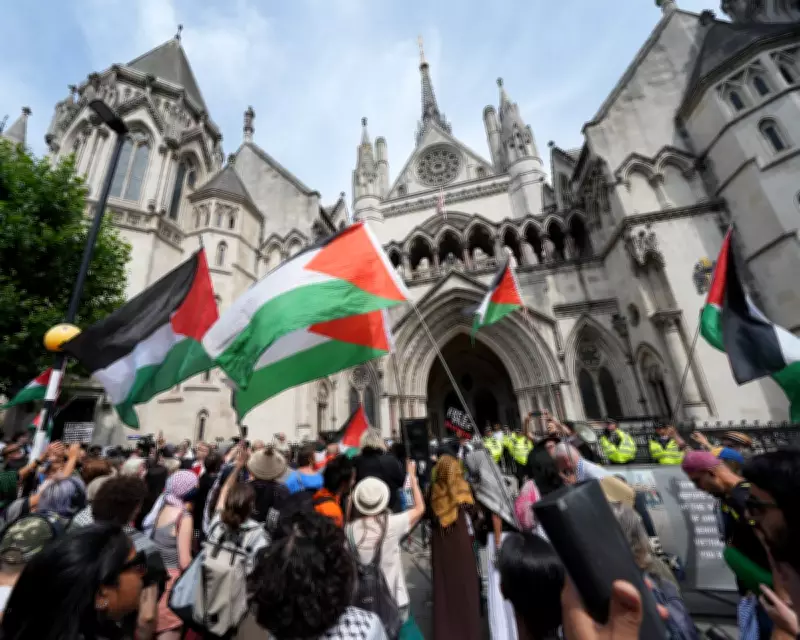
High Court Declares UK Ban on Palestine Action Unlawful
In a landmark decision, the High Court in London has ruled that the UK government's ban on the protest group Palestine Action was unlawful. This judgment overturns the home secretary's decision to proscribe the group under anti-terrorism laws, a move that had placed it in the same category as organizations like Islamic State.
Legal Challenge by Co-founder Huda Ammori
Huda Ammori, a co-founder of Palestine Action, successfully challenged the ban through a legal trial held at the High Court. The trial, which concluded in December, included sessions held in secret to address sensitive security concerns. On Friday, a panel of three judges, led by Dame Victoria Sharp, the president of the king's bench division, delivered the ruling, stating that the proscription decision was not legally justified.
Impact of the Ban and Widespread Condemnation
The ban on Palestine Action, which took effect from 5 July last year, made membership or showing support for the group a criminal offence punishable by up to 14 years in prison. This marked the first time a direct action protest group had been proscribed in the UK, sparking widespread condemnation from civil liberties advocates and activists. In response, a civil disobedience campaign defied the ban, resulting in more than 2,000 arrests as protesters continued to demonstrate outside locations such as the Royal Courts of Justice in London.
Background and Context of the Case
Palestine Action is known for its direct action protests aimed at raising awareness about issues related to Palestine. The group's activities have included high-profile demonstrations and campaigns targeting companies and institutions they accuse of complicity in human rights abuses. The government's decision to ban the group under anti-terrorism laws was controversial, with critics arguing it was an overreach that threatened freedom of expression and assembly.
The High Court's ruling now invalidates this ban, potentially setting a precedent for how protest groups are treated under UK law. The judges emphasized that the evidence did not support categorizing Palestine Action as a terrorist organization, highlighting the need for proportionality in such proscriptions.
Reactions and Future Implications
Following the ruling, Huda Ammori and supporters of Palestine Action celebrated the victory as a triumph for justice and civil rights. Legal experts suggest this case could influence future government decisions on proscribing groups, ensuring stricter scrutiny of anti-terrorism measures. The ruling also raises questions about the balance between national security and the right to protest in democratic societies.
As the UK continues to navigate complex issues around activism and security, this judgment underscores the importance of judicial oversight in protecting fundamental freedoms. The government may now need to reassess its approach to handling protest movements, particularly those engaged in direct action.




