
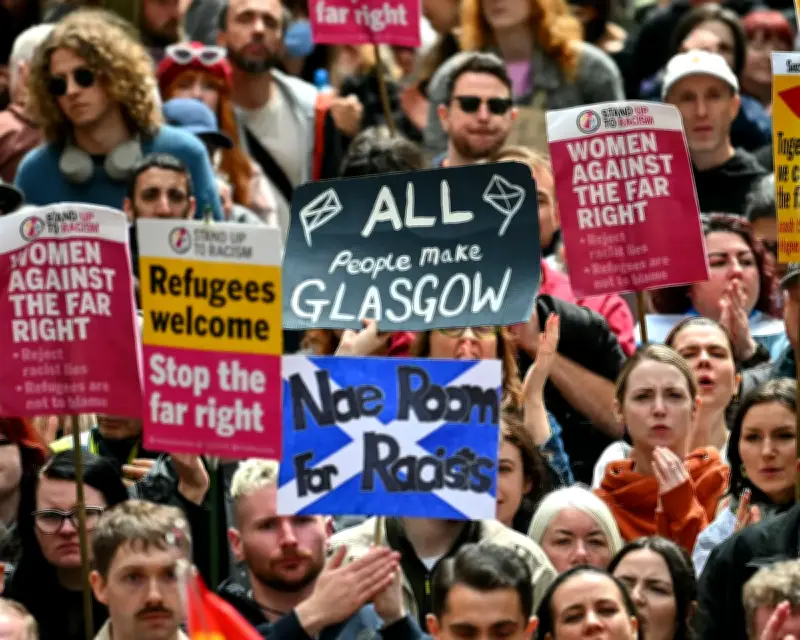
When Sanghmitra Singh moved from India to Glasgow in 2018, she was welcomed by kind strangers and helpful neighbours, and the city's slogan "People make Glasgow" seemed to ring true. Now, she says, something has changed: she feels scrutinised and afraid, as racist incidents and far-right demonstrations have increased in Scotland.
A shift from welcome to scrutiny
Singh, a human rights lawyer and writer, wrote in a first-person article for the Guardian that the friendliness she initially experienced has been replaced by a growing hostility. She describes how strangers now question her nationality, accent, religion, and clothes, and how she has been told her accent is "weird" and that immigrants are "taking away jobs from locals."
She recounts specific incidents: a customer in a Govan pub said immigrants are criminals and "need to go back," and an old lady on a bus told her and her British husband to stop talking the way they were. Singh says she now feels stared at "head to toe" and that the "outsiders" Glasgow once accepted have become "the subject of derision and suspicion."
Rising racist disorder in Scotland
Singh points to a series of events in 2026. In June, hundreds of masked protesters marched through Glasgow, harassing Asian business owners and attacking people, according to police, "because of the colour of their skin." Later that month, a man was charged with attempted murder after allegedly attacking men leaving a mosque in Edinburgh, with a video appearing to show him shouting he was "protecting the country."
In July, a delivery driver was assaulted after anti-immigration protesters "rampaged" through Glasgow again. Singh also notes that mosques have been defaced with hate graffiti, with one attacked in Britain every five days, according to new data. She mentions a speaker at a protest outside an asylum hotel in Falkirk calling for a crowd to "keep Britain white," and activists staging fascist-style demonstrations outside the Scottish parliament.
Why the change?
Singh attributes the change to a combination of factors: the high cost of living, the worsening climate crisis, and the rightwing agenda of some mainstream media. She also points to the Covid-19 pandemic, during which many people felt left alone by the state, and to social-media algorithms that favour inflammatory posts. She argues that extreme wealth inequality persists and increases, creating a "tinderbox" where people of colour feel afraid.
She writes: "I understand why many British people feel overlooked and badly done by – it's true that Britain is unequal and unfair. But I wish that the media would not validate people's inherent biases and misconceptions, nor politicians legitimise their worst sentiments by calling for reactions like 'pure, cold rage.'"
Anti-racist rallies and a call to action
In response to the incidents, anti-racist rallies were held in Leith and Glasgow, with signs reading "Racism is weird, have you tried hobbies?" and "Migrants make the NHS." Singh says it was heartwarming to see thousands unite for diversity, but she questions if it is enough to stop the growing hatred.
She concludes by urging people to say "no" to the normalisation of bigotry and to focus on shared living conditions and inequality. "We need to remember we have more in common with each other than with any billionaire," she writes. "Talk to real people who look and sound different from you. You'll realise we're all humans."




