
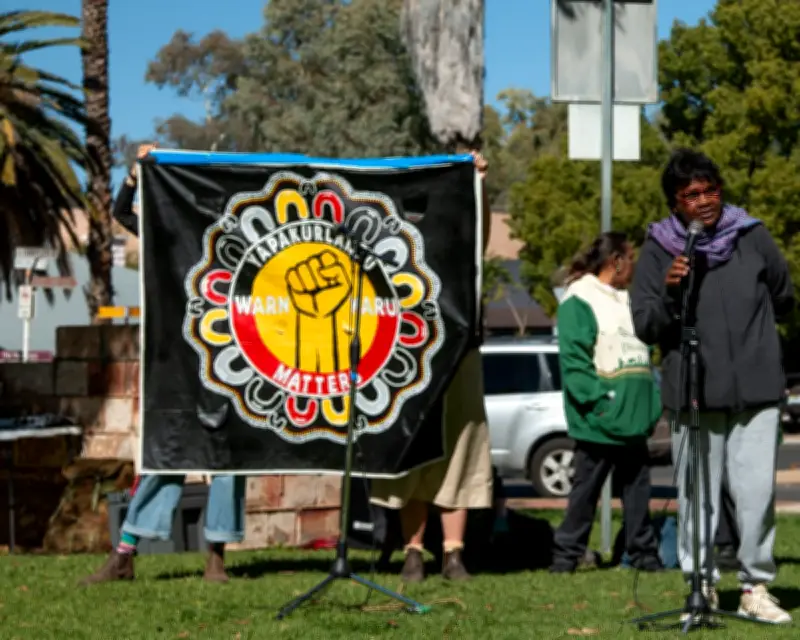
The family of an Indigenous man who died in police custody has launched legal action against the Northern Territory government over the decision not to charge the officers involved. The man, identified as Kumanjayi Walker, died in November 2019 after being shot by a police officer in the remote community of Yuendumu, about 300km north-west of Alice Springs.
Details of the incident and legal challenge
Walker, 19, was shot by Constable Zachary Rolfe during an attempted arrest. Rolfe was charged with murder but acquitted in March 2022 after a Supreme Court trial. The Northern Territory's Director of Public Prosecutions later decided not to lay any charges against other officers present at the scene, citing insufficient evidence.
The family's legal action, filed in the Supreme Court of the Northern Territory, seeks a judicial review of that decision. According to documents obtained by Guardian Australia, the family argues that the DPP erred in its assessment and failed to properly consider evidence that other officers used excessive force or failed to provide adequate medical care.
Impact and family's statement
“The decision not to charge any other officers has left our family without justice,” said a spokesperson for the family in a statement. “We are seeking a review because we believe the law was not applied correctly. Our son's life mattered, and we will continue to fight for accountability.” The legal action is supported by the North Australian Aboriginal Justice Agency (NAAJA).
According to the Australian Institute of Health and Welfare, Indigenous Australians are 15 times more likely to die in custody than non-Indigenous Australians. The death of Kumanjayi Walker has become a symbol of systemic failures in the justice system, prompting calls for reform.
Broader context and reactions
The Northern Territory government has not yet filed a response to the legal action. A spokesperson for the Department of the Attorney-General and Justice said the government would “carefully consider the application and respond in due course.” The case has drawn attention from human rights groups, with Amnesty International Australia calling for an independent inquiry into deaths in custody.
The family's lawyer, Dr. Hannah McGlade, a human rights advocate and member of the United Nations Permanent Forum on Indigenous Issues, said the judicial review is a critical step. “This is about ensuring that the legal system works for all Australians, particularly Indigenous Australians who have been historically over-policed and under-protected,” she said.




