
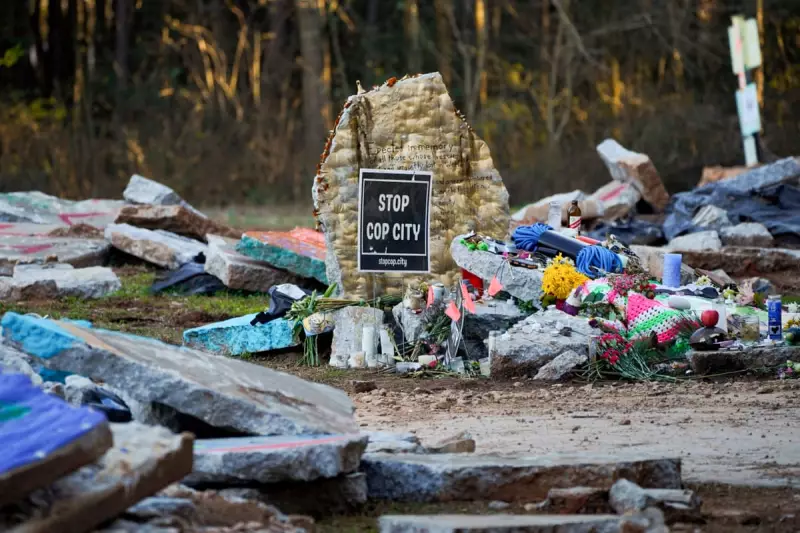
A sprawling legal case in Georgia, believed to be the largest ever use of racketeering laws against a protest movement in the US, continues to cast a long shadow over 61 defendants. The case, connected to opposition to the Atlanta police training facility dubbed 'Cop City', remains unresolved, with the state holding onto a massive trove of seized personal property.
A Case in Limbo and Property in Limbo
The prosecution, now in its third year, hit a procedural snag. Fulton County Superior Court Judge Kevin Farmer orally dismissed the felony conspiracy charges in September 2024 on procedural grounds. However, he failed to put that decision into writing within the 90-day deadline required by state law, which passed on 8 December. This leaves the case in a state of legal purgatory.
As a direct consequence, the state government continues to possess a vast array of personal items taken from the defendants. This includes hundreds of cell phones, laptops, diaries, health records, and even clothing. The situation starkly illustrates the government's power to seize property while prosecuting dissent.
"It's a natural consequence of the overreach by the state, who cast such a wide net since the beginning," said Devin Franklin, senior movement policy counsel at the Southern Center for Human Rights in Atlanta.
Personal Losses Amid Legal Battles
The impact is deeply personal. The state retains most of the diary, cell phone, and laptop of Manuel Paez Terán, known as 'Tortuguita', the activist shot dead by state troopers in January 2023 while camping in a forest near the Cop City site. Their mother, Belkis, revealed that their final cell phone message, sent minutes before the shooting that left 57 bullet wounds, was "Help." "I would like to have that," she told the Guardian.
Three defendants who ran the Atlanta Solidarity Fund, a bail fund for protesters, are also affected. They are missing irreplaceable items like photos of a deceased grandmother on a seized phone and intimate personal diaries. The fund's practical work is hampered too, as the state holds receipts needed to reclaim bond money.
Attorney Xavier de Janon described the chilling experience of reviewing over 50 boxes of evidence, which included "bloody clothes, their diary, backpack and tent – which still smelled like death" from Tortuguita's campsite.
The Weight of Seizure and an 'Air of Repression'
The scale of digital evidence is immense, with the state initially claiming over 14 terabytes of data – equivalent to more than 3 million photos. Defence attorneys argue that while data can be copied, the physical devices and personal papers should be returned.
"I don't know if it's laziness or intentional, but there is an air of repression to the state's handling of the issue," said Lauren Regan, executive director of the Civil Liberties Defense Center, who represents a defendant. She likened it to the state saying, "We've got you under our thumb."
Georgia's Attorney General, Chris Carr, who is running for governor, has stated his office will appeal Judge Farmer's decision once it is formally written, vowing to "continue the fight against domestic terrorists." The $109m Cop City facility, opposed over concerns of police militarisation and deforestation, opened in spring 2024.
For the 61 defendants and the memory of Tortuguita, the wait for resolution—and the return of their personal lives, captured in seized letters, phones, and diaries—continues indefinitely.




