
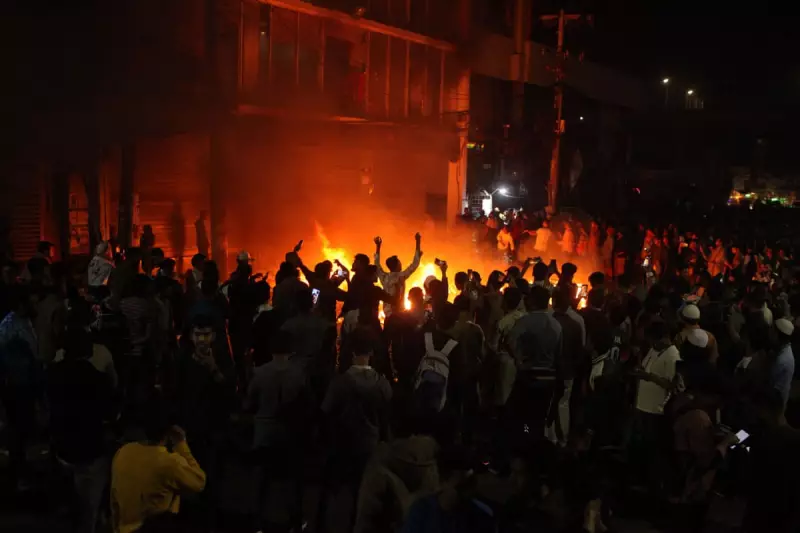
The political landscape in Bangladesh has been plunged into turmoil following the violent death of a prominent opposition leader, sparking days of intense protests and deadly clashes across the country.
A Political Assassination Ignites Nationwide Unrest
Sharif Osman Hadi, a senior figure within the Bangladesh Nationalist Party (BNP), was killed on Friday, December 19, 2025. The incident occurred in the capital, Dhaka, as he was travelling to a political gathering. According to initial reports from party officials and local media, his vehicle was attacked by unidentified assailants. The attack resulted in his death and left several of his aides injured.
The BNP and its supporters have squarely blamed the ruling Awami League government for orchestrating what they term a "political assassination." Government spokespeople have vehemently denied any involvement, instead suggesting the violence stemmed from internal conflicts within the opposition or acts of criminal gangs. This immediate blame game has further polarised an already divided nation.
Protests Erupt and Turn Deadly
The news of Hadi's death acted as a catalyst for immediate and widespread demonstrations. Supporters of the BNP and other opposition groups poured onto the streets of Dhaka and other major cities including Chittagong and Khulna.
The protests swiftly descended into violence, with confrontations between demonstrators and law enforcement turning lethal. Police employed tear gas, rubber bullets, and in some reported instances, live ammunition to disperse crowds. Protesters, in turn, erected barricades, set vehicles alight, and threw stones.
Current estimates suggest the toll from several days of unrest is severe. At least 15 people have been confirmed killed, including both protesters and police officers. The number of injured is believed to be in the hundreds, overwhelming local hospitals. Authorities have imposed curfews in several volatile districts and have reportedly made mass arrests, detaining hundreds of opposition activists.
International Concern and Domestic Fallout
The crisis has drawn sharp international attention. Human rights organisations, including Amnesty International, have called for an independent investigation into Hadi's killing and urged all sides to show restraint. Several Western governments have issued statements expressing deep concern over the escalating violence and the shrinking space for political opposition in Bangladesh.
Domestically, the situation presents a severe challenge to Prime Minister Sheikh Hasina's government. The BNP has announced a programme of sustained protests, including nationwide strikes, which threaten to paralyse the economy. The killing of a high-profile leader like Hadi has galvanised the opposition in a way not seen in recent years, potentially signalling a new and more dangerous phase in Bangladesh's political strife.
Analysts fear that without a credible, transparent investigation into the assassination and a move towards genuine political dialogue, the cycle of violence and retaliation will only deepen, risking long-term instability for the South Asian nation.




