
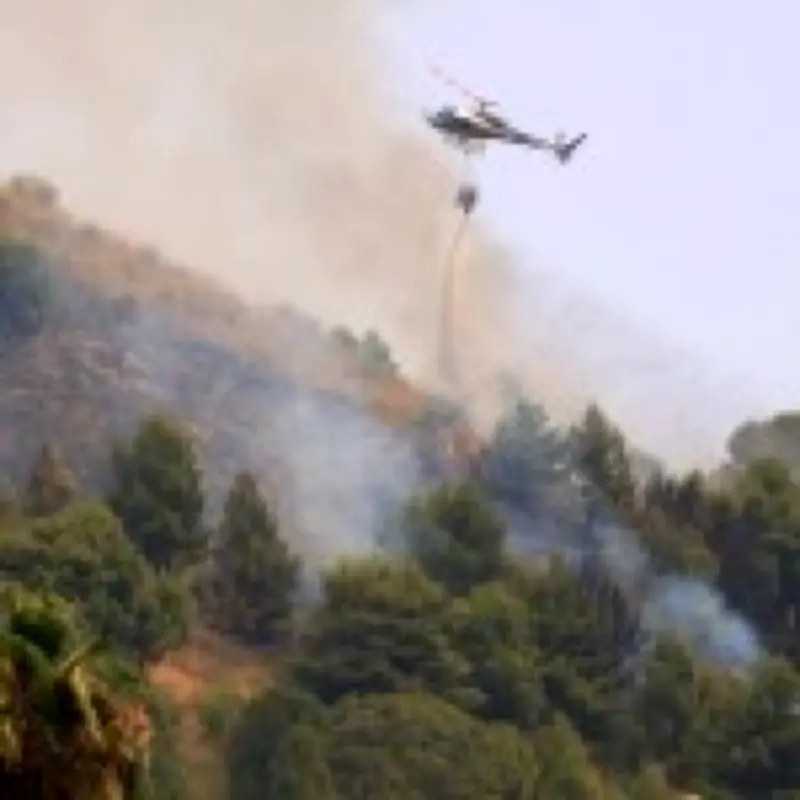
Italian authorities are investigating a disturbing arson method in which live cats were sent into wildfires with flammable-soaked rags tied to their tails. Domenico Costarella, of Calabria's Civil Protection Agency, said in a Facebook video: 'These animals were released into the fields, running around and spreading the fire.' The Italian Association for the Defence of Animals and the Environment has filed a criminal complaint and is offering a €1,000 reward for information about those responsible.
Details of the Arson
Investigators believe the cats were deliberately used to ignite dry grass and spread flames across southern Italy. Costarella also reported finding glass bottles fitted with wicks and flammable liquid, which were used to set off fires in areas covered in dry vegetation. This is not the first time cats have been weaponized in this way; in 2016, Italian police said the mob used cats to start fires at a national park near Mount Vesuvius.
Wildfire Crisis Across Europe
Wildfires have ravaged much of Europe this week amid relentless heatwaves. In Italy, fires have broken out near Rome and Sicily's capital of Palermo. Firefighters in the Calabria region alone extinguished more than 160 fires in 24 hours, according to Italian broadcaster RAI. In the UK, Wales activated crisis management arrangements due to a shortage of helicopters to tackle fires. The Welsh government said the Ministry of Defence confirmed no aerial support was available anywhere in the UK.
Ongoing Blazes in Derbyshire
An ongoing wildfire on Derbyshire moorland has scorched more than 600 hectares since it began a month ago—the equivalent of 900 football pitches. The blaze started at Tintwistle Moor near Glossop and remains unextinguished. Firefighters are managing hotspots and controlling flare-ups, with work expected to continue into early next week. The nearby A628 will remain closed in both directions between the A57 at Hollingworth and the A616 at Flouch until at least Monday.
Heatwave Impact
The fires follow three record-breaking heatwaves in May, June, and July, leading to hosepipe bans and other safety measures. Some 2,700 excess deaths were attributed to the heat in England and Wales during the first two heatwaves, according to official data.




