
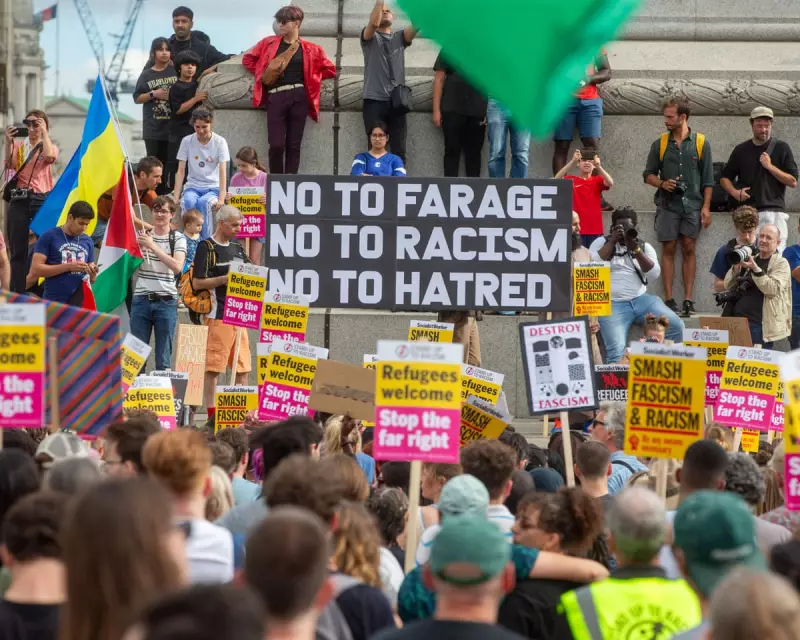
Anti-racism campaigners have staged a protest in London against Reform UK leader Nigel Farage, linking him to a wave of far-right riots across the United Kingdom. The demonstration, which took place on 10 August 2024, underscores a deepening national conflict over racism, history, and the very soul of British identity.
A Personal Reflection on a Racist Past
The allegations surrounding Nigel Farage's schooldays at Dulwich College have ignited memories for many of a Britain where racism was casual and overt. Farage has dismissed the claims as "wholly untrue, defamatory, and malicious," adding he "never directly, really tried to go and hurt anybody." This defence has reopened a painful national conversation.
For those who grew up in the 1970s and 80s, the accusations are hauntingly familiar. In one Cheshire comprehensive school in the mid-1980s, racist slurs were commonplace. A handful of non-white pupils faced daily abuse, from defaced artwork to verbal assaults. Some pupils wore red laces in their Dr Martens boots to signal support for the National Front, while a sixth-form counsellor openly used racist language and expressed a desire to join the police.
The Resurgence of Ethnonationalist Politics
This historical reflection comes amid alarming new data. A report from the Institute For Public Policy Research on 30 December warned that "ethnonationalist narratives" are gaining significant traction with voters. While only 3% of people believe being a good British citizen requires white skin, over a third now think true Britishness is something one must be born with, a sharp rise from one in five in 2023.
The political discourse has shifted dramatically. Mainstream media now platforms voices arguing that those "without native British ancestry" should be barred from Parliament. Reform MP Sarah Pochin has publicly complained about advertisements featuring too many black or Asian people. The debate on immigration is morphing into calls for "remigration," a sanitised term for forced deportation, framed around preserving "cultural coherence."
Rewriting History and the Progressive Fightback
A key tactic of this new right is the whitewashing of Britain's troubled past. Shadow Justice Secretary Robert Jenrick recently reminisced about 1980s football culture, describing an era of endemic racism and violent disorder as "largely all good-natured fun." This revisionism seeks to paint the past as a monocultural utopia, ignoring the pervasive racism, industrial strife, and police brutality that characterised the period.
The response, argues commentator John Harris, must be a clear-eyed rebuttal: modern Britain, for all its faults, is immeasurably better than the prejudiced and often violent country of decades past. Labour leader Keir Starmer has vowed to fight for the "soul of the country," targeting Farage and Reform UK. However, many believe an effective counter-movement should be led from outside Westminster, by cultural figures, artists, and influencers who can campaign with wit and optimism to a broader audience.
The stakes for the coming year are profound. The nation must decide whether the hatreds that once festered in its playgrounds and football grounds are grim relics of history or a blueprint for a fearful future. The protest against Farage is not just about one politician; it is a flashpoint in a much larger battle over what kind of nation Britain will become.




