
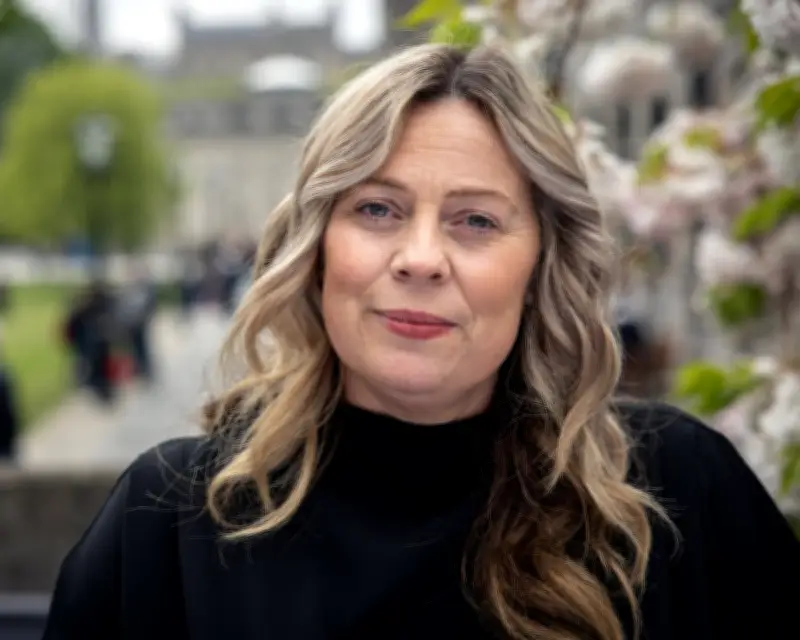
In over three decades of live broadcasting, Adrian Chiles had only once sobbed on air. That moment came during a radio interview with Katriona O'Sullivan, now a professor of psychology at Maynooth University. Her journey from a childhood of harrowing poverty to academic success moved him to tears.
A Childhood of Hardship
O'Sullivan grew up in Coventry, the child of two heroin users. She experienced hunger—for food and for love. Her first taste of care came at primary school from teacher Ms Arkinson and teaching assistant Miss Hall. Ms Arkinson, an Irish woman, welcomed O'Sullivan as "an Irish girl in my class—what a treat." Miss Hall taught her how to wash and provided clean underwear when classmates called her "pissy pants."
Despite these glimmers of kindness, years of chaos followed. O'Sullivan lived in Birmingham, then Dublin as a single mother with nothing. She entered Trinity College Dublin through an access programme, eventually earning a PhD and becoming a professor. Her memoir, 'Poor', chronicles this brutal yet uplifting journey.
The Interview That Moved Chiles
During the live broadcast, Chiles choked up when discussing a line from the book. O'Sullivan described her love for school dinners, referring to classmates as "the loved ones" who complained about the food. She wrote: "Other kids, the loved ones, they sometimes complained, but I didn't give a shit what was served. I'd have eaten anything." Those three words—"the loved ones"—captured her sense of being unloved.
A Call to Read 'Poor'
Chiles is on a mission to get everyone to read O'Sullivan's memoir. He notes that we know more about Taylor Swift or life on the International Space Station than about the lives of millions living in poverty in the UK. He criticizes the tendency to look away from the "underclass"—a word he acknowledges is ghastly but necessary.
O'Sullivan's story has a happy ending, thanks to social services funded during Ireland's Celtic Tiger era. However, her epilogue delivers a stark warning: most people who start in her world never escape. She insists her success was possible only because of political decisions to fund childcare, addiction treatment, and access courses—services that have since been cut.
Impact and Reflection
Chiles emphasizes that O'Sullivan's story is not a simple rags-to-riches tale. It is a testament to the power of social support systems. He urges readers to see her journey as proof that collective action, not individual effort alone, can change lives.




