Activists Released After Federal Judge Overturns Detention in Minnesota ICE Protest Case
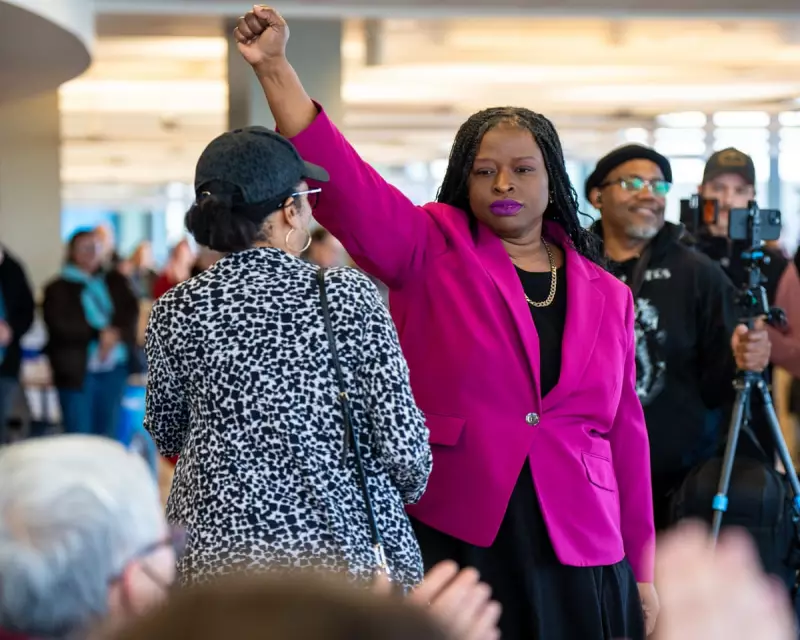
Two prominent activists arrested for their involvement in an anti-ICE demonstration that disrupted Sunday church services in St Paul, Minnesota, have been released from detention following a federal judge's ruling. Nekima Levy Armstrong and Chauntyll Allen emerged from custody on Friday, raising their fists and embracing loved ones in emotional scenes captured on video.
Court Orders Release Citing Lack of Justification for Detention
The federal judge ordered their release after determining that the government had failed to demonstrate sufficient grounds for detention, stating authorities had not met their burden to prove a detention hearing was warranted or that continued custody was appropriate. According to reports from the Minneapolis Star Tribune, a third activist involved in the same church protest, William Kelley, has also been ordered released after a separate judicial finding that he posed no danger to the public.
"Thank you all for being here," Levy Armstrong told supporters upon her release. "Glory to God!" The women's freedom came after several days of legal proceedings and growing controversy surrounding their arrest and the government's handling of their case.

White House Faces Criticism Over Digitally Altered Image
The release follows significant controversy after the White House posted a digitally manipulated image of Levy Armstrong's arrest on social media. The altered photograph, which had been modified to falsely portray her as crying and to darken her skin tone, was captioned in all capital letters: "Arrested far-left agitator Nekima Levy Armstrong for orchestrating church riots in Minnesota."
The deception was uncovered by the Guardian and other news organizations, partly because Homeland Security Secretary Kristi Noem had previously posted the original, unaltered image showing Levy Armstrong appearing composed during her arrest. This revelation sparked widespread criticism of the administration's tactics.
Original Arrest Video Contradicts Government Narrative
On Friday, Levy Armstrong released her own video of the arrest recorded by her husband, Marques Armstrong, which further exposed the extent of the White House's manipulation. According to Associated Press transcription of the footage, the video shows:
- Levy Armstrong asking agents why they were recording her detention
- Her request to be treated with "dignity and respect"
- Agents explaining they needed to handcuff her while one appeared to record video
- Levy Armstrong's concern about potential misrepresentation: "I would ask that you not record"
- An agent assuring her: "It's not going to be on Twitter. It's not going to be on anything like that"
- The same agent adding: "We don't want to create a false narrative"
Throughout the more than seven-minute video showing Levy Armstrong being handcuffed and led into a government vehicle, she never appeared to cry, directly contradicting the altered White House image. Instead, she engaged in conversation with agents about the nature of her arrest.
Activist Accuses Administration of Political Persecution
In an audio message shared with the Associated Press through her spokesperson, Levy Armstrong asserted that the video evidence proves the Trump administration used artificial intelligence to manipulate images of her arrest. "We are being politically persecuted for speaking out against authoritarianism, fascism and the tyranny of the Trump administration," she stated in the message recorded during a jail call with her husband on Friday morning.
During her arrest as shown in the authentic video, Levy Armstrong told agents: "You know that this is a significant abuse of power. Because I refuse to be silent in the face of brutality from ICE." An agent responded: "I'm not in here to get in a political debate," highlighting the tension between law enforcement procedures and political activism.
The case has drawn national attention to protest rights, government transparency, and the treatment of activists opposing immigration enforcement policies, particularly in Minnesota where tensions surrounding ICE operations have been escalating.