
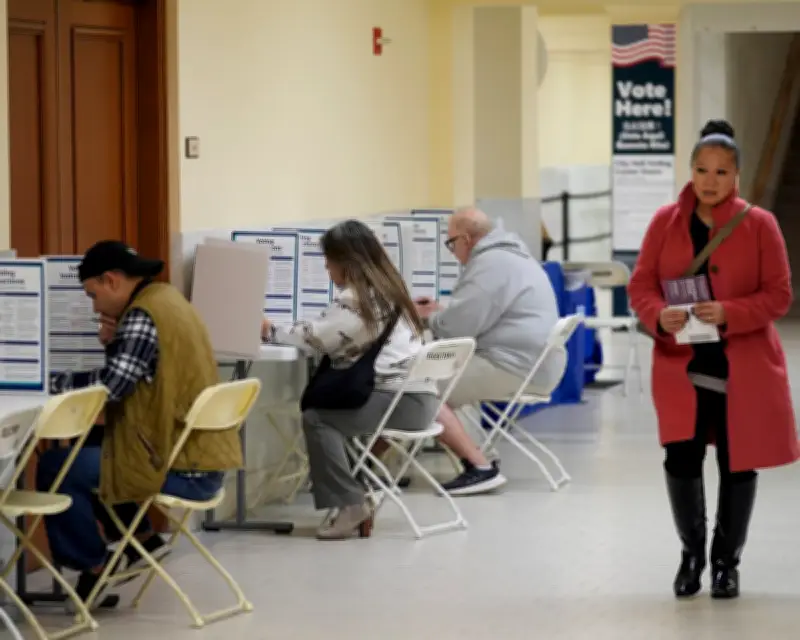
Eighty-five million Americans are disaffected and less likely to vote, according to a comprehensive multiracial study by Sojourn Strategies, Ariel Research Partners, and Richard Shafranek. The research indicates that 35% of the US electorate exhibits high disillusionment and low trust in government, posing a challenge to democratic revival. However, the study also highlights that 58% of the disaffected would like to feel more connected to others, presenting an opportunity for organizers to foster belonging and collective agency.
Disaffection Across Demographics
The disaffected electorate mirrors the overall population in race, ethnicity, and gender but tends to be younger, have fewer resources, and be less likely to hold a college degree. Surprisingly, they are as civically engaged as the general population in activities like discussing political issues (60% vs. 61%) and searching for political information online (42% for both). However, only 56% of disaffected voters would vote if midterm elections were held today, compared to 65% of the overall population. This gap stems not from apathy but from a perceived disconnect between voting and tangible improvements in their lives.
The Role of Isolation and Civic Homes
A common thread among the disaffected is isolation: 49% do not belong to any online community, religious group, political organization, labor union, or other community spaces. The researchers emphasize that “civic homes”—spaces where people meet, feel heard, and work on shared issues—are critical for developing a sense of belonging and agency. Even small increases in belonging within such spaces correlate with significant rises in voting and other civic actions.
Examples illustrate this approach. In Nevada, Angeles, a car wash supervisor, attended a Make the Road Nevada meeting where she connected with neighbors facing similar struggles. Through Know Your Rights workshops, she felt included and will cast her first ballot as a US citizen this year. “Not because a candidate’s campaign finally reached her. But because her people did,” the researchers note.
Innovative Programs Building Belonging
Power Interfaith in Pennsylvania runs Soul Food Dinners for young, disaffected Black men, combining familiar food with honest conversations about life and civic skepticism. Similarly, Georgia Alliance’s We the People initiative hosts intergenerational dialogues between older and younger Black participants, breaking stereotypes and increasing feelings of power—a measure linked to voter turnout. In North Carolina, North Carolina Asian Americans Together organizes Mahjong nights with hotpot meals for young adults, blending cultural activities with civic engagement like voter registration.
These programs require deep relational work over time, but the payoff is durable civic agency. Transactional engagement offers a “sugar rush,” while belonging-based organizing builds strong architects of a hopeful future.
Hope in Action
Stories like Elnora Gavin in Benton Harbor, Michigan, demonstrate the power of civic homes. Working with We the People Michigan, she organized supporters to win $114 million in school debt relief for majority-Black school districts. Julie Fernandes, managing director of the Democracy & Power Innovation Fund, and Katrina Gamble, PhD, founder of Sojourn Strategies, conclude: “In these turbulent times, people are choosing to lean into people-centered organizations and movements where they can find belonging, develop collective agency and make a better future possible.”




