
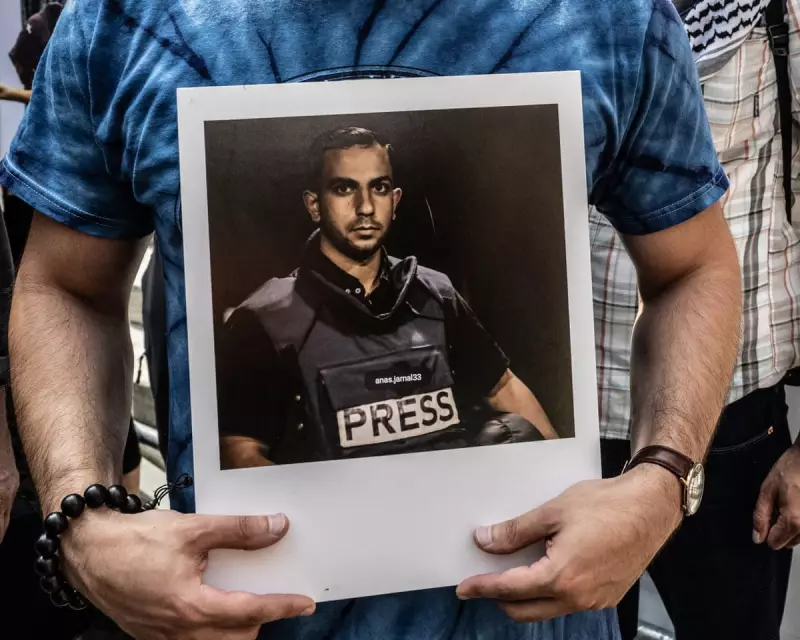
The year 2025 has been another devastating period for journalists globally, with Palestinian reporters in Gaza paying an especially terrible price for bearing witness. Among the most prominent casualties was Al Jazeera correspondent Anas al-Sharif, whose targeted killing in August has become a stark symbol of the dangers faced by the press and the tactic of discrediting journalists to justify attacks.
A Voice Silenced: The Targeting of Anas al-Sharif
Anas al-Sharif was a well-known and popular figure in Gaza. In January, he was filmed celebrating a fleeting ceasefire, later breaking down on air while reporting on starvation in his war-ravaged hometown. A bystander once told him, "Persist, Anas, you are our voice." However, his prominence made him a target. Months before his death, international agencies warned of the danger he faced as the Israel Defense Forces (IDF) intensified online attacks, falsely labelling him a Hamas terrorist.
His employer, Al Jazeera, urged him to restrict his reporting to the relative safety of al-Shifa hospital after his father and several colleagues were killed. Despite these precautions, in August 2025, a few months before his 29th birthday, al-Sharif and six others were killed in a direct attack on a media tent beside the hospital. In a posthumous message, he wrote: "If these words reach you, know that Israel has succeeded in killing me and silencing my voice."
The Global Toll and a Deliberate Tactic of Discredit
Al-Sharif is one of 67 media professionals killed in 2025, according to Reporters Without Borders (RSF). The International Federation of Journalists (IFJ) puts the figure even higher at 111, with nearly half of those deaths occurring in Gaza. The Israeli military confirmed it targeted al-Sharif, claiming he led a Hamas cell. However, major press freedom groups like the Committee to Protect Journalists (CPJ), IFJ, and RSF, alongside UN agencies, have found no evidence to support these allegations.
Irene Khan, UN special rapporteur for freedom of opinion, condemned the strategy: "Israel refuses to allow international journalists into Gaza, and on the other, it ruthlessly smears, threatens, obstructs, targets and kills the few local journalists remaining." Fiona O'Brien, UK director of RSF, called al-Sharif's case a "very strong example" of a deliberate Israeli tactic to discredit journalists without credible evidence.
Consequences: A Vacuum of Truth and Eroding Trust
This tactic is effective within a context where Israel's ban on international press in Gaza remains in place. This ban not only prevents independent reporting but also, as O'Brien notes, makes it harder to support local journalists and easier to discredit them. In an era of rampant misinformation on social media, unsubstantiated allegations can quickly sow doubt. This occurs as global trust in journalism recedes at an alarming rate.
Since the war began on 7 October 2023, more than 240 Palestinian journalists have been killed. Many, like Shireen Abu Akleh, were shot while wearing press vests. The Rory Peck Trust's Jon Williams stated that these journalists have been the world's eyes and ears, paying a terrible price. RSF has filed its fifth complaint against Israel at the International Criminal Court, alleging war crimes for its treatment of Palestinian journalists, yet killings continue with impunity.
Worryingly, the global environment for press freedom is deteriorating. In the United States, the Trump administration has sued media organisations, banned reporters, and cut funding for public service media. The chilling effect is clear. As one year ends with a miserable tally, the ability of journalists to report atrocities remains under grave threat. Unless this changes, 2026 risks being no better than 2025—and could be much worse.




