
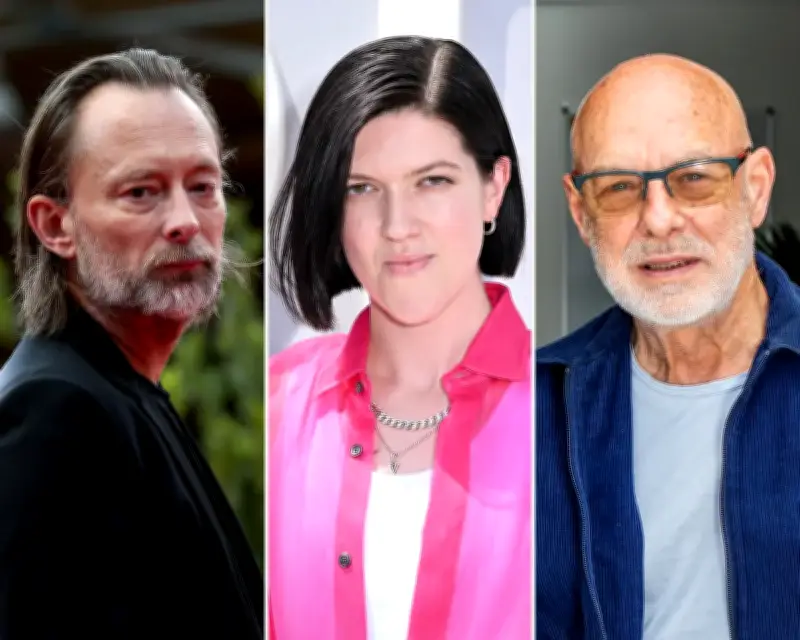
More than 200 musicians, including Massive Attack and Brian Eno, have signed a letter to Prime Minister Andy Burnham urging him to reject plans for further oil and gas drilling in the North Sea. The letter, signed by 211 artists such as Bobby Gillespie, Olly Alexander, and Paris Paloma, specifically calls on the prime minister to reject the Rosebank oilfield, warning that the project would fail to lower energy bills or provide energy security, as most of the oil is likely to be exported.
Musicians unite against fossil fuel expansion
The signatories include Radiohead’s Thom Yorke, Ed O’Brien, and Philip Selway; The Cure’s Robert Smith; Bobby Gillespie of Primal Scream; Alexis Taylor of Hot Chip; Anoushka Shankar; Kevin Rowland; Anna Calvi; Jacob Collier; David Gray; the electronic duo Bicep; and Romy of The xx. The letter was sent as the government’s consultation on Rosebank, located about 80 miles north-west of the Shetland Islands, closed on Monday. Ministers will now decide on the project’s future, along with that of the Jackdaw gasfield off Aberdeen, whose consultation concluded a week ago.
Adura, the company behind both projects, has stated that the developments would result in £10.8bn in investment and support 3,500 jobs at the peak of construction, with 880 employees over its production lifetime. However, environmental activists argue that extracting fossil fuels from the UK’s largest remaining untapped oilfield will accelerate climate chaos. Estimates suggest Rosebank could produce more than 250 million tonnes of CO2 over its lifetime, equivalent to 70% of the UK’s annual emissions.
Artists cite climate reality
In their letter, the artists wrote: “The climate crisis is no longer something we fear for future generations; it is shaping our lives today. Heatwaves are disrupting schools, workplaces, hospitals, transport networks, festivals and live events.” Brian Eno, co-founder of the campaign group EarthPercent, said Burnham had previously stood with artists and campaigners calling for an end to fossil fuel expansion. “So he has a choice to make,” Eno said. “He can stand with the fossil fuel industry and approve Rosebank, or he can stand with the people who will live with the consequences of that decision. We are already seeing what a hotter world looks like, with record heat and devastating wildfires across Britain and Europe. At this point, continuing to expand fossil fuel production isn’t pragmatism, it’s a failure to face reality.”
The Met Office has said this summer in the UK is on course to be the hottest since records began, with 2026 likely to be the first year in which the country has recorded four separate days with temperatures of 36C or above. Extreme heat has driven a surge in attendance at hospital emergency departments over the summer, with more than 2.4 million patients attending each month in May, June, and July – the three highest monthly totals ever recorded.
Government decision pending
Production at Rosebank and Jackdaw was initially approved by the previous Conservative government. However, those decisions were quashed after a legal challenge from Greenpeace, pending more detailed climate assessments. These were put out for consultation last month, leaving Labour ministers to decide whether drilling should go ahead. Suzi Shingler, of the campaign group Stop Rosebank, said there had been “radio silence” from Burnham on climate change despite heatwaves and wildfires across the UK and Europe. “The devastating wildfires that are tearing across the UK are not because of disposable barbecues. They are caused by climate change and are only set to get worse,” she said.
A Department for Energy Security and Net Zero spokesperson said: “The North Sea remains a vital national asset, supporting jobs, growth and the UK’s energy security. We are clear that oil and gas will continue to play an important role in our energy system for decades to come, alongside transitioning to clean power to protect jobs and tackle the climate crisis.” The decision on Rosebank and Jackdaw now rests with the government, which must weigh the potential economic benefits against the environmental and climate impacts highlighted by the musicians and campaigners.




