A week after the dramatic capture of Venezuelan President Nicolás Maduro by US special forces, a profound sense of fear and uncertainty grips the South American nation. While the operation initially sparked euphoria among government opponents, hopes for democratic change have been swiftly dashed, replaced by what observers are calling a 'more convenient dictatorship' under the leadership of Maduro's former allies.
A Thaw That Never Came
The audacious night-time raid last weekend, which saw Maduro abducted from a military base and flown to New York to face charges, led to immediate speculation about a political thaw. US President Donald Trump hinted that the notorious El Helicoide prison—a brutalist shopping mall turned jail—was 'closing up'. By Thursday, authorities announced the release of a 'significant number' of political prisoners, including high-profile figures like Spanish-Venezuelan activist Rocío San Miguel and former presidential candidate Enrique Márquez.
However, for the approximately 1,000 political prisoners still believed to be incarcerated, and for the broader population, these gestures have proven superficial. Former inmate Freddy Guevara, a 39-year-old opposition leader tortured in El Helicoide, expressed dashed hopes. 'It was horrible … You don’t know what is going to happen,' he recalled of his 34-day ordeal, during which captors threatened his grandmother's life during the Covid pandemic.

Draconian Atmosphere and a New-Old Regime
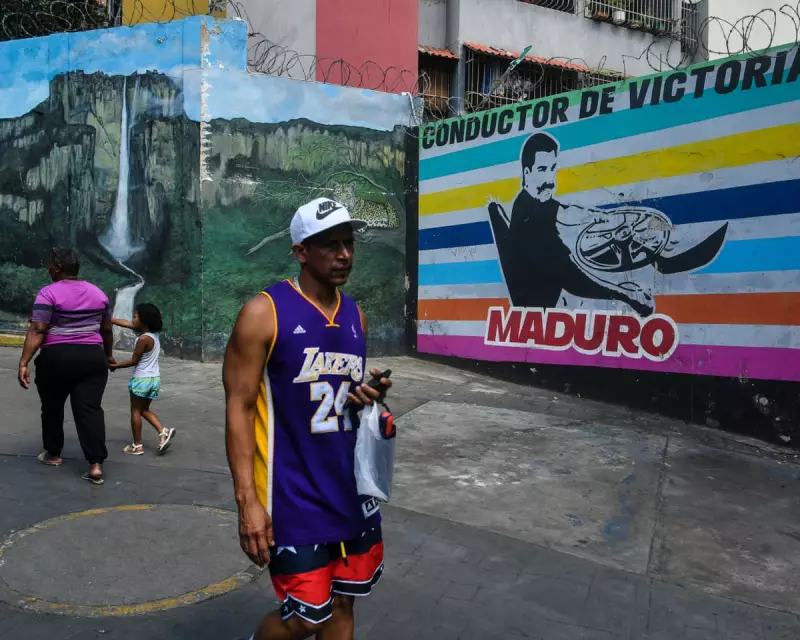
Far from liberalising, the atmosphere in Venezuela has grown more draconian. The new administration, led by Maduro's vice-president, Delcy Rodríguez, and her brother Jorge Rodríguez, president of the national assembly, has moved aggressively to assert control. Masked civilians armed with Kalashnikovs patrol the quiet streets of Caracas on motorbikes. Security forces man checkpoints, scrutinising citizens' phones for anti-regime material. Journalists have been detained, deported, or barred from entry.
In the working-class Caracas neighbourhood of 23 de Enero, paramilitary groups known as colectivos have imposed an informal curfew. 'After 6pm you don’t see anyone in the streets,' reported one local, noting these groups were recruiting homeless people and drug addicts to bolster their patrols. The US has explicitly affirmed its control, with White House press secretary Karoline Leavitt stating: 'Their decisions are going to continue to be dictated by the United States of America.'
'Regime Capture' and the Oil Motive
Analysts argue the US operation amounted not to regime change, but to 'regime capture'. Tom Shannon, a veteran US diplomat, described it as an external coup: 'We removed a leader and then chose the next one – but it’s the same gang.' Andrés Izarra, a former minister now in exile, was blunter: 'Trump conquered an oil hacienda … and hired the Rodríguez siblings to run it for him.' This view is bolstered by Trump's admission that he sought 'total access' to Venezuela's vast oil reserves, the largest in the world.
The move sidelined opposition leader María Corina Machado, whose movement is widely believed to have won the 2024 presidential election. Moisés Naím, another exiled former minister, lamented that Trump had 'essentially thrown María Corina Machado under the bus' to embrace the old guard.
A Future of Distrust and Unknowns
The path forward remains treacherous. Within the remnants of Maduro's regime, a maelstrom of distrust brews as officials scramble to uncover who betrayed their leader to US intelligence. Gunfire near the presidential palace earlier this week sparked rumours of a secondary coup, later attributed to a tense standoff between police and paramilitaries.
US Secretary of State Marco Rubio outlined a three-phase strategy for Venezuela: stabilisation, recovery and reconciliation, and political transition. Yet, for ordinary Venezuelans, the immediate reality is unchanged. A 57-year-old entrepreneur fleeing across the border into Colombia confided, 'We’re happy about the news but we can’t show it because it’s dangerous.' He likened Maduro's capture to decapitating a monster, while its body—the regime—remained intact.

As journalist Ricardo Alcalá crossed the border, passing armoured personnel carriers, he could only express cautious optimism. 'We’re into the last season of the series,' he predicted of Venezuela's crisis. When asked how it would end, he replied: 'We don’t know. The truth is, nobody knows anything.' For now, Venezuela endures under a new, US-approved iteration of the same oppressive system.