Trump's Childhood Church Experience Explains Current Papal Antagonism
Donald Trump's recent verbal assaults on Pope Leo, following the pontiff's criticism of U.S. military actions in Iran and Trump's controversial social media post depicting himself as Jesus Christ, appear deeply rooted in the former president's formative religious experiences. As a young man, Trump regularly attended services at the Protestant Marble Collegiate Church in Manhattan, an institution led by the famously anti-Catholic pastor Norman Vincent Peale.
The Peale Connection: From Pastor to Presidential Influence
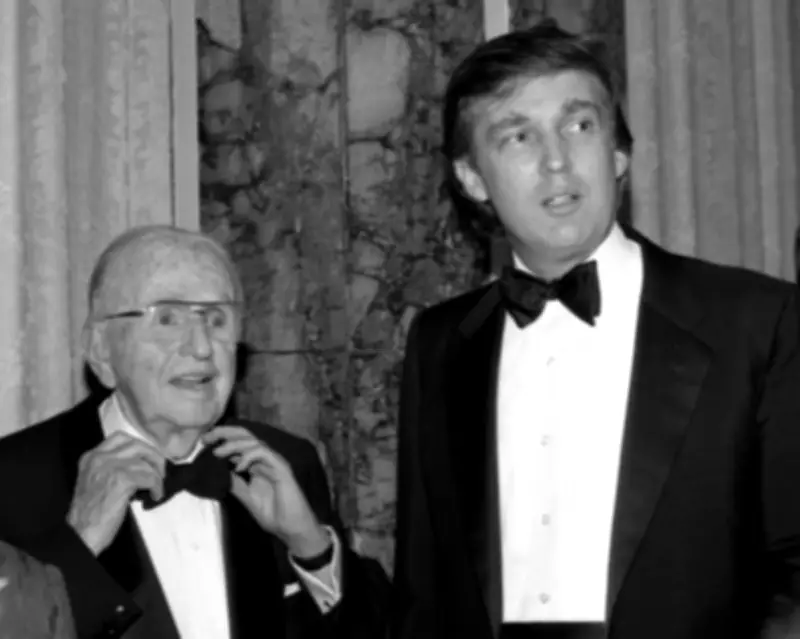
Norman Vincent Peale, who would later officiate Trump's first wedding to Ivana Zelníčková, is primarily remembered today as the author of the influential Christian self-help book The Power of Positive Thinking. However, during Trump's adolescence, Peale gained national notoriety for leading a coalition of Protestant clergymen who vehemently opposed John F. Kennedy's presidential candidacy specifically because Kennedy was Catholic.
In September 1960, as Time magazine documented, Peale presided over a gathering of 150 Protestant clergymen and laypeople at Washington's Mayflower Hotel. This group, calling themselves Citizens for Religious Freedom, issued a 2,000-word manifesto that transformed religious affiliation into the most emotionally charged issue of that year's presidential election.

"Our American culture is at stake," Peale warned his colleagues during the meeting, according to contemporary reports. "I don't say it won't survive, but it won't be what it was."
Historical Anti-Catholic Sentiment in American Politics
The statement from Peale's group, prominently featured in the New York Times on September 8, 1960, reveals how recently overt anti-Catholic prejudice remained socially acceptable within America's Protestant establishment. Their primary objection centered on the alleged incompatibility between Catholic faith and the constitutional separation of church and state.
"Brotherhood in a pluralistic society like ours depends on a firm wall of separation between church and state," declared Peale and his fellow clergymen. "We feel that the American hierarchy of the Roman Catholic Church can only increase religious tensions and political-religious problems by attempting to break down this wall."
Kennedy responded decisively the following week with his landmark speech to Baptist ministers in Houston, Texas, famously asserting: "I believe in an America where the separation of church and state is absolute; where no Catholic prelate would tell the President – should he be Catholic – how to act, and no Protestant minister would tell his parishioners for whom to vote."
Generational Patterns of Religious Prejudice
The concerns expressed by Peale's group in 1960 echoed earlier anti-Catholic conspiracy theories that surfaced during Al Smith's 1928 presidential campaign, the first time a Catholic received a major party nomination. As historian Robert Slayton has documented, the Ku Klux Klan actively worked to prevent Smith's election, with one Klan leader declaring: "We now face the darkest hour in American history. In a convention ruled by political Romanism, anti-Christ has won."
This historical context connects directly to Trump's family background. In 1927, Donald Trump's father, Fred Trump, was arrested during a Memorial Day parade riot in Queens where 1,000 robed Klan members clashed with the predominantly Irish Catholic police force. Contemporary Klan flyers distributed after the riot proclaimed: "Americans Assaulted by Roman Catholic Police of New York City!" and "Native-born Protestant Americans clubbed and beaten when they exercise their rights in the country of their birth."
The convergence of Trump's personal exposure to Peale's anti-Catholic teachings during his formative years, combined with his family's historical proximity to violent anti-Catholic sentiment, provides crucial context for understanding his contemporary conflicts with papal authority and Catholic leadership.