US Catholics Torn in Feud Between President and Pope Over Iran War
In Decatur, Georgia, Maryellen Lewicki gathers weekly for Bible study with a group of Catholic women, striving to keep their discussions free from politics. Yet, the name of Donald Trump inevitably surfaces. "We pray for one person each week," Lewicki explains. "My friend says she prays for the president daily, asking God to soften his heart and fill it with love."
Lewicki attends St. Thomas More, a Jesuit church in an affluent Atlanta suburb where the congregation leans politically progressive. An AI-generated image of Trump as Christ healing the sick, posted and later withdrawn by Trump on social media, has done little to sway opinions here. In an era of political outrage, Americans' capacity for shock has diminished, but the response by Trump and Republican leaders to Pope Leo XIV's criticism of the war in Iran is pushing those limits.
Papal Criticism and Political Backlash
Pope Leo XIV, an American, has been consistently vocal against war, particularly condemning U.S. attacks in Iran. During a Palm Sunday mass in St. Peter's Square, he denounced the use of religion to justify violence, stating that God "does not listen to the prayers of those who wage war." This follows months of papal critiques on U.S. refugee treatment and a forceful statement by American archbishops in February opposing the administration's immigration policies.

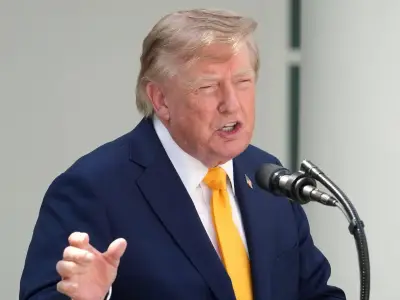
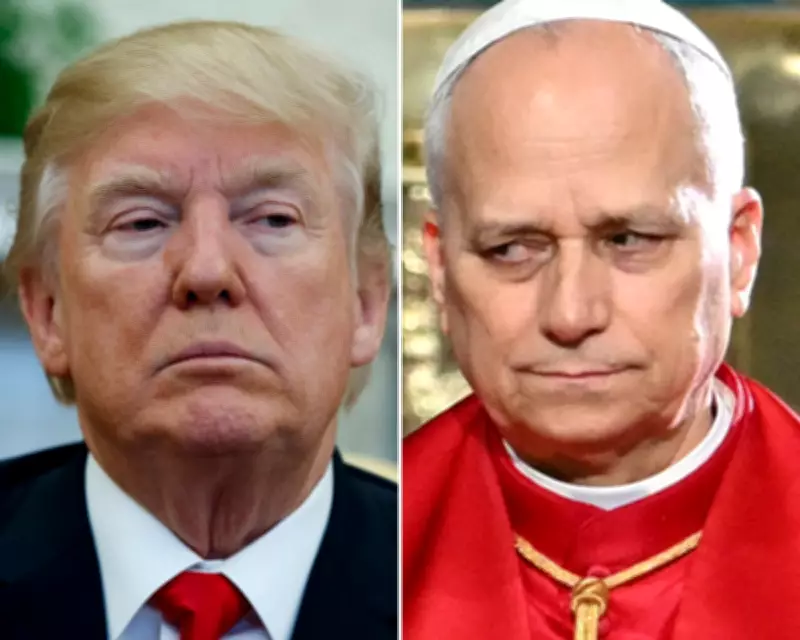
Trump's reaction to the homily described Leo as "weak on crime" and suggested the pope's tenure is due to Trump's influence, further polarizing the Catholic community. Taylor Marshall, a prominent Catholic conservative with a large YouTube following, expressed the dilemma: "If you're an American, you don't want to see your president feuding with the pope. And if you're Catholic, it's tough. Voting for Trump three times while trying to be faithful to the Holy Father creates a challenging situation."
Marshall attributes Trump's behavior to a struggle with the soft power of an American pope, challenging Trump's self-perception as the world's most powerful figure. "The pope leads 1.4 billion people and dares to interject moral authority into Trump's actions? It's a philosophical conundrum Trump wasn't prepared for," Marshall adds.
Catholic Voting Patterns and Divisions
Approximately 53 million Americans identify as Catholic, making it the largest Christian denomination in the U.S., with about one in five voters being Catholic. Historically, Catholic voters have split between parties, with no presidential candidate securing over 60% of their vote in the last 50 years. Trump won 52% of the Catholic vote in 2016 and 55% in 2024, but 52% backed Joe Biden, the second Catholic president.
Sharp divides exist among Catholic demographics. White Catholics have increasingly aligned with Republicans over the past decade, while Hispanic Catholics, though shifting, still predominantly support Democrats, with over 60% voting blue. About 40% of U.S. Catholics are Hispanic, according to Pew Research.
Despite the papacy's growing criticism of U.S. policies under Pope Francis, focusing on immigrant and refugee rights, about half of Catholics voted for Trump. Matthew J. Cressler, a Catholic historian, notes, "Catholics have been central to conservative movements for decades. Pope Francis's stance on justice issues didn't drive Catholics away from Trump."
Polling and Public Opinion Shifts
A poll by Shaw & Company Research and Beacon Research, conducted from March 20 to 23, shows Trump's support among Catholic voters had dropped to 48%, with 52% disapproving, even before his comments about Leo or the AI image. The poll reveals deep divisions: 40% of Catholic voters strongly disapprove of Trump, while 23% approve. At the time, this was seven points higher than overall public support.
Support for the war and Trump has waned since U.S. attacks on Iran and subsequent oil price spikes after the Strait of Hormuz closure. Three Catholic cardinals criticized the conflict on CBS's 60 Minutes, while Trump's administration has framed the war as a holy endeavor, despite theologians arguing it fails Christian moral tests. Defense Secretary Pete Hegseth quoted a fictional Bible passage from "Pulp Fiction" in a Pentagon sermon, highlighting the administration's controversial rhetoric.

Administration Response and Catholic Reactions
Pope Leo XIV, speaking in Cameroon after Trump's social media post, reaffirmed his stance: "Blessed are the peacemakers! But woe to those who manipulate religion and God's name for military, economic, and political gain." The administration's response has done little to bolster Catholic support.
Vice-President JD Vance, a recent convert, warned the pope to "be careful" on theology, and House Speaker Mike Johnson suggested Leo misunderstands "just war" philosophy, despite the pope's expertise in Saint Augustine's teachings. Michael Steele, a former RNC chairman and Catholic seminarian, emphasized on a podcast, "The pope speaks to living out the gospel, which has no political orientation. If you can't do that, maybe you need to reflect more."
Trump supporters often criticize the pope for not condemning Islamist terrorism and Iranian repression as harshly as U.S. actions. Michael Knowles, a conservative commentator, calls this an "anti-Catholic and anti-Trump operation" to split Catholics from the president. As the feud intensifies, U.S. Catholics navigate a complex landscape where faith and politics collide, testing loyalties in a deeply divided community.