Syria's National Commission for Transitional Justice is preparing a case against Fadi Saqr, a former militia leader in the Assad regime, accusing him of crimes against humanity and war crimes, a senior Syrian official has confirmed. Saqr, a former commander of the National Defence Forces (NDF) militia, is widely accused of involvement in the mass killing and forcible disappearance of civilians in the Tadamon neighbourhood of Damascus and other parts of the capital.
After Bashar al-Assad was ousted in December 2024, Syria's new government initially collaborated with Saqr on security files, sparking outrage among victims seeking accountability. Zahra al-Barazi, deputy chair of the commission and an adviser in Syria's foreign ministry, said the independent body is working with victims to build a case. The findings will be referred to the Syrian judiciary, which will decide whether to prosecute.
Judicial proceedings against Saqr would mark a significant step for Syria, which has struggled to establish transitional justice after over a decade of war that left hundreds of thousands dead. Experts say a proper process could help curb intercommunal violence, which has persisted since Assad's fall. Al-Barazi stated: "There is absolutely enough evidence against Saqr. No one is above the law."

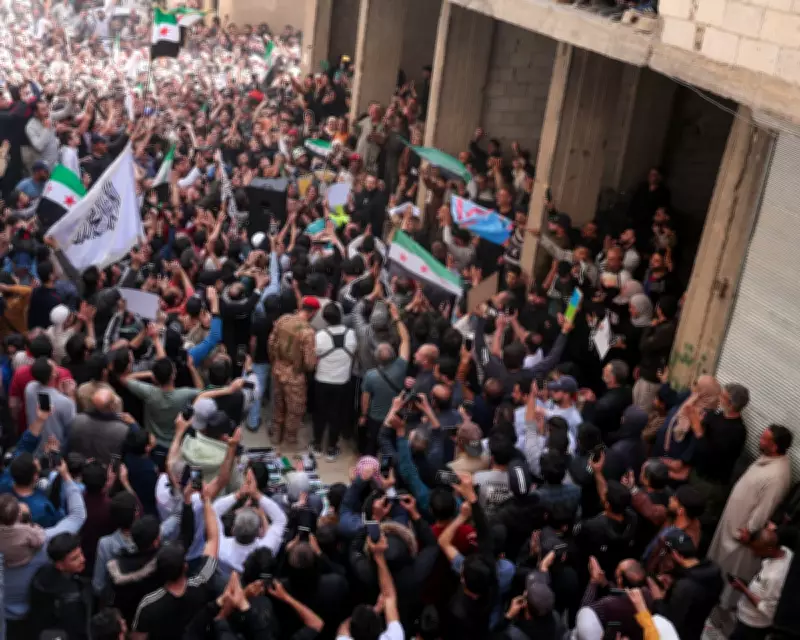
Last week, Syrian authorities arrested Amjad Youssef, a key perpetrator in the Tadamon massacres. Videos from Youssef's laptop, leaked in 2022, documented the killing of nearly 300 civilians by regime forces in 2013, showing Youssef ordering blindfolded civilians to run while he shot them. While Youssef became notorious, Tadamon residents have long insisted that many others, including NDF members under Saqr, were involved. During celebrations of Youssef's arrest, they called for Saqr's detention.
Ahmed al-Homsi, an activist with the Tadamon Coordination Committee, said: "Amjad was just a foot soldier compared to Fadi Saqr. Nothing happened without orders from him." Saqr has denied responsibility, claiming he learned of the massacre through the media and trusts the judicial process. However, the Guardian reviewed unpublished videos showing additional killings by Youssef and NDF personnel in October 2013, four months into Saqr's tenure as NDF commander.
Prof Uğur Ümit Üngör, an academic who obtained the videos, noted that the Tadamon massacre was not a single event but a process of mass killing throughout 2013 and beyond, with the NDF participating. Tadamon residents have expressed outrage at the government's initial collaboration with Saqr. Maher Rahima, a survivor, said: "If officials had seen what I saw, they would be ashamed to protect Fadi Saqr."
The government justified working with Saqr as balancing justice with stability, as he helped liaise with Assad regime remnants. Al-Barazi said plans to build a case against Saqr have been underway for months, with the political cost of keeping him onboard increasing. Youssef's arrest "helped push this to the forefront." She visited Tadamon residents, inviting them to join forces and promising witness protection. The commission will request an arrest warrant, though the judiciary ultimately decides.
In Tadamon, the prospect of Saqr facing justice has given new hope. Al-Homsi said: "Fadi Saqr's arrest would be way bigger than that of Amjad Youssef. It would be like a second liberation day."