Judith Alexander, the sister-in-law of Prime Minister Keir Starmer, has described her terror during an arson attack on her home in Kentish Town, north London, telling a court she feared what might have happened if she had not woken up.
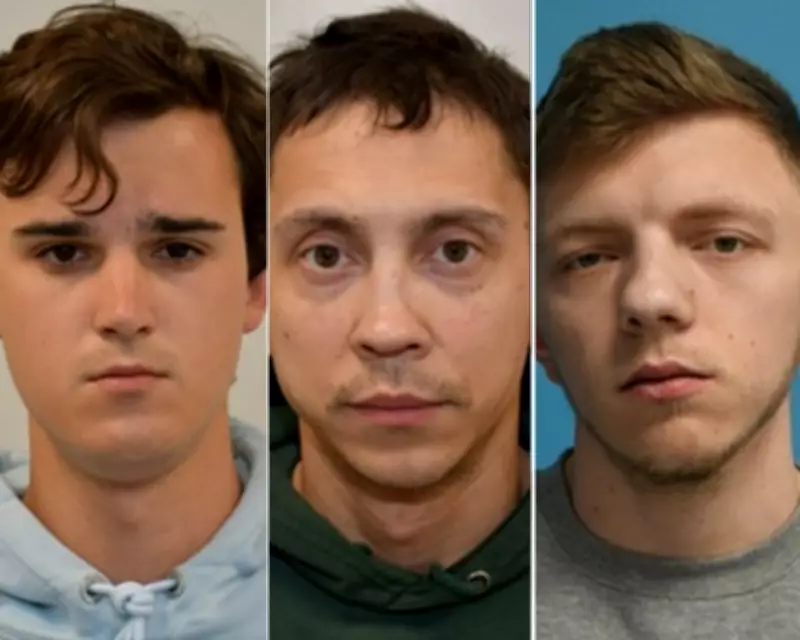
Alexander, who moved into the property after Starmer relocated to Downing Street, was giving evidence on the second day of the trial at the Old Bailey of three men accused of a series of arson attacks on properties linked to the prime minister. Roman Lavrynovych, 22, and Petro Pochynok, 35, both from Ukraine, and Stanislav Carpiuc, 27, a Romanian national, deny all charges.
In a statement read to the court, Alexander recounted the early hours of 12 May last year: “All of a sudden, I heard two bangs. It was very loud and sounded like two wheelie bins had been thrown at the door. I did not see anyone on the street but when I looked down I saw smoke and an orange glow where the front door was.”

Alexander had been lying awake in bed scrolling on her phone while her partner and daughter slept. After hearing the noise, she called the fire brigade and “frantically” attempted to call her sister Victoria, Starmer’s wife. Her daughter’s bedroom was near the fire, and the girl was woken by smoke. Alexander gave her family members Covid masks to wear.
“We could see the smoke was getting thicker and going upstairs,” Alexander said, describing her daughter as “really frightened” and “extremely worried”. Alexander, who has asthma, struggled to breathe as the house filled with smoke.
It was only after firefighters attended that the “realisation of what happened really hit me”, she added. “The fact that [my daughter's] room was right above the fire and if I did not wake up, what might have happened. I was awake all night.”
Series of Attacks
The Kentish Town fire was the third in a series of arson attacks in May last year. On 8 May, a Toyota RAV4 once owned by Starmer was set ablaze. On 11 May, a fire was set at the front door of a property in Islington, north London, which Starmer had previously managed. The third fire occurred in the early hours of 12 May outside the Kentish Town home where Starmer lived before moving to Downing Street.
Lavrynovych faces three counts of arson with intent to endanger life or being reckless as to whether life would be endangered. Pochynok and Carpiuc are accused of conspiracy to commit arson.
Prosecution Evidence
The court heard that Lavrynovych was arrested in south London on 13 May. During a search, a petrol can and a bottle of white spirit were seized and found to have his DNA on them. In a police interview, Lavrynovych denied involvement in the fires, claiming he was at home on the dates of the first two incidents and visiting a friend in Camden on the third.
When asked if someone had asked him to start the fires, Lavrynovych said: “I think you need to speak to a different person.” When asked who, he replied: “I don't know, I never saw this person.” However, when asked whether someone asked him to set fire to the three addresses, Lavrynovych allegedly replied “yes”.
The prosecution alleges that the three men, with links to Ukraine, were offered payment in cryptocurrency to set fire to the car and two houses by a Russian-speaking Telegram contact named El Money, a translation of the Ukrainian word “Hroshi”.
Telegram Messages
On Wednesday, the court heard that Telegram messages recovered by police between Lavrynovych and El Money showed he had been recruited, instructed, and promised payment in cryptocurrency for the fires. Pochynok had been recruited by Carpiuc to help Lavrynovych with the first fire, while Carpiuc’s role involved planning and receiving payment.
In a prepared statement, Lavrynovych said El Money offered him £1,500 to check for CCTV in the area and gave instructions about the two addresses. Lavrynovych “needed the money”, though he had not been paid. He said he “felt threatened” as El Money said he “would have to do the job as he knew where I lived”. Lavrynovych said he was “scared” as his grandmother shared his address.
Lavrynovych maintained that he “did not commit arson at any address”. The trial is expected to last three weeks.