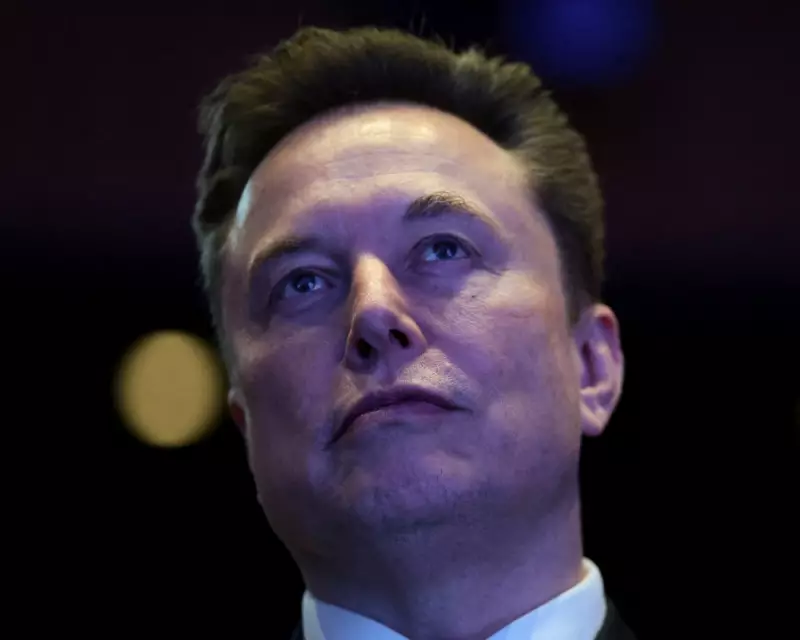
The president of the Royal Society, Sir Paul Nurse, has reignited a fierce internal debate by publicly defending the academy's decision to take no action against fellow Elon Musk, despite mounting controversy over the billionaire's conduct and his AI tool's capabilities.
Nurse's Stance: Fellowship Based on Science, Not Character
In an interview, Nurse argued that fellows of the prestigious scientific institution should only be ejected for fraud or serious defects in their research. He stated that individuals are elected for their scientific achievement, and removal should be contingent on those achievements being proven false.
Nurse, who began his second term as president last month, acknowledged the society's code of conduct might need review. However, his comments directly address calls from some fellows for Musk's removal. Musk was elected a fellow in 2008.

Grok AI Feature Sparks Fresh Outcry
The controversy around Musk's fellowship intensified with recent revelations about Grok AI, an artificial intelligence tool available on his social media platform X. The tool has been reported to allow users to digitally remove clothing from images, including photographs of women and children.
This functionality has placed Musk's association with the Royal Society under fresh scrutiny, with critics arguing it brings science into disrepute and violates the society's own code against harassment and unethical behaviour.
A Divided Fellowship: Support and Strong Criticism
The Guardian reports a sharp split among fellows. Nobel laureates Professor Sir Andre Geim and Professor Frances Arnold voiced support for Nurse's cautious approach. Geim called the focus on Musk a "misplaced effort" and stated that expulsion is merely "theatre". Arnold agreed that dislike of Musk's behaviour was not grounds for ejection, but suggested criminal acts, beyond just fraud, could be considered.
However, other fellows, many speaking anonymously, expressed strong dissent. One accused Nurse's position of bringing "discredit" on the society and making a "mockery" of its code. Another stated that if allowing an AI to "undress women" does not damage science's reputation, they did not know what would.
Professor Peter Somogyi criticised Musk for supporting violent societal change and said Nurse was avoiding a "hot potato". Professor Andrea Sella of UCL, who previously returned a society award in protest, accused Musk of amplifying anti-science movements and unleashing technologies that enable misogynistic attacks.
Wider Scientific Community Pushes Back
Professor Rachel Oliver of the University of Cambridge has written to Nurse urging him to reconsider, warning that his stance risks "empowering harassers" by downplaying breaches of conduct unrelated to research fraud.
Emeritus Professor Stephen Curry of Imperial College London said the society's "feebleness and cowardliness" in responding to Musk was "truly depressing", and contradicted its own code. A Royal Society spokesperson reiterated that the body "does not tolerate any form of discrimination, harassment or bullying".
The row highlights a fundamental tension within one of the world's oldest scientific academies: whether a fellowship is a lifetime honour based solely on past achievement, or an ongoing association that carries ethical responsibilities to the scientific community and society at large.