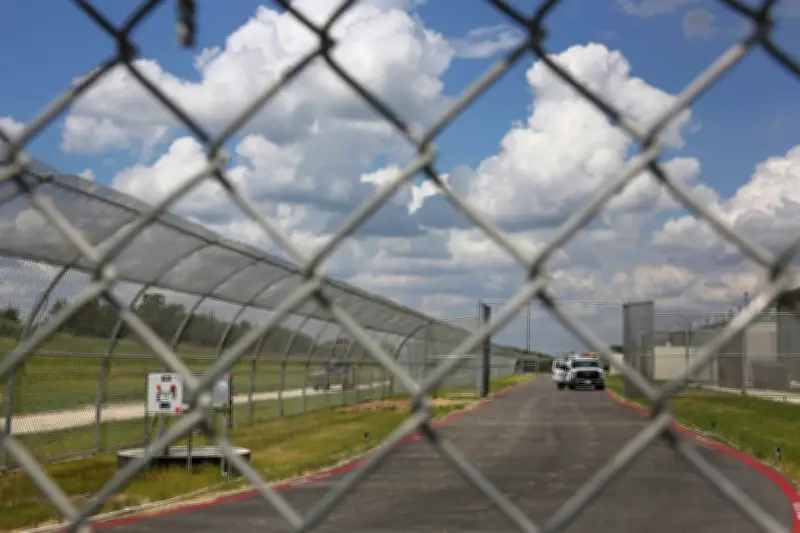
Eight people who participated in a protest at the Prairieland ICE detention facility in Alvarado, Texas, were sentenced on Tuesday to between 50 and 100 years in prison. A ninth person, Daniel Sanchez-Estrada, who did not participate in the protest, received a 30-year sentence for moving boxes containing leftwing zines after a prison phone call from his wife. The sentences have sparked widespread alarm over their unusually punitive length and the apparent harsh criminalization of protest activity under Donald Trump's justice department.
Extreme sentences draw condemnation
First Amendment groups called the sentences chilling. Representative Rashida Tlaib posted on X: "These sentences are a travesty and totally unjustified, but that's the point. Americans hate the fascist Trump regime, so the only way they can try to cling to power is brute force. More bullshit 'terrorism' charges like these are coming."
Seth Stern, chief of advocacy at the Freedom of the Press Foundation, said Sanchez-Estrada's sentence sends a chilling message about possessing ideological material. "Sanchez's case is the latest example of the Trump administration grasping at any legal straws it can to criminalize disfavored ideologies and writings," he stated. "Americans should not make the mistake of believing Sanchez's sentence only threatens immigrants, leftists or so-called antifa members – they're just the low-hanging fruit, not the endgame."

Details of the sentences
Of the seven other defendants, five received 50-year sentences, including two who arrived late and left when asked. Maricela Rueda, Sanchez-Estrada's wife, got 70 years. Benjamin Song, who fired at a police officer and hit him, received 100 years. All are expected to appeal. "The government wants to take her entire life away because she attended a protest. Nobody died," said Lydia Koza, whose wife Autumn Hill was sentenced to 50 years.
Sentencing experts noted the punishments are unusually long. Judges Mark Pittman and Reed O'Connor, Trump and George W. Bush appointees respectively, stacked sentences for multiple convictions. "It's relatively unusual to see that kind of stacking," said Mark Osler, a law professor at the University of St Thomas. O'Connor said harsh sentences were needed to deter such conduct, calling the attack an "assault on democracy."
Legal analysis of sentencing
The government's sentencing recommendations remain sealed but may have been inflated by a terrorism enhancement under federal guidelines. Douglas Berman, a law professor at Ohio State University, explained the enhancement creates a "double whammy" making recommendations extremely long. "I still can say these are extreme sentences," he said. Judges have discretion to depart from guidelines, but O'Connor and Pittman chose not to. A federal judge in Maryland recently sentenced a woman who attempted to assassinate Supreme Court Justice Brett Kavanaugh to eight years, despite guidelines recommending 30 years to life.
Experts were most puzzled by Sanchez-Estrada's 30-year sentence. "Simply because this is an activity that took place after the harm occurred, and it's something done within a family context," Osler said. Federal prosecutor Frank Gatto argued during sentencing: "People with that kind of extremist beliefs need extra time in prison. They believe violence is justified." Phillip Hayes, attorney for Song, said the activists were "a bunch of kids and young adults who really have a really big heart and really wanted their voice to be heard. It was never intended that anybody get hurt."