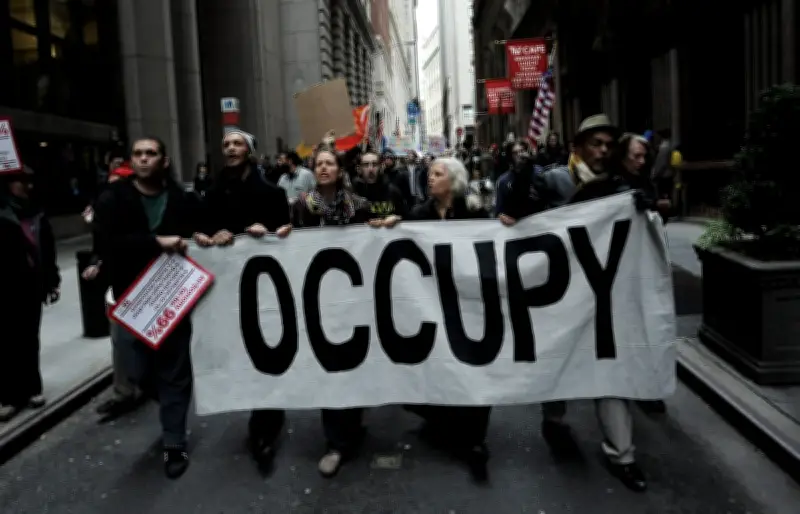
Yotam Marom, a key organizer of the Occupy Wall Street movement, reflects on its legacy and the lessons for today's left in his new book, For Louder Days: Reaching Beyond a Politics of Powerlessness. Marom argues that while Occupy fell apart due to police raids, winter, and an internal 'politics of powerlessness,' it paved the way for later successes like Bernie Sanders' 2016 campaign and the recent election of democratic socialists in New York, including Zohran Mamdani.
The Politics of Powerlessness
Marom defines the 'politics of powerlessness' as a set of ideas and behaviors that turn movements inward, away from opponents and the public, leading to infighting and a fear of leadership. He traces this to a belief that leftist movements cannot win, which discourages risky power-building work. Instead, Marom advocates for embracing leadership, building coherent strategy, and creating structures that welcome millions.
Lessons from Occupy to Today
Marom notes that Occupy introduced the '99% vs. 1%' narrative and trained hundreds of leaders, leading to organizations like the Sunrise Movement and Dream Defenders. He sees a direct line to current electoral insurgencies, such as the DSA slate in New York, which he says demonstrates a willingness to seek power. However, he cautions that the left is still at the beginning of its trajectory, facing powerful opponents like billionaires, the far-right, and climate change.

Strategic Sacrifices: The CAAAV Example
Marom highlights a story from CAAAV (Committee Against Anti-Asian Violence), a New York community organization. In a strategy retreat, they chose to shut down a campaign in Queens to focus on a winnable one in Chinatown, despite the pain of losing staff and relationships. This decision later helped CAAAV Voice become an early endorser of Mamdani and organize a Chinese and Bengali base for his victory. Marom emphasizes that such tough choices are essential for effective strategy and transformation.
Building Institutions for Lasting Power
Marom argues that the left needs institutions that can mount electoral challenges, wage campaigns against landlords and bosses, welcome new members, and provide political education. He stresses the importance of linking non-electoral power-building with electoral work so they mutually support each other. While he does not prescribe a specific form like a 'big party,' he calls for building capacities that could eventually form such an umbrella.
Marom remains cautious about overstating current wins, noting that the far-right controls the federal government and that climate change is a ticking time bomb. He warns against the temptation to shrink in the face of loss, urging movements to stay focused on building power.